
In the aftermath of ISE, there was – again – a lot of discussion about the future of digital signage software. One keyphrase that keeps coming up, also on Sixteen:Nine: Find the USP. A successful software must have distinct features that sets it apart from the competition. Without this story, the selling point is solely on price, and that isn’t enough.
A company that took this to the heart is Uniguest: The international digital signage software company is known for offering solutions for specific verticals gathered under one platform architecture. Historically, Uniguest has focused primarily on hospitality, broadcasting, and sports, but acquisitions in recent years have added other areas to its portfolio.
At ISE 2026, Uniguest presented a solution tailored to the healthcare sector, or more specific, to hospitals. The roots of this product lies in the acquisition of P-Care in 2023. The company has now complied with European data protection requirements for the software and intends to launch it on the continent and in the UK.
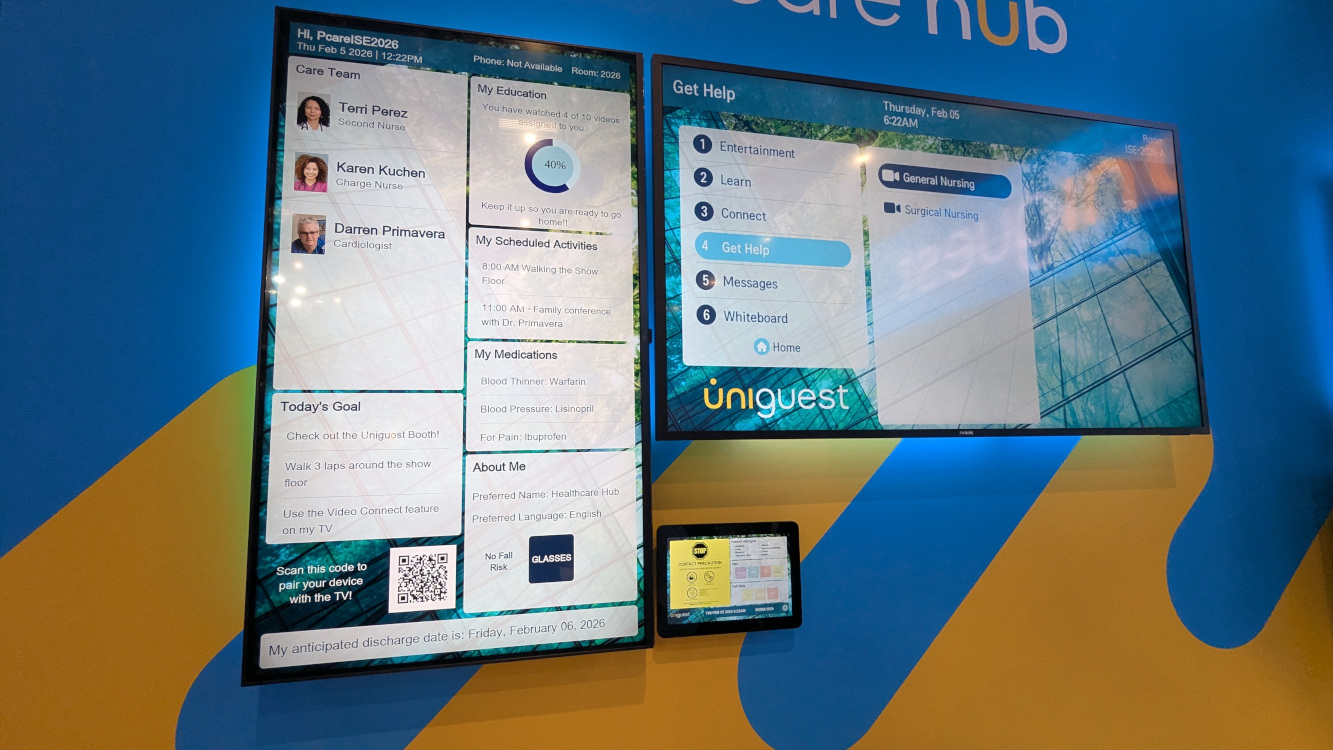
This is a patient-oriented solution for hospitals that includes both interactive and digital signage displays. With screens in hospital rooms, various services can be offered to patients in an automated and standardized manner.
The interactive screens can be used, for example, for remote consultations with doctors inside or outside the hospital. The digital signage display acts as an extended medical record for both the patient and the visiting doctor. It shows, for example, medications, the appointment calendar, or the necessary steps a patient must take before discharge. For doctors, data about the patient is displayed, such as how they would like to be addressed and other information. This means that the necessary information can also be accessed when the patient is asleep.
The system can also be expanded, for example, to include electronic door signs. Here, meal-specific information about the patient or the risk of infection can be documented.
This is a prime example of a signage solution that covers various pain points for the vertical it is tailored for. While having a very specific client base, it is designed on the basis of the client’s business – setting up each touchpoint according to its contextual function. The only question that remains is how – apart from the official GDPR compliance, patients and doctors will accept these kinds of solutions.