
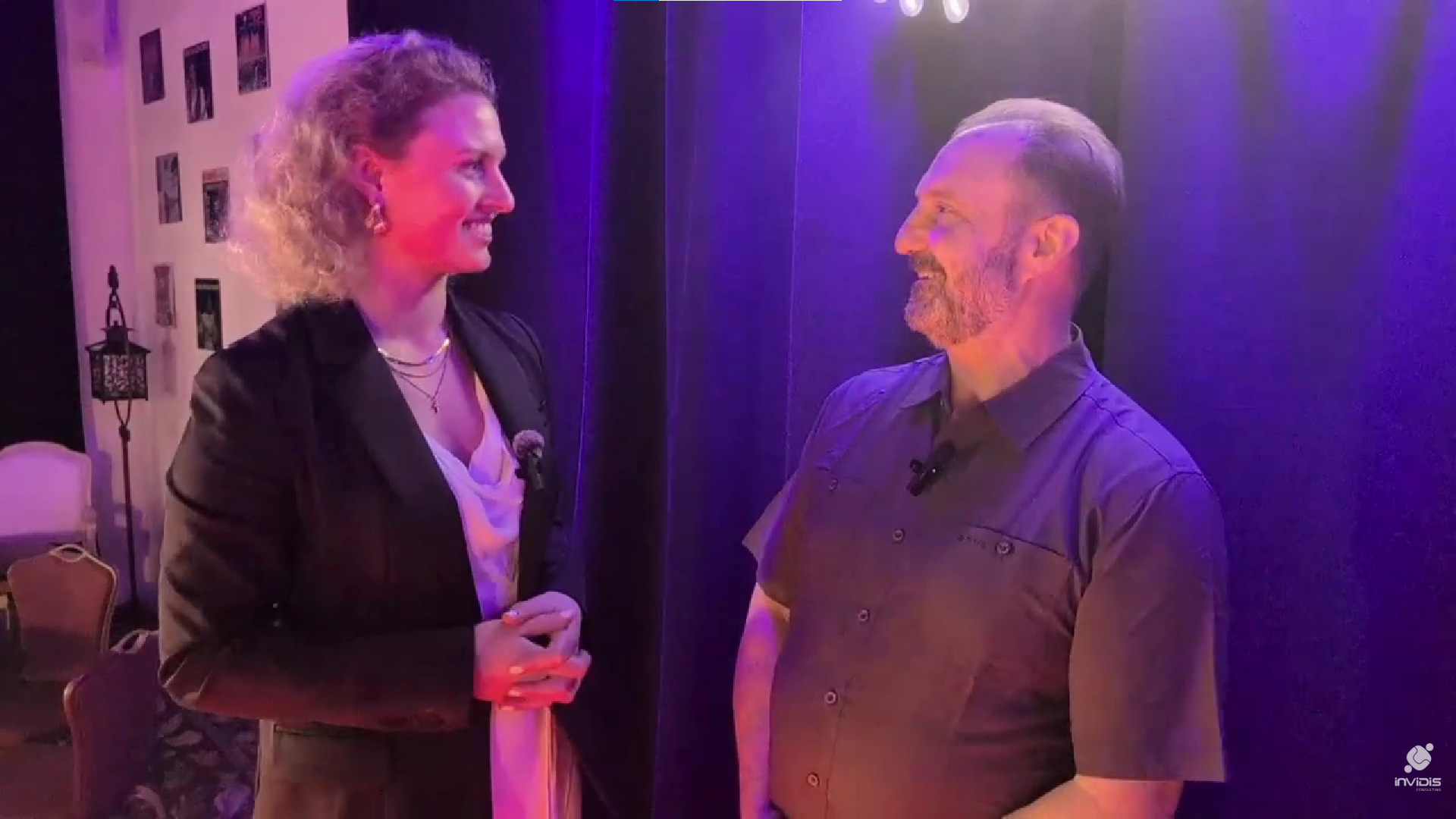
In a recent conversation with George Pappas, CEO of i5LED, he shared how his company distinguishes itself in the dvLED screen market. Sacramento, California-based i5LED focuses on unique product development and closely controls its supply chain with trusted partners in Taiwan, China, and Malaysia, avoiding mere reselling of displays.
George discussed the trust-building process with factories that deliver quality products and revealed how tariffs, while initially challenging, sometimes opened business opportunities. He also highlighted the growing demand for LEDs in medical settings for remote surgeries and educational purposes.
George also emphasizes the potential for creativity with LED technology. But to tap that potential companies should seek providers that offer tailored solutions rather than just standard products.
Check out the full conversation in this video – or in the transcript below.
You are currently viewing a placeholder content from YouTube. To access the actual content, click the button below. Please note that doing so will share data with third-party providers.
Transcript:
George, do you wanna introduce yourself really quickly? Yeah. George Pappas. CEO i5LED. And what does i5LED do? The name says what you do, but what do you specialize in? We’re a manufacturer of high-end LED screens. We do turnkey installations when needed. However, we focus on new product product development.
Our own design and we specialize in things that most people don’t make. So you don’t work with the Chinese manufacturer, you do everything yourself. Product design, manufacturing, we do the product design. We do have contract manufacturers. We have our own factory in Taiwan, a small factory in mainland China and Malaysia.
But we try to control most of our own supply chain, so we’re not just buying LED displays and reselling. So how do you find those factories in China that you can really trust and then, deliver the quality that you need for those special projects that you do? So a lot of the stuff that we have that we’re doing [00:01:00] when we have made our traditional LED factories, they’re building other things like, motherboards, other kind of processors. LED screens don’t need to be in an LED factory. You just need to have people with the right equipment. And so we look for people that are outside the industry. So a lot of our secrets are kept secret.
And you probably don’t have the massive volumethat requires a big factory because you do more of those specialized projects Yeah. And when we do have massive volumes, we have our own partner in Taiwan that I’ve been working with for 25 years. He’s a part owner in our company and, so I can run as much product as I need through there.
So I’ve heard you say before that you’ve earned really affected by tariffs which is surprising to hear from you as a hardware manufacturer. How do you explain that? Everybody. Got the tariff. It’s just if fuel prices went up, everybody’s gonna pay the new fuel price. The end user didn’t have much of a choice, right?
So we don’t control it. It wasn’t our fault. It’s not like we said, Hey, we’re gonna charge you more. They understood it. We looked for as many [00:02:00] ways as we could, absorb some other costs and work with them. Yeah, it didn’t really affect us too much. Okay. But essentially you had to raise your prices a little bit and customers were understanding.
Yeah. We made it very transparent of here’s what the additional duties are in tariffs and, some of our clients actually wanted it as a separate line item because they were going to try and look at a different way of costing for it. I can imagine that as an American LED manufacturers, the tariffs might not only have caused disruption, but may also have created business opportunities, especially in sectors like government.
It did, we had a couple of government agencies that were exempt from the tariff. But you have to remember, a lot of our stuff is also made in Taiwan, so we didn’t have the exact same threats as mainland China. Okay. That makes sense. That makes sense. Like a lot of what you do is in government as you told me.
How’s that sector developed? Is it just spending high in that sector? Yeah, it’s a very slow process. But because of [00:03:00] our own type of control system and how we build our stuff our TAA compliance. That’s a really good market for us. And we’re it’s a market that takes time and patience.
But, we’re in this for the long run. What’s another sector that you are really seeing huge potential with LED that’s maybe not on everybody’s radar? It’s interesting, somebody from Sixteen:Nine wrote a really cool article about one of our projects. I wonder who that Yes. Research.
We’re looking at the the medical market. It’s there’s new needs for LED displays, direct view, LED, high end not only for, just the normal day-to-day operations, but their surgeries and operating rooms where they can remote view. Just a small LED or LCD TV isn’t cutting it anymore.
So they’re really putting big LED walls in the in the operating rooms. Just outside so students can see what’s going on. So now they don’t want 25 people [00:04:00] in an operating room, right? So this is remote viewing. But they want high end and they want something big. They have a classroom, not everybody has a laptop in front of ’em.
They want a big screen they can point to, they can see. So it’s across the board. It’s for patient care. That’s one of our clients that’s doing it for patient care. And then other ones are in the learning hospitals. What’s one thing you wish companies would know about LED? Because I know it’s still a little bit of a subject that not everybody’s comfortable with, or technology not everybody’s comfortable with.
Yeah. So I think the biggest thing is there’s more possibilities than people know about, right? Everybody sees an LED and too many people thinking it 16 by nine aspect ratio. But with LED, direct view, LED, you have flexibility. Yeah. You can do whatever you want, how you want it, right? The key is find the right provider that doesn’t just sell boxes, right?
So we don’t just sell boxes, we sell solutions. Most of the integrators that we work with us because they’re looking for somebody to help them give the customer what they want. [00:05:00] So what’s a good indicator of good quality? LED that like somebody who doesn’t know LED at all? Can pinpoint towards if they see a new product and are thinking, is this good quality?
How can I check? That’s a tough one. Okay, so there’s no simple answer. There’s no simple answer. You need to take it apart and see. The first thing I like to look at is when I take one apart and look at the type of components and, that takes a little bit of an expertise, but if you open it up and it looks like there’s tons of cables and ribbon cables and wiring, it looks like a mess.
It’s probably a mess. Thanks, George. That was very insightful. Thank you. You’re welcome.