
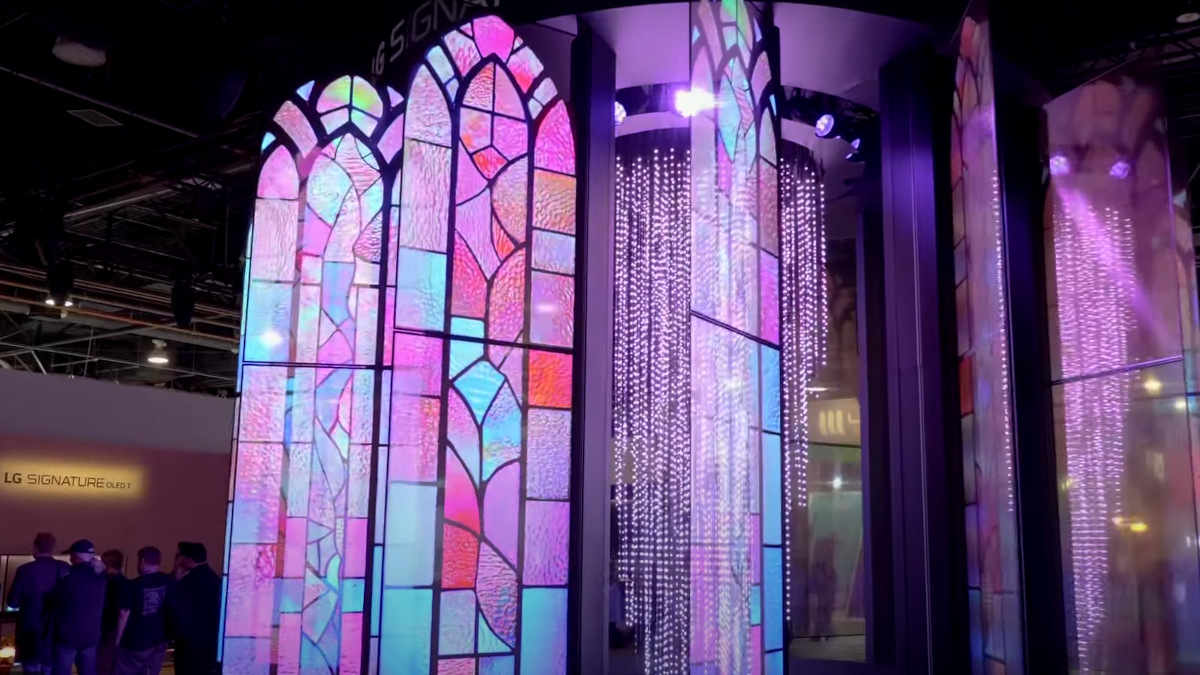
We are approaching CES in Las Vegas, and just like in recent years, there’s a good chance transparent displays will be used at a sizeable number of booths to add a layer of visual dimension. Beyond trade shows, however, the technology has yet to find a lucrative market that can deploy it a larger scale. New research from Omdia suggests that while transparent displays are unlikely to become a mass-market product, they are expected to grow into a meaningful display category by 2032.
Omdia forecasts that revenue from transparent displays will reach $100.2 million by 2032, representing a compound annual growth rate (CAGR) of 9.3% between 2025 and 2032. While this won’t send unit shipments skyrocketing, it points to notable growth in both revenue and total display area shipped.
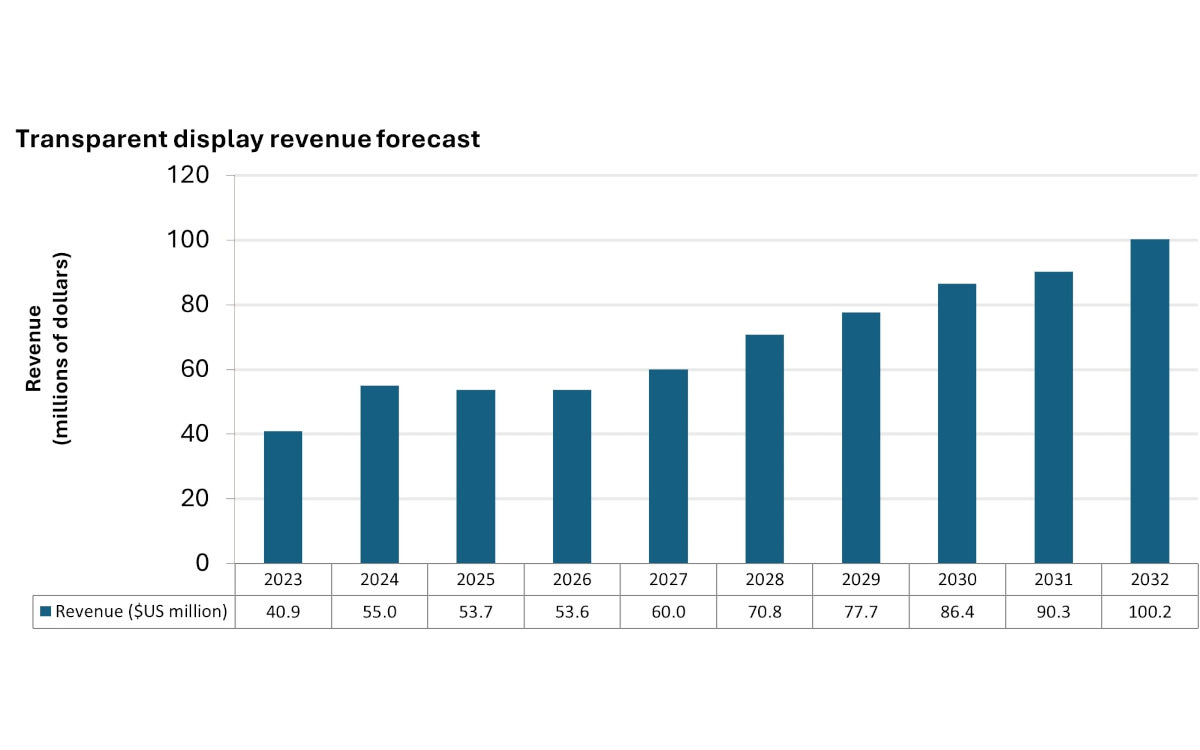
Much of this growth is expected to come from large-format deployments in public display environments, where ongoing improvements in transmittance and scalable panel sizes are making transparent displays more practical.
Technology Advancements Driving Adoption
Over the past decade, display manufacturers have explored a variety of transparent display technologies, including TFT-LCD, PMOLED, AMOLED, LED, and microLED. Each offers its own strengths in terms of panel size, pixel density, and light transmittance (TR). Early iterations, however, faced limitations — PMOLED panels, for example, were typically smaller than 2 inches, while TFT-LCD panels offered less than 20% transmittance.
Recent advancements have helped overcome these constraints. AMOLED panels now exceed 70 inches, and LED and microLED technologies — including Samsung’s transparent microLED unveiled at ISE 2024 — can achieve transmittance rates above 70%. Omdia expects these improvements to support gradual adoption as technology is matched to specific application needs.
Focus on Public Displays and Commercial Installations
At present, most transparent displays are used in custom, one-off installations, such as large media walls, rather than personal devices. This explains the broader market trend toward larger form factors and commercial deployments.
“Transparent displays are designed to be sufficiently see-through for objects to remain visible through the screen, enabling a merged view of real-world objects and digital content. This allows for more immersive content that blends into the physical environment,” said Jerry Kang, Practice Leader at Omdia.
Kang also pointed out that as display sizes increase, unit area price becomes increasingly important. While AMOLED and microLED panels provide high pixel density suitable for transparent applications, their cost remains high. As a result, LED Film solutions are gaining traction, offering larger display sizes at lower cost despite lower pixel density. This lower-cost alternative is expected to drive much of the market growth.
The insights are drawn from Omdia’s Special Report – Transparent Display Technology and Market – 2025, a paid report analyzing recent trends, technology developments, and market forecasts for transparent displays.