
Transparent screens continue to captivate audiences – even at shows like ISE, where so many awe-inducing technologies are competing. Specialists like Muxwave did not disappoint with their newest solutions – ultra-light transparent screens that are able to achieve high brightness levels.
Real-world applications remain a key hurdle for transparent displays. To reach their full potential, they must be seamlessly integrated into their sorroundings. Nobody can tell that story better than LG, which has brought its transparent OLEDs a long way.
If you want to read more about the recent developments of OLED, we recommend our invidis Yearbook 2025, where we have an in-depth analysis in our technology section (shameless Self-advertising over).
Back to transparent OLEDs: There are some pretty cool use cases, also in the real world (for example in the Parliament of Austria). But there is a lack of mass adoption. One of the problems: To reach their full potential, the displays must be seamlessly integrated into their sorroundings.
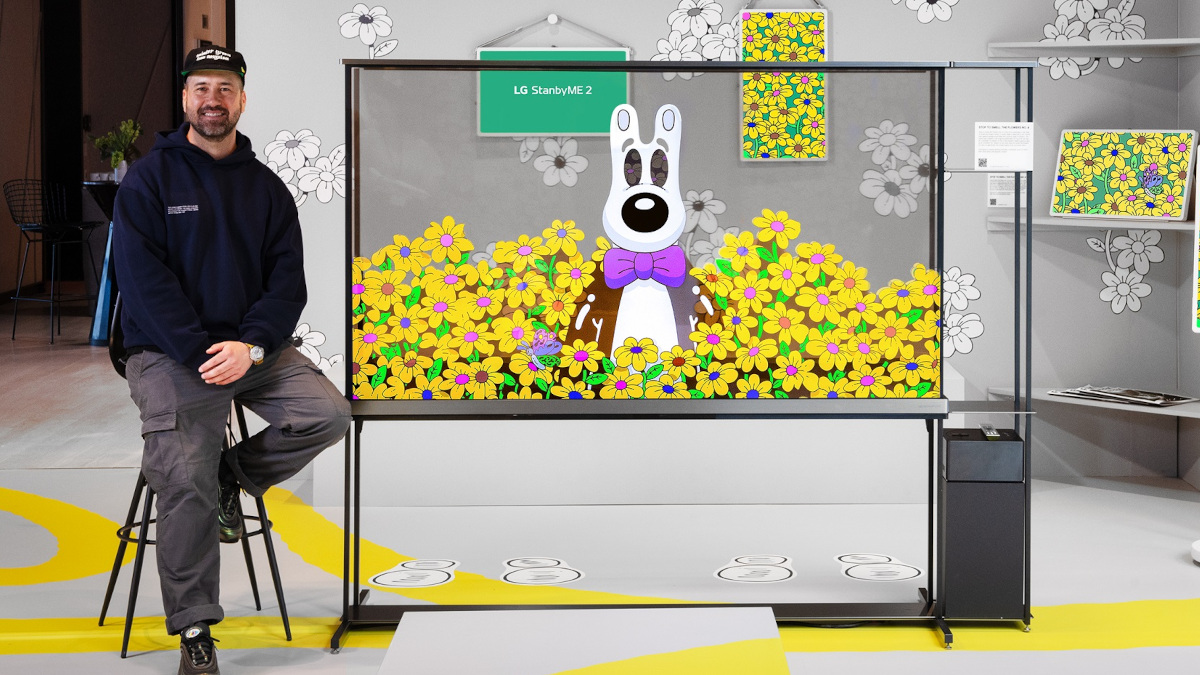
To solve this problem LG, integrated the displays into luxury furniture – or like it happened in the TV section, made a whole luxury product out of it: The LG Signature OLED T with 77 inch. Launched in the US in December and now coming to Germany, this TV clearly set itself in the luxury section, combining steely designish-design with a transparent OLED display.
The OLED T was also promoted with marketing campaigns like the collaboration with LA 2028 Olympics logo designer Steven Harrington.
I am not deep enough into the TV business to predict fail or success, but the luxury card is one well played by transparent OLED. The big question is: How do you translate it into a digital signage business case?