Bracelona | At ISE 2026, Sharp proves its expertise in making durable and modular displays, showcasing two new SDM solutions powered by Brightsign and Raspberry Pi. To cater to growing LED demand, Sharp launches a new entry-level series.
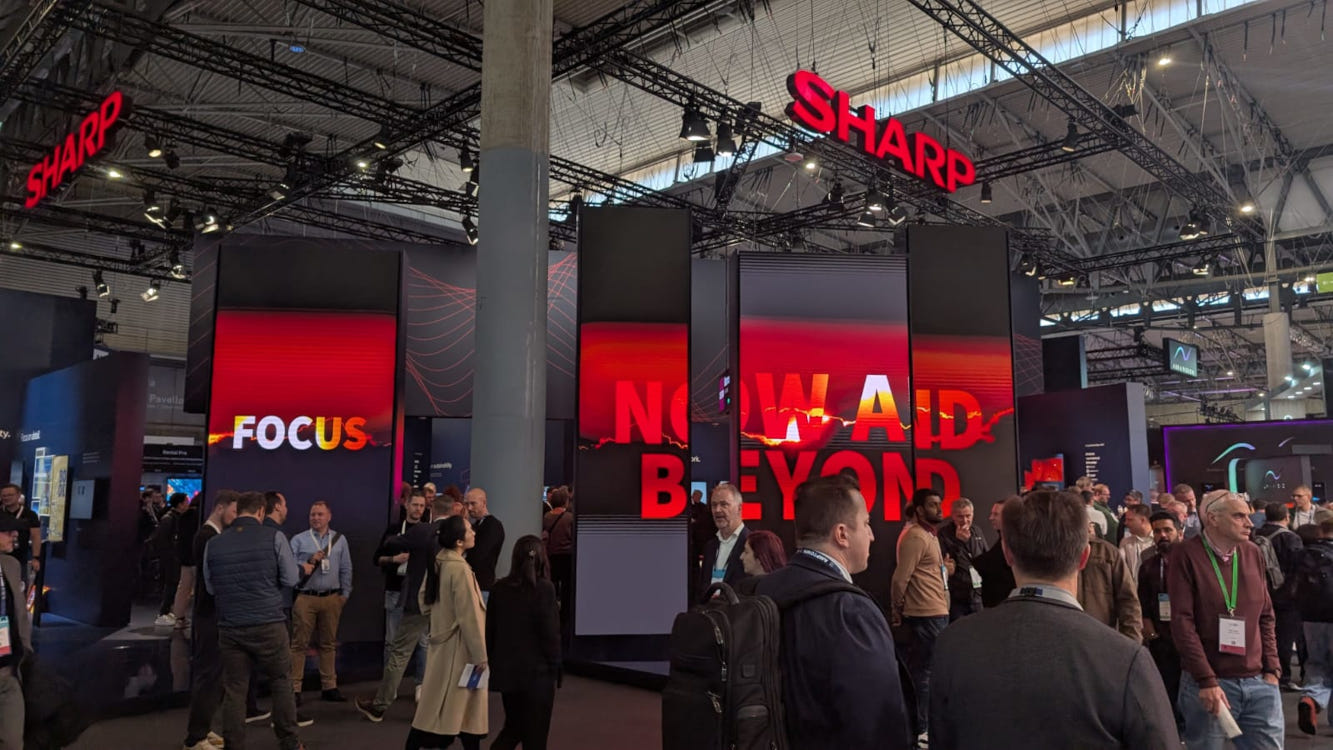
Sharp at ISE 2026: Old Icons Meet New Technology
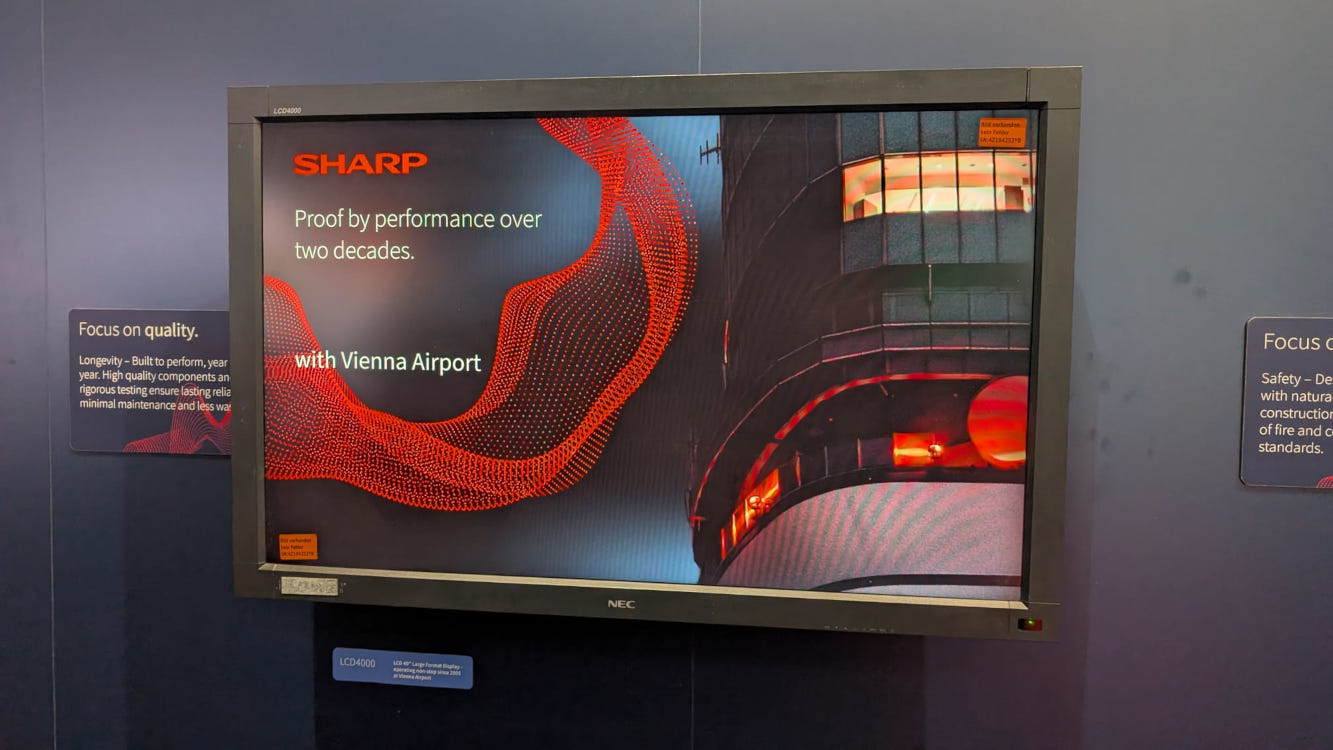
It’s the second year that the NEC logo is absent from Sharp’s ISE booth. Yet the NEC legacy is still visible: in one corner, for example, a 20-year-old NEC screen that ran at Vienna Airport for a total of 175,000 hours remains on display — a hidden highlight at this tradeshow.
While this vintage screen makes for compelling marketing, Sharp is equally focused on durability and sustainability in its newer offerings, such as its modular display lineup. For ISE 2026, the manufacturer has expanded its modular computing portfolio for digital signage with two new Smart Display Module (SDM) solutions catering to different professional needs.
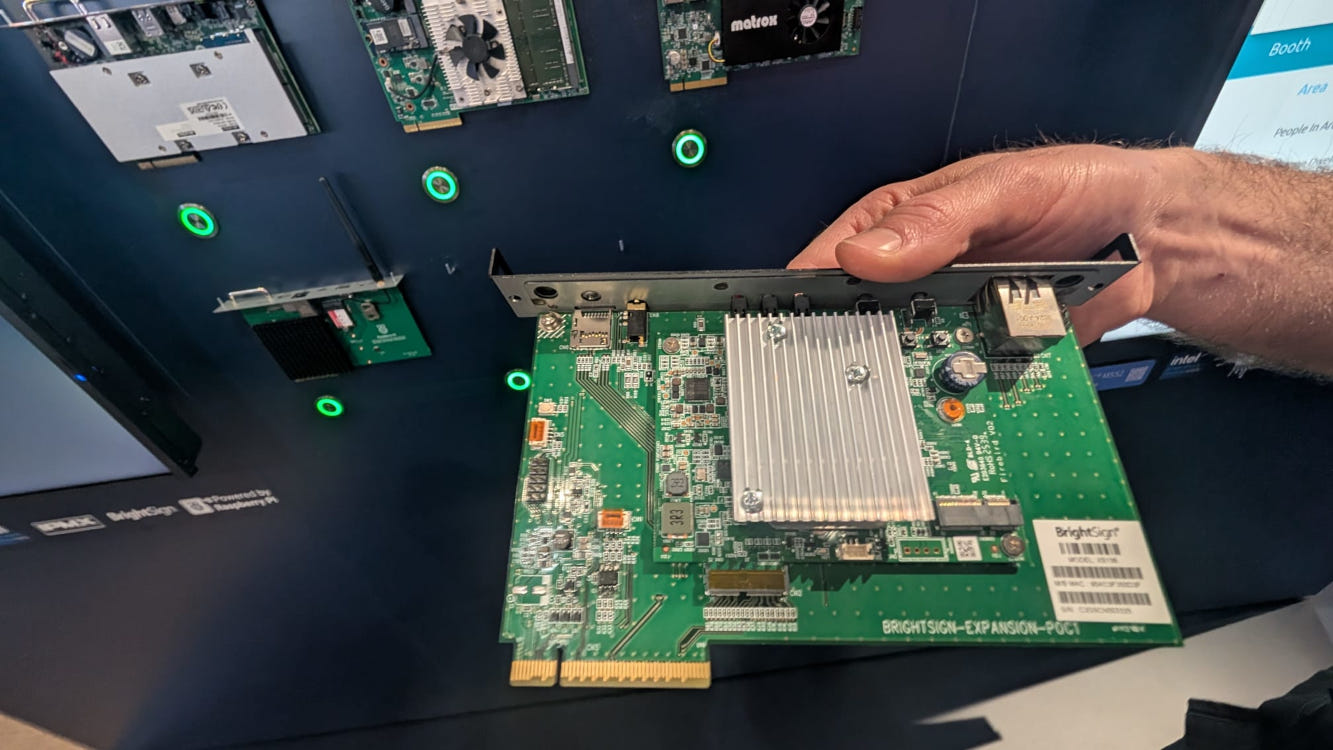
Alongside an SDM player with integrated Brightsign SoC technology, Sharp is introducing the SDM MPi5 Kit, based on the Raspberry Pi Compute Module 5. Both solutions follow the Intel Smart Display Module specification and are designed to embed computing power directly into professional displays.
SDM player with Brightsign Built-in
The SDM player with Brightsign Built-in combines Sharp’s large-format displays with an embedded media player running Brightsign OS. The built-in form factor eliminates the need for external players, additional cabling, or separate power supplies, while the modular SDM architecture still allows computing units to be replaced or upgraded independently of the display. Sharp positions this solution for mainstream digital signage applications in retail, corporate, and transportation environments, with market availability planned for the second quarter of 2026.
In parallel, Sharp is launching the SDM MPi5 Kit as an ARM-based alternative developed in collaboration with Raspberry Pi. Using the Raspberry Pi Compute Module 5, this solution targets Linux-based, mission-critical applications such as flight information display systems (FIDS), wayfinding, and other information displays. Key priorities include system control, energy efficiency, and long-term maintainability.
New COB LED series for entry-level applications
On the LED front, Sharp is expanding its portfolio with a new entry-level series, reflecting a broader trend among visual solutions providers. Similar to PPDS and Sony, Sharp now offers an LED product that is more cost-effective than its current models, though still positioned above low-cost Chinese alternatives. The new EC series is based on Chip-on-Board (COB) technology, which generally provides better durability and image quality than SMD LEDs while also reducing power consumption.
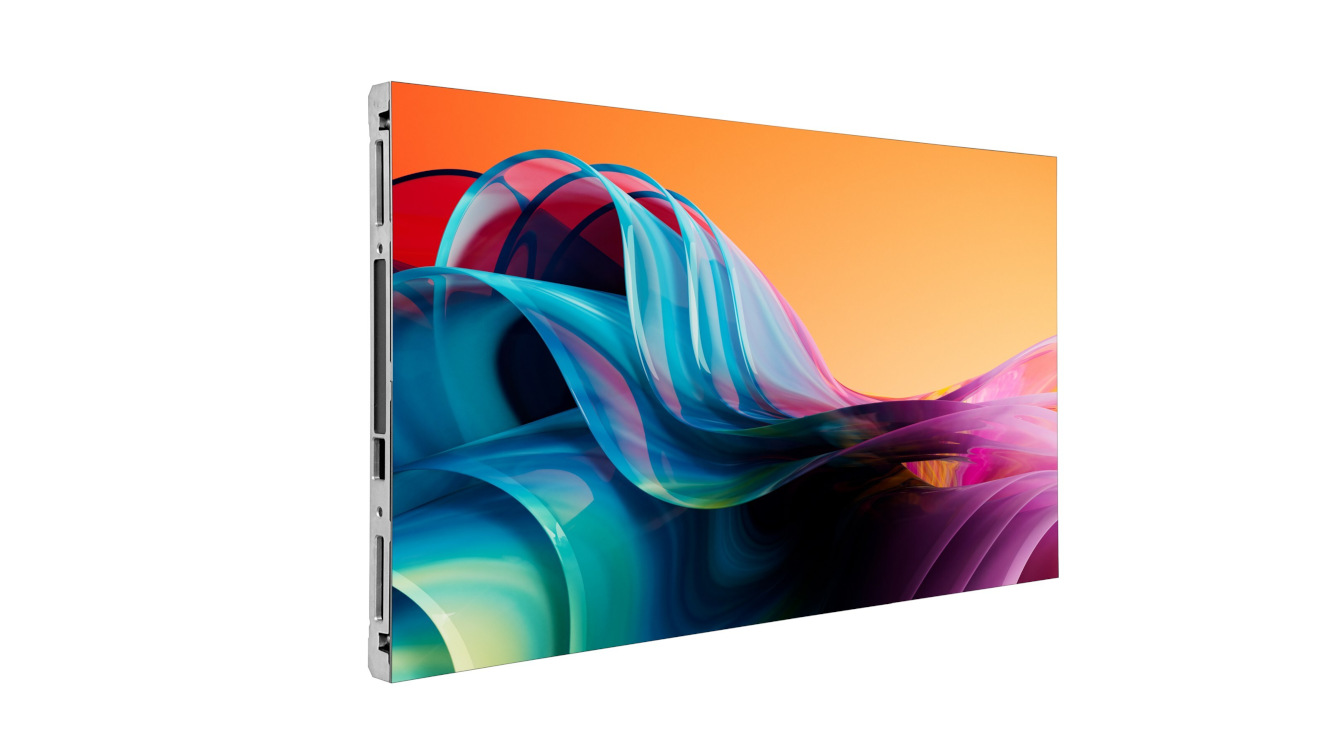
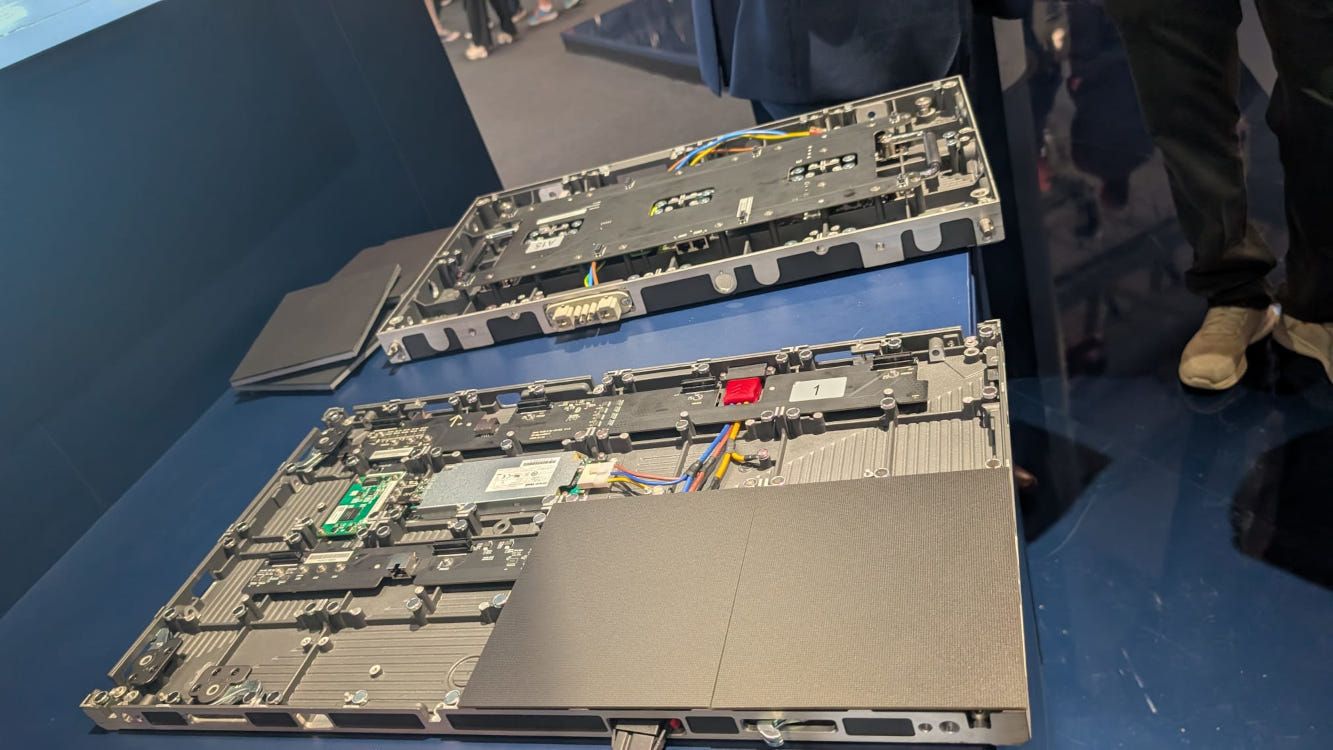
For easier installation, the cabinets can be joined using hinges instead of screws. The series will be available in pixel pitches of 0.9, 1.2, 1.5, and 1.8 mm, covering a wide range of viewing distances and use cases. Shipments are scheduled to begin in April 2026.
As with many traditional display manufacturers, LED is Sharp’s fastest-growing segment, with annual growth of around 25%. Sharp’s products are widely used in transit environments like airports, where durability and serviceability are critical — and here, SMD remains the dominant LED technology. However, with COB prices dropping and new, better-engineered solutions entering the market, the dynamics of this segment are poised to shift.