Barcelona | The large LED structure in front of LG’s booth at ISE immediately caught the eye. But the real LED innovation was found behind it: a COG Magnit MicroLED.
ISE 2026: LG Makes Two LED Power Moves
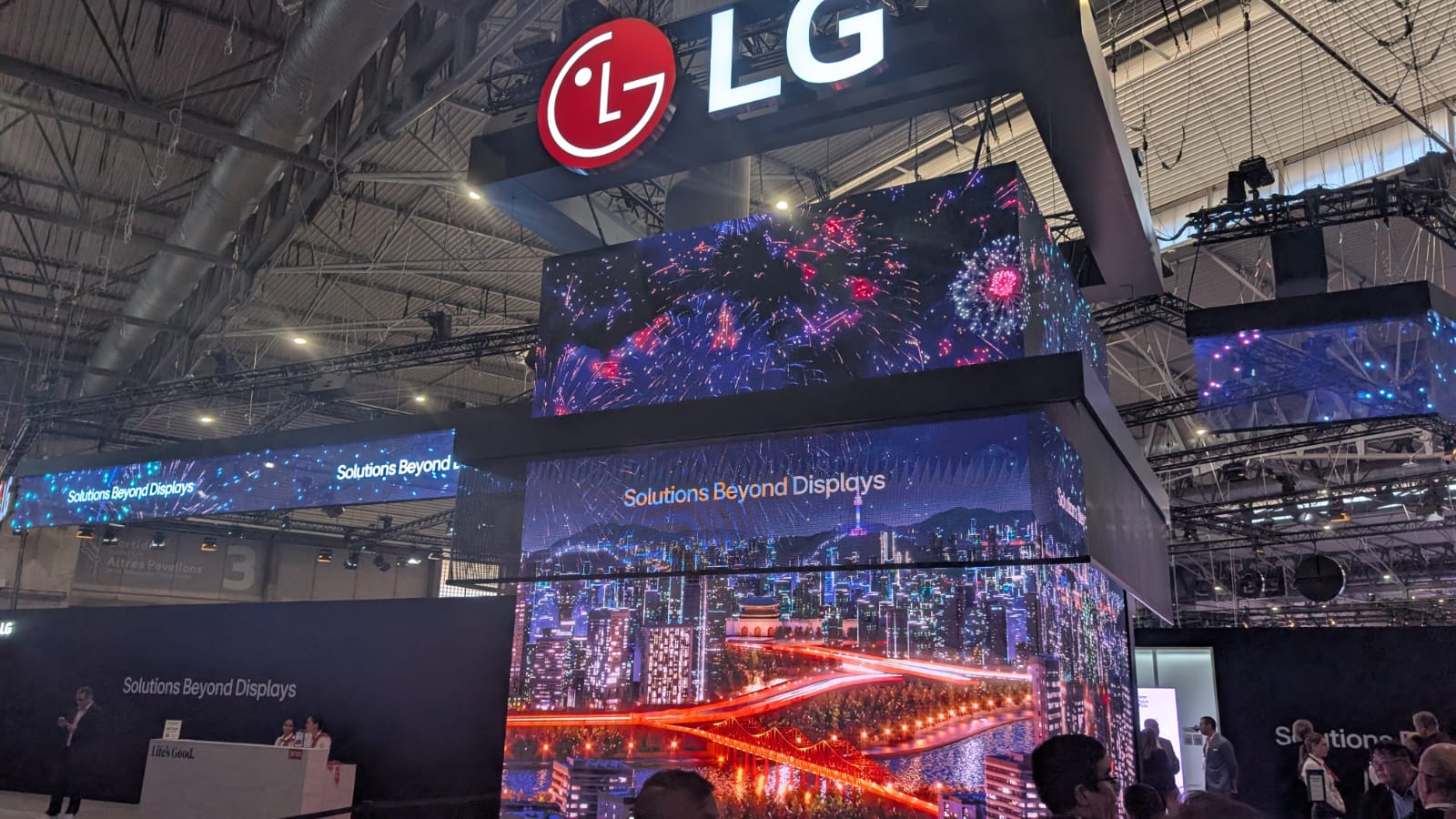
The nearly six-meter-tall LED tower at LG’s booth was impressive in its own right. What truly elevated the installation, however, was the additional LED mesh that wrapped around the tower and could be moved up and down. Together, the two elements created striking, highly dynamic animations.
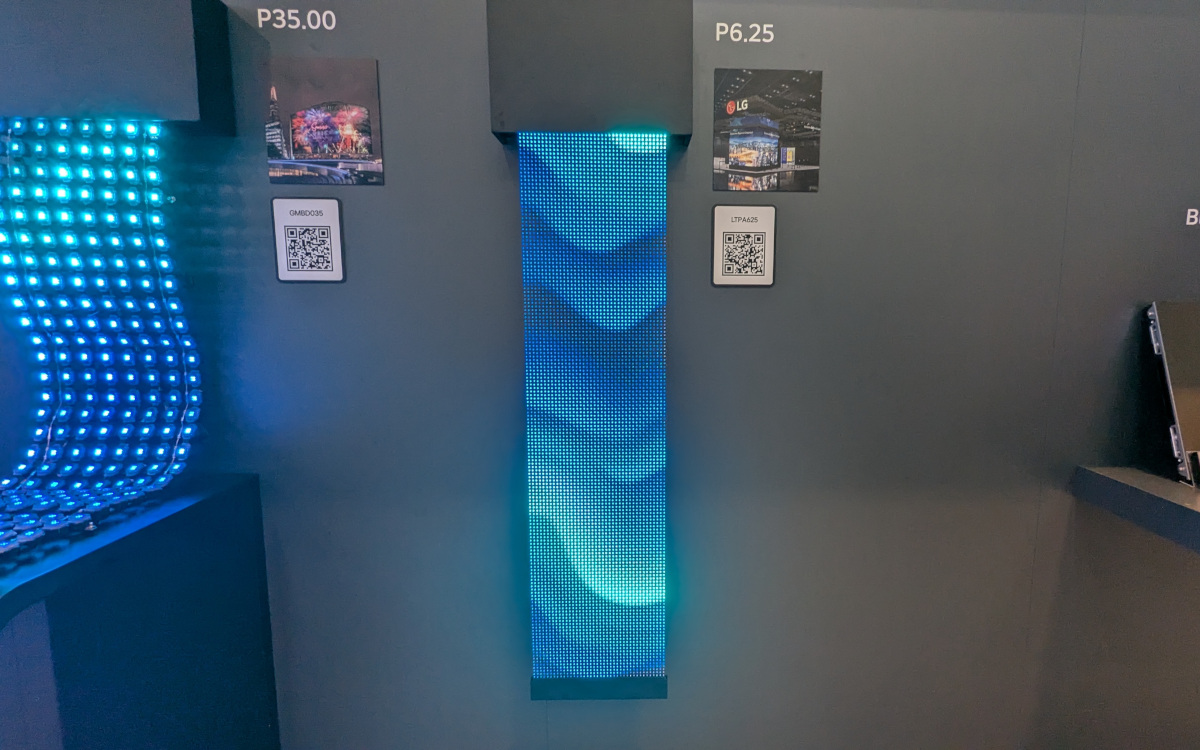
“We want to demonstrate how a clever combination of two standard products can result in something new and distinctive,” explained Robert Bergner, Head of Solution Sales at LG Information Display Germany. New on the product side was the LED mesh itself, featuring a 6.25-millimeter pixel pitch.
But the real innovation was revealed deeper inside the LG booth.
A COG MicroLED
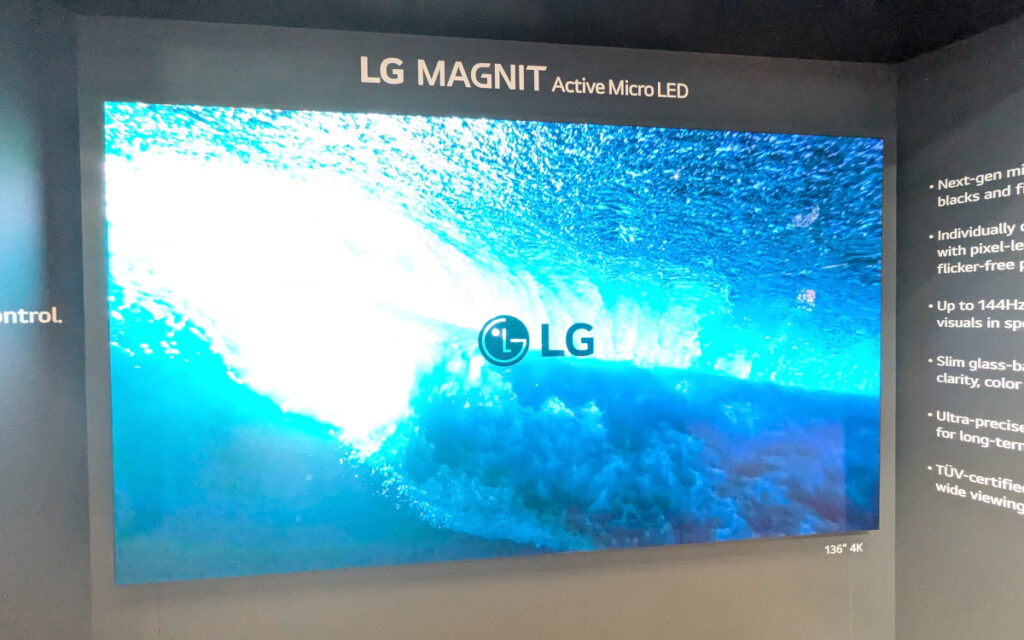
LG showcased a new chip-on-glass (COG) active MicroLED from its Magnit series. The 136-inch wall uses individually driven, TFT-based LEDs, enabling flicker-free performance. Combined with a variable refresh rate of 1,444 Hz, this results in exceptionally smooth image reproduction.
The thin glass panel structure also contributes to high image sharpness. According to LG, the ultra-precise LED transfer process ensures long-term screen stability. Market launch is expected in the near future.
Although the Magnit MicroLED is clearly positioned in the absolute premium segment, it may still serve as a strategic signal for LG. According to Futuresource analyst Ted Romanowitz, the LED industry is heading toward a transformation in production processes, moving away from packaged LEDs and toward unpackaged technologies such as COB or COG.
No lines, plenty of crosshairs
In addition to its display products, LG expanded its LED offering with a dedicated technology corner focused on LED peripherals. On display were new controllers as well as a number of smaller features designed to simplify installation and operation — among them the new Line-to-Dot technology. This approach reduces pixel defects from entire lines to individual dots, making faults far less noticeable on large LED surfaces.
Also shown was a mechanical alignment tool that allows individual panels to be precisely positioned relative to one another. Crosshairs are displayed on the LED modules, onto which a magnetic screw mechanism can be attached to raise or lower the module at that specific point. This makes it significantly easier to achieve a perfectly flat LED surface.
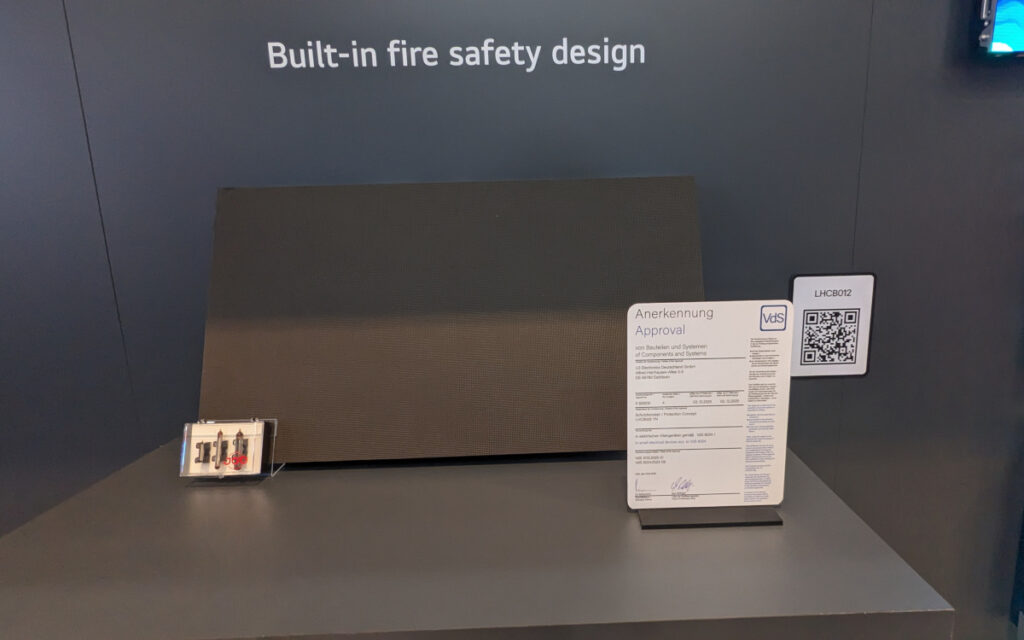
In this section, LG also introduced its new VdS-certified LED solution, which comes equipped with a built-in E-Bulb fire suppression system from Job. Thanks to the certification, deploying LED displays in safety-critical or sensitive environments becomes considerably easier.
E-paper, kiosk, and OLED
E-paper displays were also prominently featured at the booth. LG presented 32-inch and 13-inch versions, along with a stand that allows a power bank to be magnetically attached to the rear — an elegant solution for occasional power requirements.
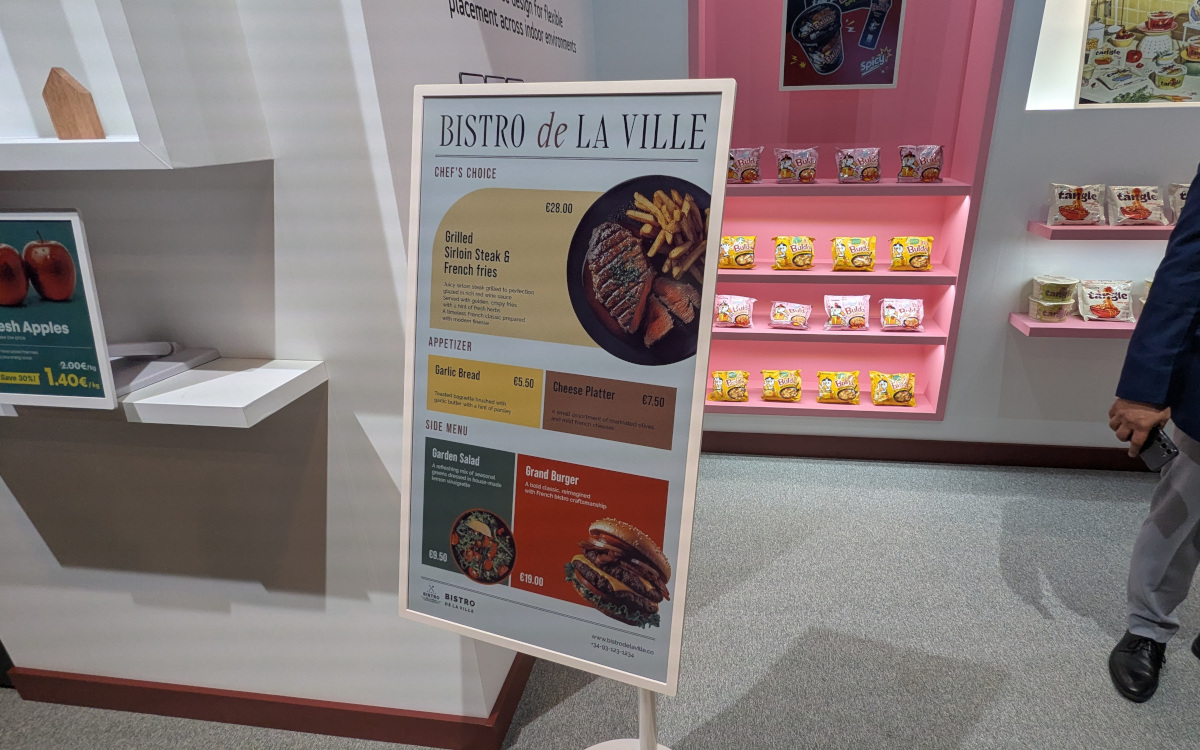
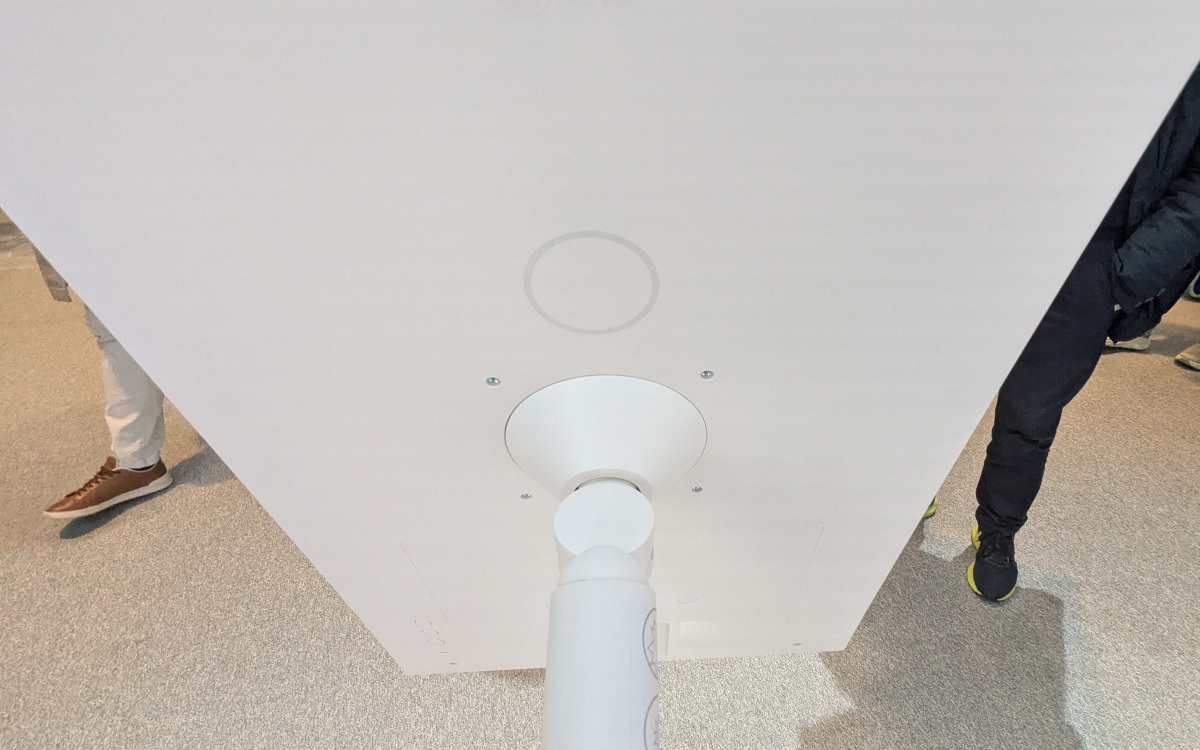
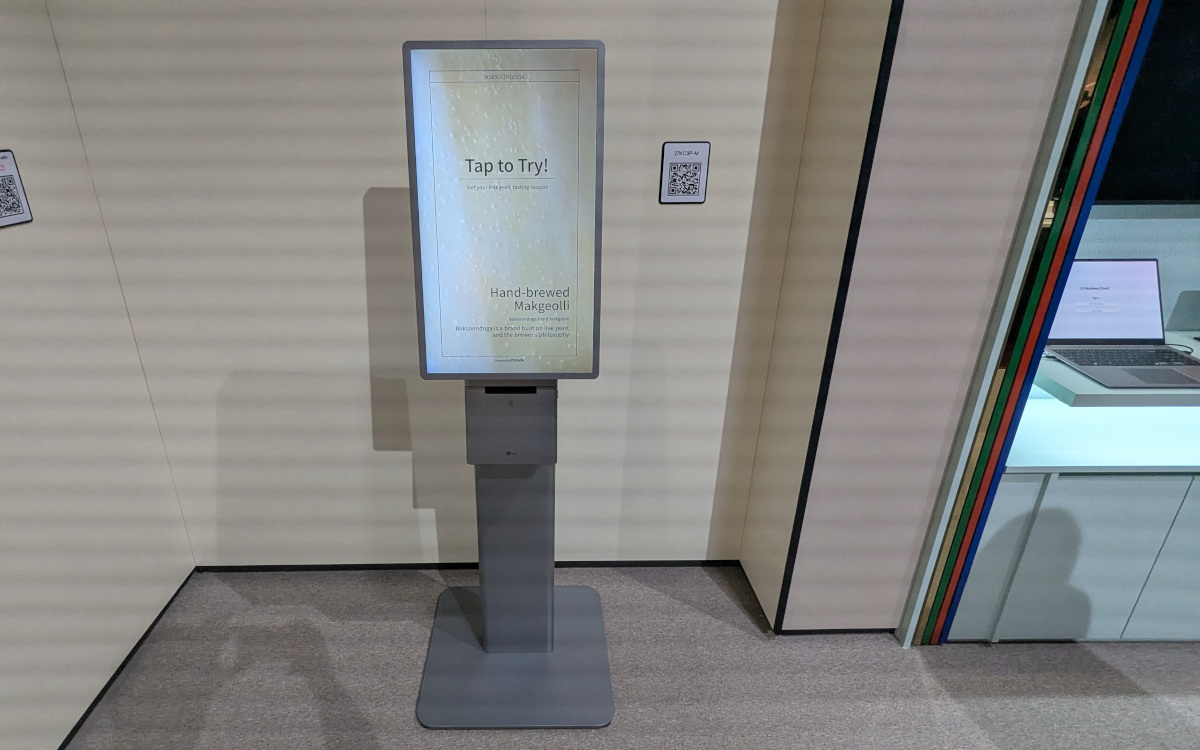
LG also unveiled a new modular version of its kiosk system and demonstrated how its OLED displays can be integrated into retail environments. Among the product highlights was a new non-OS display: simple functionality on the front end, but fully controllable on the back end. The display will be available in 65-, 75-, and 86-inch sizes.
New RDM functions
LG placed particular emphasis on its software portfolio, which together forms the LG Business Cloud. The ConnectedCare RDM platform is now also available in a Pro version, offering a wide range of additional features.
According to Robert Bergner, LG’s goal is to make the management of signage networks as efficient as possible, including integration with third-party platforms. “Our system is not a closed ecosystem,” he emphasized. At ISE, LG demonstrated an interface to the ServiceNow workflow platform, among others.
Equally important for LG is its Shield security platform, which provides comprehensive protection for the Business Cloud. This reflects a broader industry trend: unified software platforms with security architecture built in from the ground up.