
Samsung's Spatial Display was developed to combine the sharpness of 2D with the depth of 3D, giving digital signage a holographic touch. Here's a technical deep dive on how the display works.
Glasses-Free 3D: The Technology Behind Samsung’s Spatial Displays
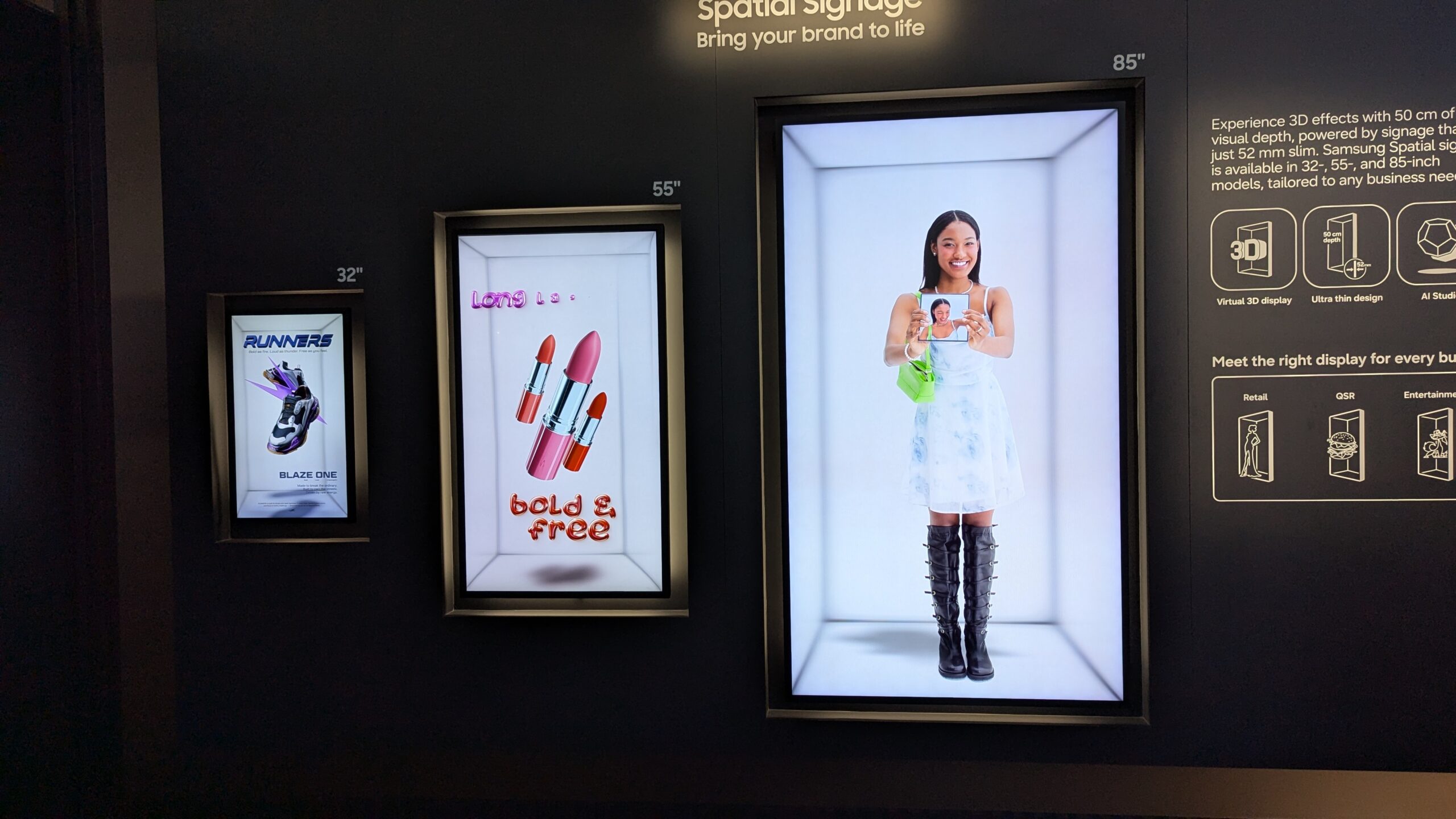
Samsung’s Spatial Signage is a large-format LCD display capable of rendering three-dimensional content without the need for VR headsets or 3D glasses. After making a high-profile debut at ISE 2026, the manufacturer is now offering a closer look at how the technology works under the hood.
Hybrid imaging for maximum clarity
To create a convincing sense of depth in open space, Samsung combines conventional panel technology with a lenticular structure. At the core of the system is an ultra-thin 3D plate – just 3 to 4 millimeters thick – based on the principle of binocular disparity. According to Samsung, the main subject in the foreground is displayed as a crisp 2D image, while the lens layer generates a virtual depth of up to 500 millimeters in the background.
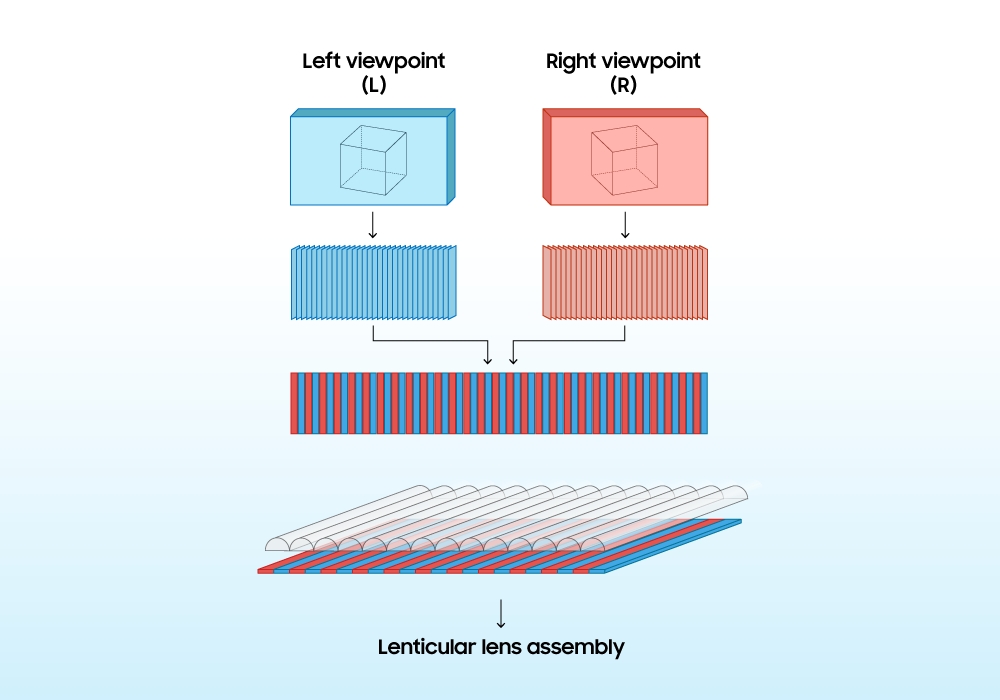
This hybrid approach avoids the blurring typically associated with traditional 3D displays and enables spatial effects without the need for bulky hardware. Content production is handled via Samsung’s cloud-based VXT platform, where an integrated AI Studio automates much of the preparation process. For the 3D effect to work, image data must be broken down into micrometer-scale segments – a step that, according to Samsung, significantly reduces the traditionally high cost of producing 3D content.
Portfolio expansion planned by year-end
The hardware itself dispenses with large enclosures or holographic boxes, making it easier to integrate into existing retail environments. Samsung’s goal is to bring immersive visual experiences to the mass market without structural barriers.
The company sees primary use cases for its glasses-free displays in retail, gyms, and educational settings, where spatial effects are expected to boost viewer engagement.
So far, the system is available as an 85-inch model. However, Samsung plans to expand the lineup by the end of 2026 with smaller 32- and 55-inch versions, opening up applications in