Programmatic DooH continues to climb globally, driven by AI, data, and growing ROI confidence — with Germany leading in adoption. These are the key findings of Viooh’s 2026 “State of the Nation” report.
Viooh State of the Nation 2026: Global Surge Continues for Programmatic DooH
Programmatic digital out-of-home (DooH) advertising continues to gain momentum worldwide, according to a survey by Viooh, the SSP belonging to global OoH market leader JC Decaux. The findings are summarized in the 2026 edition of its “State of the Nation” report.
The survey included 1,050 companies globally, with first-time participation from Saudi Arabia, Qatar, and the UAE. Unlike the last survey, no German companies were included. After six years of research, Viooh considers the German market a global leader in Programmatic DooH adoption, making further growth tracking in Germany less meaningful.
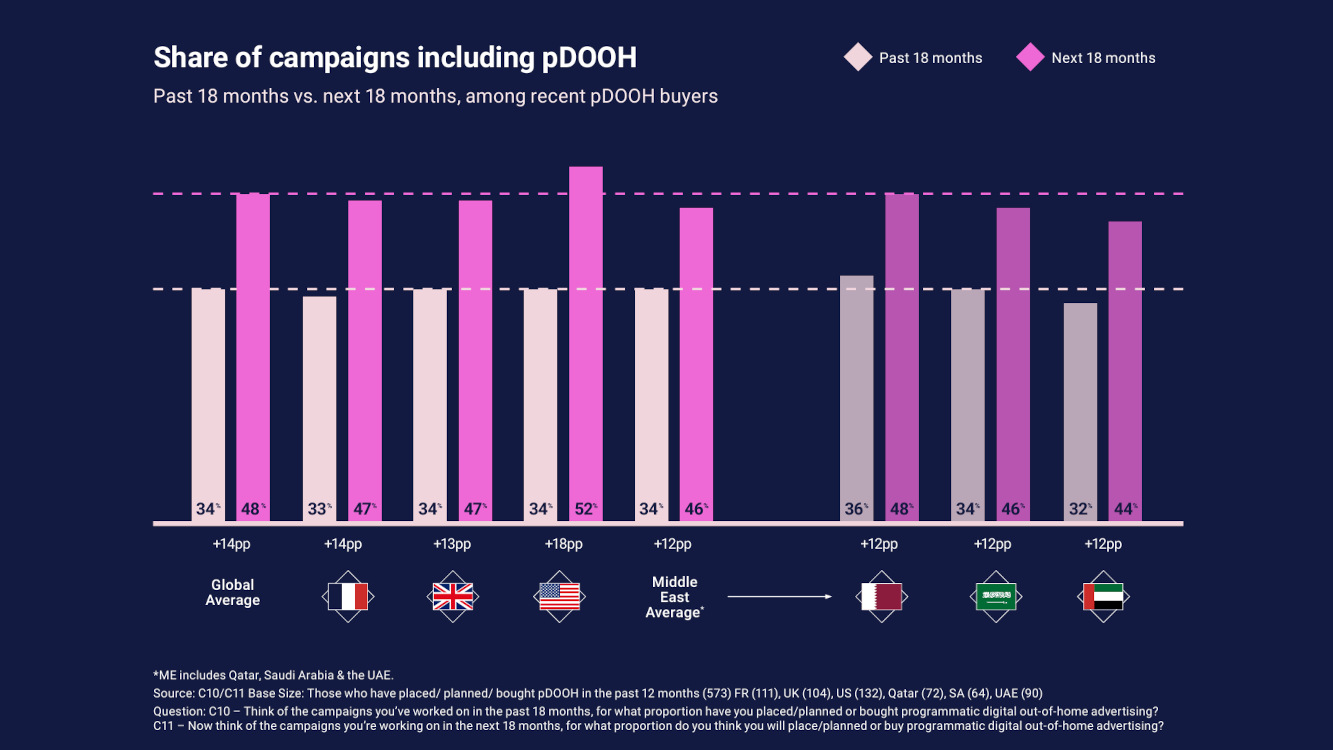
Globally, responses indicate continued positive trends for Programmatic DooH. Nearly one-third of surveyed companies already use programmatic in their DooH campaigns, and this is expected to grow to a 48% share within the next 18 months.
U.S. leads in campaign growth
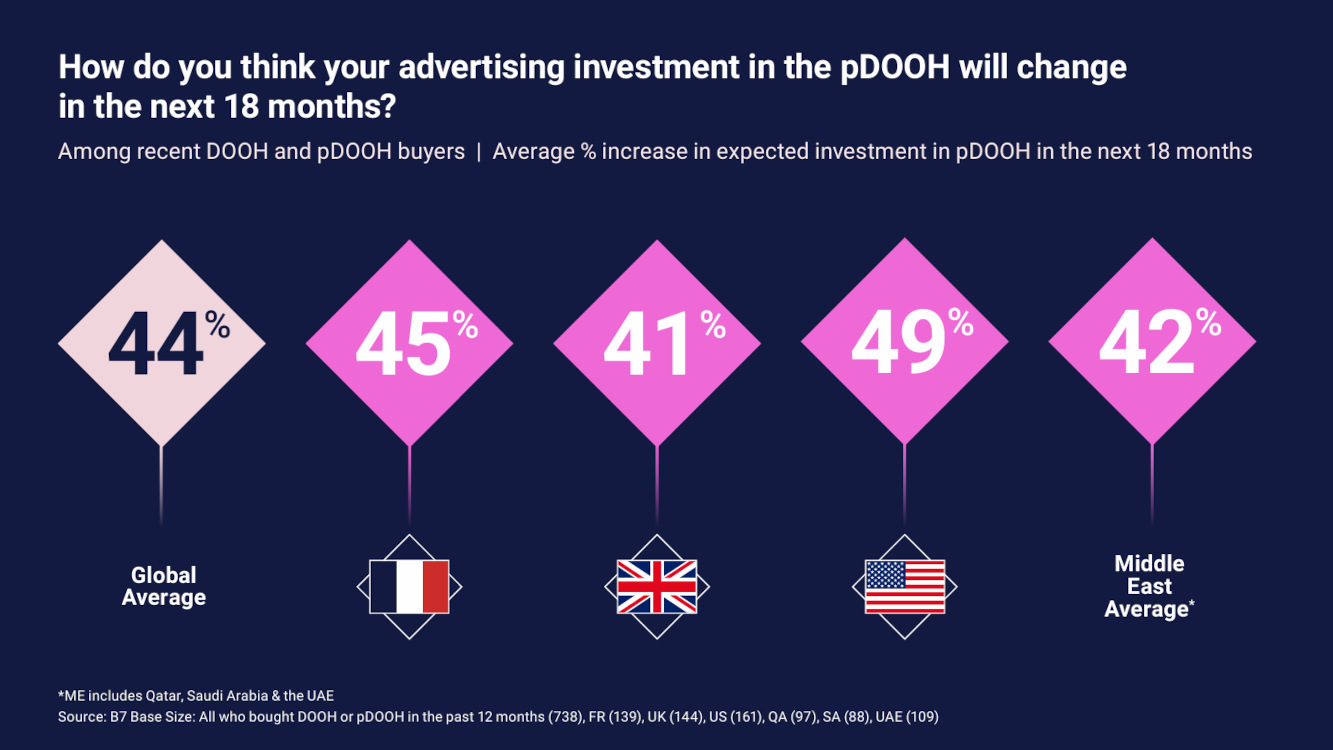
Driving this growth will require budget increases. The survey shows an expected average investment rise of 44%. The U.S. is projected to see the strongest campaign growth, with respondents anticipating an 18 percentage point increase in Programmatic DooH adoption.
Almost all companies (99%) that have already implemented Programmatic DooH plan to maintain or increase their investments, mostly by reallocating budgets from other digital channels, including traditional DooH. Dedicated Programmatic DooH teams are helping fuel this trend — companies with such teams are more likely to release new budgets.
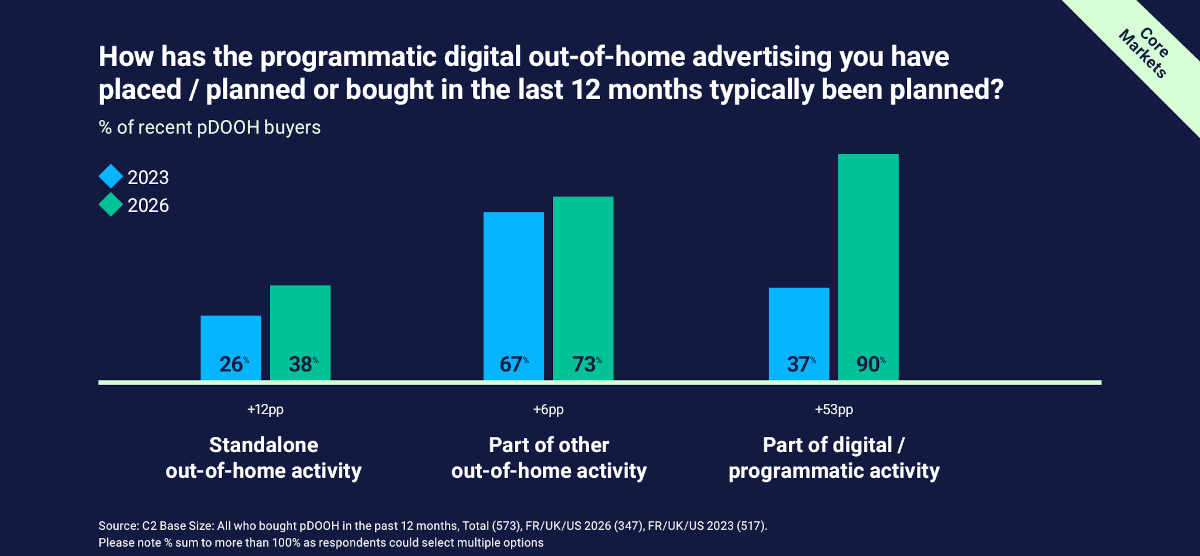
Programmatic DooH is increasingly a core part of digital media plans. In key markets, 90% of buyers now include the channel in their overall digital strategy, up from just 37% in 2023.
Rising confidence in ROI
Confidence in Programmatic DooH’s ROI is also growing. Sixty percent of respondents expect the channel to deliver measurable results — more than traditional DooH or OoH.
However, dynamic creative optimization (DCO) presents a paradox. The use of content dynamically adapted to external contexts dropped from 13% to 8%, even though 66% of respondents plan to expand their use of DCO. Companies cite lack of training, limited budgets, and scarce creative resources as the main barriers.
Sustainability in programmatic DooH
Sixty-two percent of respondents associate Programmatic DooH with a sustainable or eco-efficient approach, confirming the channel’s continued green image. However, sustainability is losing weight as a decision-making factor. In key markets — the U.S., UK, and France — only 15% of respondents now rank sustainability among their top three criteria, down from 32% in 2024.
AI has become a central part of campaign processes. Ninety percent of respondents already use AI in at least one stage, most commonly for creative generation, trend forecasting, and automated inventory selection.
Data-driven campaign planning is also on the rise. Sixty-eight percent plan to increasingly base campaigns on data. Large advertisers, with media budgets over €150 million, are leading the charge: 41% identify first-party data integration as the key lever for boosting Programmatic DooH investment.