
Delhi | The Middle East is experiencing one of its toughest logistics crises in decades - with blocked sea routes, overloaded ports, and skyrocketing air freight costs disrupting everything from food supply to digital signage hardware. As megaprojects stall and demand collapses, the region’s famed resilience will be tested long before recovery arrives later in the year.
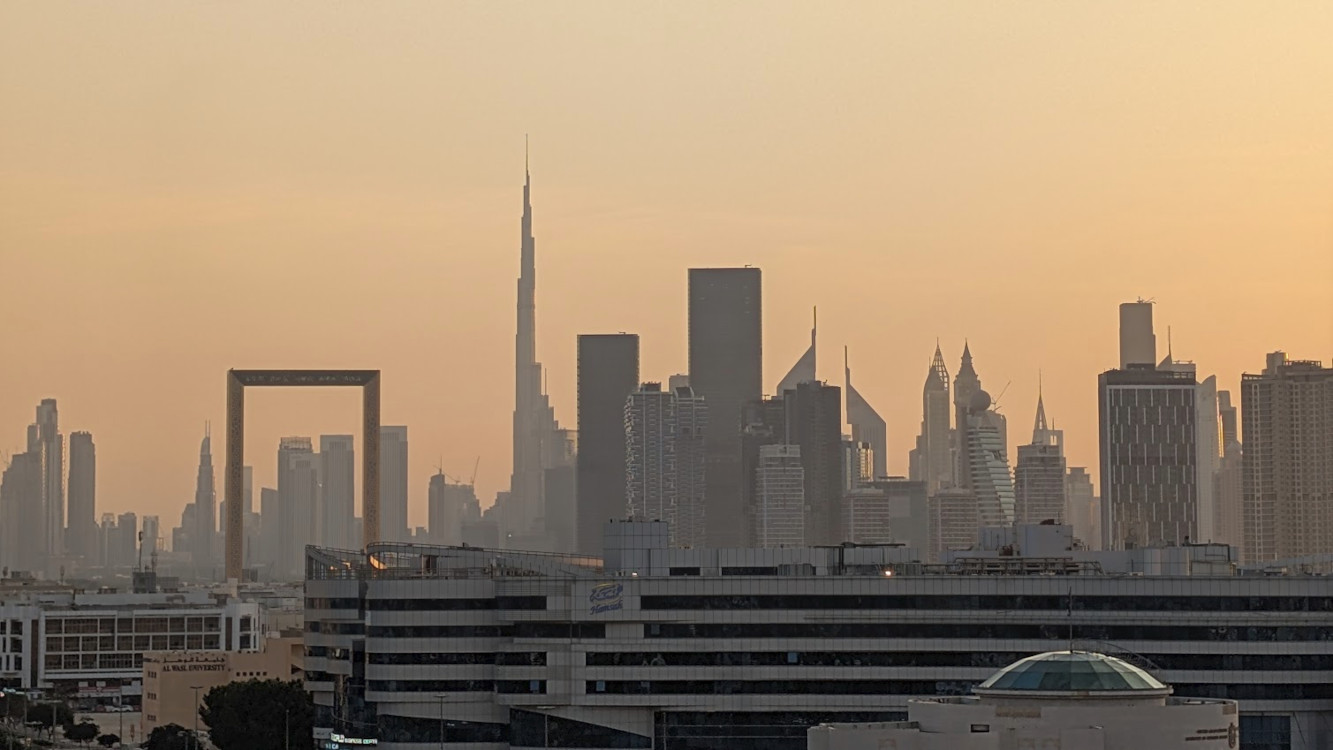
The Gulf’s Supply Crisis: From Food to Screens
India has long been one of the Gulf region’s most important trading partners — not only for construction materials, consumer goods, and even electronics, but above all for food. Large parts of the fresh produce found on the shelves of retailers in Dubai, Doha, and Riyadh originate from India. But since the outbreak of the Iran–Iraq conflict, the familiar transport corridors have collapsed almost overnight. And in times of crisis, creativity becomes a survival strategy – not only for food logistics, but also for digital signage.
Air Freight Instead of Sea Freight – The New Normal
What seemed unthinkable just a few weeks ago has now become routine: major UAE-based supermarket chains such as Spinneys and Lulu are chartering aircraft to fly in basic food supplies. Traditional sea routes – normally the backbone of Gulf logistics – have become unpredictable, slow, or simply unusable. The Strait of Hormuz is effectively impassable, and alternative ports are either overloaded or located thousands of kilometers from the UAE.
Europe is now experimenting with a radically different solution: 6,000‑kilometer truck routes crossing up to nine countries, including Egypt and Saudi Arabia, before reaching the UAE (Economic Times). Hardly a romantic road‑trip – but in the current climate, one of the few functioning supply chains. The overland journey takes nearly three weeks, roughly equivalent to sea freight under normal conditions. The problem: available ports are congested, and handling times have ballooned.
Digital Signage Caught in the Same Bottleneck
While food shipments take priority, digital signage hardware is suffering the consequences. From India, trucking is not an option. That leaves two choices: expensive and capacity‑limited air freight, or rerouting via distant ports with long overland legs.
The result is predictable and painful: Sea freight delays of several weeks, Significant surcharges across all shipping lanes and Highly unreliable delivery schedules
And it gets worse: according to invidis research, demand for new screens, media players, and infrastructure has almost collapsed. With no visibility on supply timelines, many end customers are simply postponing or freezing procurement. Hardly anyone expects a meaningful recovery before autumn.
Megaprojects on Hold – and Mall Traffic Down 40%
The Gulf region’s reputation for mega‑developments is well earned. But even Saudi Arabia’s most ambitious projects cannot escape reality. Several construction and digital transformation initiatives have been paused, reevaluated, or slowed.
Automotive imports have also been hit hard – manufacturers are unable to transport vehicles into the region. With one exception: wealthy Gulf residents who simply fly in their custom Ferraris, as the Financial Times reported this week.
Trade fairs and events across the UAE and Saudi Arabia are in limbo. Some are postponed, others cancelled entirely. Shopping malls – which depend heavily on tourism, business travel, and high‑spending transit customers – are reporting revenue drops of around 40%.
A Region Built on Resilience – But 2026 Will Be Difficult
Resilience is one of the Middle East’s greatest strengths. The region recovered quickly after the 2008 financial crisis and after Covid. It will recover again. Nobody believes in a quick pollical solution between Iran, Israel and the U.S. – even though everyone hopes for one. Until then, logistics will remain the defining challenge for the Gulf market: unpredictable, volatile, and expensive.