
New York City | The blockade of the Strait of Hormuz is rapidly turning the Iran war into a global supply‑chain crisis, with the digital signage industry already facing rising prices, tightening component availability, and sharply higher logistics costs. As Asia’s energy shortages ripple into Europe and North America, the outlook darkens by the day - and the industry must brace for prolonged disruption.

Global Impact: Iran War Blockade Hits Digital Signage
Two weeks after the outbreak of the Iran war, the consequences for the global economy are becoming clearer each day, and the digital signage industry is increasingly being drawn into the widening supply‑chain crisis. With the Strait of Hormuz – one of the most important trade arteries for oil, gas, and industrial gases – still blocked, the initial hope for a quick resolution has evaporated. Instead, tensions are escalating, and the disruptions originating in the Gulf are now reaching Asia, Europe, and even energy-independent North America.
Oil Market Turmoil: Prices Surge, Shipping Routes Collapse
The pressure began with rising diesel prices and immediate disruptions to shipping routes. But the effects have already grown far beyond logistics. Shipping insurance premiums for any passage near the Arabian Peninsula have reportedly multiplied by a factor of twelve, causing many carriers to reroute vessels or suspend services entirely. Global oil prices have soared by up to sixty percent at their peak. The International Energy Agency in Paris described the current situation as “the largest supply disruption in the history of the oil market,” noting that roughly one‑fifth of global oil demand has effectively disappeared from the market.
Hardware Costs Rise: Media Players, Storage, and Chips Under Pressure
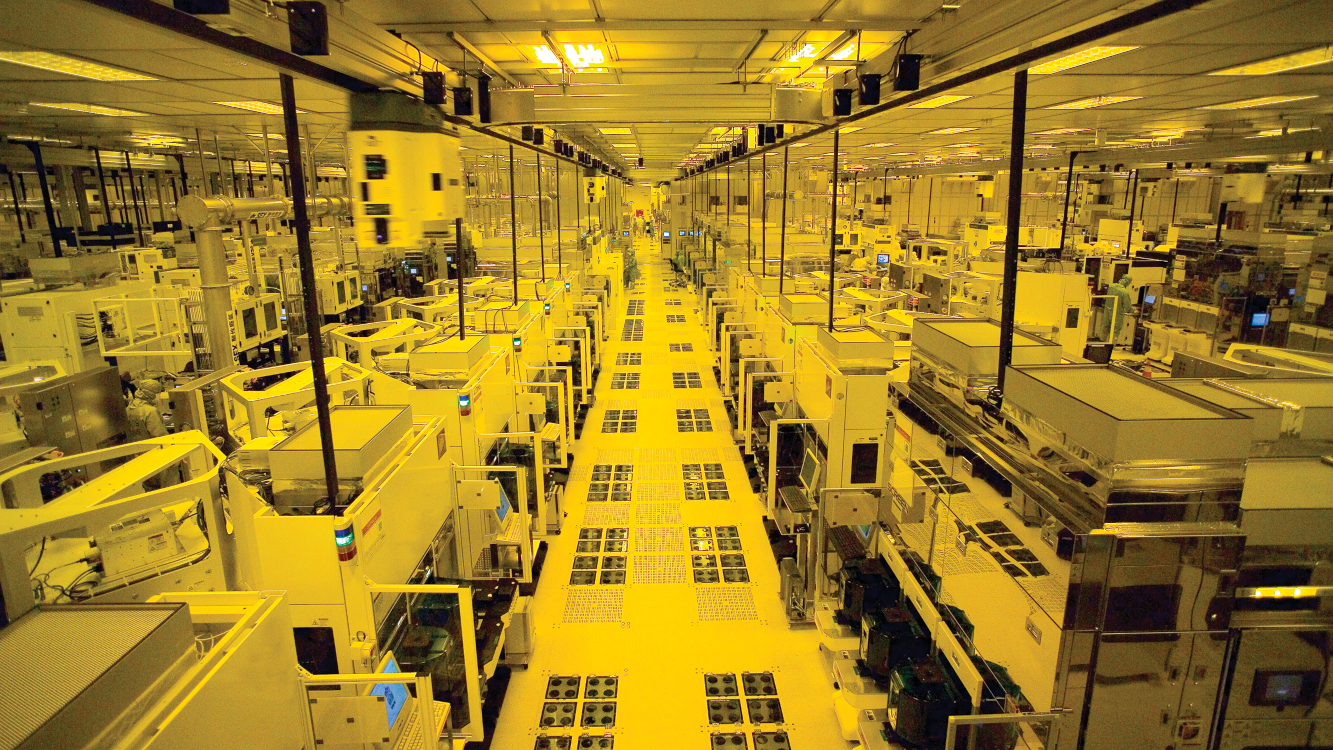
Asia, the manufacturing backbone of the global digital signage sector, is feeling the impact severely. Many production countries – including China, Taiwan, Vietnam, Malaysia, and Indonesia – rely heavily on liquefied natural gas and helium imports from the Gulf.
As shipments stall, computer and media‑player manufacturers have already raised prices by around ten percent, while storage prices continue to skyrocket due to the unrelenting global demand created by AI data‑center expansion. A renewed chip shortage is becoming increasingly likely, particularly because Taiwan depends on helium and LNG from the region to maintain semiconductor output. Energy shortages could soon disrupt digital signage hardware production across Southeast Asia, putting additional strain on global availability.
Iran War Blockade Hits Digital Signage
We are taking current foreign policy events as an opportunity for a virtual exchange with invidis readers and consulting clients. invidis’ Florian Rotberg and Stefan Schieker will provide you with an update and answer your questions, which you can submit during the livestream.
Register for our free webinar Retail in Turbulent Times: Trends, Tech & the New PoS Power Play – due to current events including latest updates about industry reactions, price hikes and cyber security attacks,
Monday 16 March 2026 at 14 CET / 9a ET
Ripple Effects in Europe and North America: Logistics Becomes a Cost Driver
Not only the Middle East, but Europe and North America are beginning to feel the downstream effects. Even before components become scarce, project pricing is already shifting upward. The digital signage market, which has traditionally been less sensitive to logistics costs, is now also exposed by rising logistic costs. With diesel prices soaring and freight forwarders facing severe cost shocks, transportation is rapidly becoming a critical budget factor. Since roughly 85 percent of global goods are transported by diesel trucks – which remain the backbone of the supply chain – cost increases are passing through to almost every product category.

Material Shortages Spread: Chinese Suppliers Pull Back
The strain extends beyond energy and chips. Various industries report that some manufacturers have already received rejections from Chinese suppliers for key materials. China relies far more on Middle Eastern energy imports than Europe. It remains unclear whether Chinese suppliers will scale back production or prioritize domestic customers, but both scenarios would further tighten access to essential materials widely used in digital signage.
Looking ahead, the economic outlook depends heavily on how long the Strait of Hormuz remains closed. Goldman Sachs has modelled several scenarios. If the blockade lasts thirty days, oil prices are expected to remain at the already elevated range of around one hundred dollars per barrel. Should the disruption persist for two months, prices could rise to one hundred ten dollars; at four months, analysts project spikes up to one hundred forty dollars – a historic high. These levels are not yet reflected in current macroeconomic forecasts, which still assume growth rather than a recession. However, prolonged energy shocks of this magnitude would significantly reshape that outlook.
Industry Consequences: Rising Prices, Delayed Rollouts, Uncertain Timelines
For the digital signage industry, the implications are increasingly unavoidable. Hardware prices are rising, delivery times are lengthening, and supply reliability is deteriorating at every step of the chain. Integrators and solution providers must now prepare for volatile lead times and re‑evaluate project schedules and pricing models. Media owners, retailers, and end customers will feel the effects in delayed rollouts and higher overall system costs.
The pressure on the digital signage market is not only coming from disrupted supply chains – demand will be softening as well. Retailers and other end customers will increasingly postpone orders and delaying rollouts amid uncertainty about their own business outlook. In the crisis‑affected regions, a cash crunch appears inevitable, but businesses in Europe, North America, and Asia might likewise shifting toward financial caution and deferring investments. As a result, the market should expect noticeably weaker demand for digital signage solutions in the coming months.
Even in the best‑case scenario – a quicker‑than‑expected end to the conflict – supply chains will require months to normalize. Stock levels are already thin, factory schedules are disrupted, and logistics networks are under strain. The reopening of the Strait of Hormuz would alleviate the situation, but the economic aftershocks will ripple through the system for a long time.
What is becoming increasingly clear is that the global digital signage industry is entering a period of prolonged uncertainty. The decisive factor now is time – and with each passing day, the consequences of the blockade grow more severe. Not always directly to digital signage businesses, but certainly to digital signage end-users impacting demand.
North America: Stratacache Layoffs Signal Rising Pressure on Digital Signage Market
The economic and geopolitical turbulence affecting North America is beginning to ripple through the digital signage industry. The ongoing Iran war – combined with the Trump administration’s punitive tariffs – is creating a challenging environment for hardware‑driven businesses. One of the first major indicators of these pressures is now coming from Stratacache.
For several days, rumors circulated across the North American digital signage ecosystem as the industry began receiving numerous job applications from former Stratacache employees. By mid‑week, CEO Chris Riegel confirmed the reports in a statement to the Dayton Daily News: “We are doing some layoffs to reduce costs. The continued challenges with tariffs and the global memory spike/supply chain availability difficulties are certainly headwinds.”
Stratacache did not disclose specific numbers, stating only that layoffs at its Ohio sites remain below the 50‑employee reporting threshold for the month. However, the company operates across multiple U.S. states and in Canada – each with its own labor reporting requirements. This means the total number of affected employees may be higher than publicly disclosed.
Within the industry, speculation over a significantly larger wave of layoffs has intensified. These figures cannot be substantiated, nor can rumors regarding potential difficulties with Stratacache’s Retail Media Network customers. Yet observers note that multiple macroeconomic factors are converging at the same time, putting pressure on many market participants.
Tariffs, increased costs associated with global trade disruptions, and sharply rising memory prices are all affecting hardware-heavy digital signage suppliers. At the same time, the global hype around Retail Media Networks is settling into a more realistic phase as brands and retailers recalibrate expectations and investment volumes.
Against this backdrop, Stratacache’s cost-cutting measures may reflect broader structural tensions within the North American market. While the company has long positioned itself as one of the sector’s most resilient players, the current layoffs suggest that even industry leaders are not immune to macroeconomic headwinds.
For the wider U.S. and Canadian digital signage community, the development serves as a clear reminder: the competitive landscape is tightening. Companies across the value chain should prepare for continued volatility as economic and political uncertainty persists.