Düsseldorf | Euroshop has always been a place where the retail industry stages its most polished visions – what one invidis client aptly called a “better‑than‑reality world.” But the perfectly orchestrated concepts often feel far removed from the messy, time‑pressed, and budget‑constrained reality inside stores. Nowhere is this gap more visible than in the current conversation about AI. Everybody talked about it at Euroshop, but what does AI actually mean for everyday digital signage workflows?
Euroshop 2026: “AI Expectations Are Sky‑High”
To understand the practical implications, we spoke with digital signage specialist Echion on opening day. With the halls still quiet, there was time for deeper conversations about how AI is reshaping the collaboration between agencies, solution providers, and retail clients.
AI: high demand, even higher expectations
According to Echion’s Denise Grell, AI has become the defining topic of retail communication. Curiosity is immense and customer demand is surging, but the industry is still early in its adoption curve. Many retailers are only now exploring what AI could mean for their workflows – and they are looking for guidance rather than tools.
Yet, expectations are already sky‑high. Many retailers believe AI will drastically accelerate creativity, boost efficiency, and reduce manual effort overnight. But in day‑to‑day operations, the picture is more nuanced.
AI in customer communication: helpful, but not yet fast enough
AI excels in multilingual, fact-based content creation – a huge advantage for national and international retail networks that need consistent messaging in multiple languages. It can draft variations of content, create information snippets, and even generate internal announcements. “AI is made for Instore Radio and Echion uses it extensively”.
But interaction speed remains a limiting factor. Real‑time use cases, such as interactive customer support or storefloor assistance, often require sub‑second response times that cloud‑based AI still struggles to deliver. And when it comes to brand safety and CI compliance, retailers still prefer accuracy and consistency over speed. Faster is only better when trust is guaranteed.
AI avatars in‑store: support, not replacement
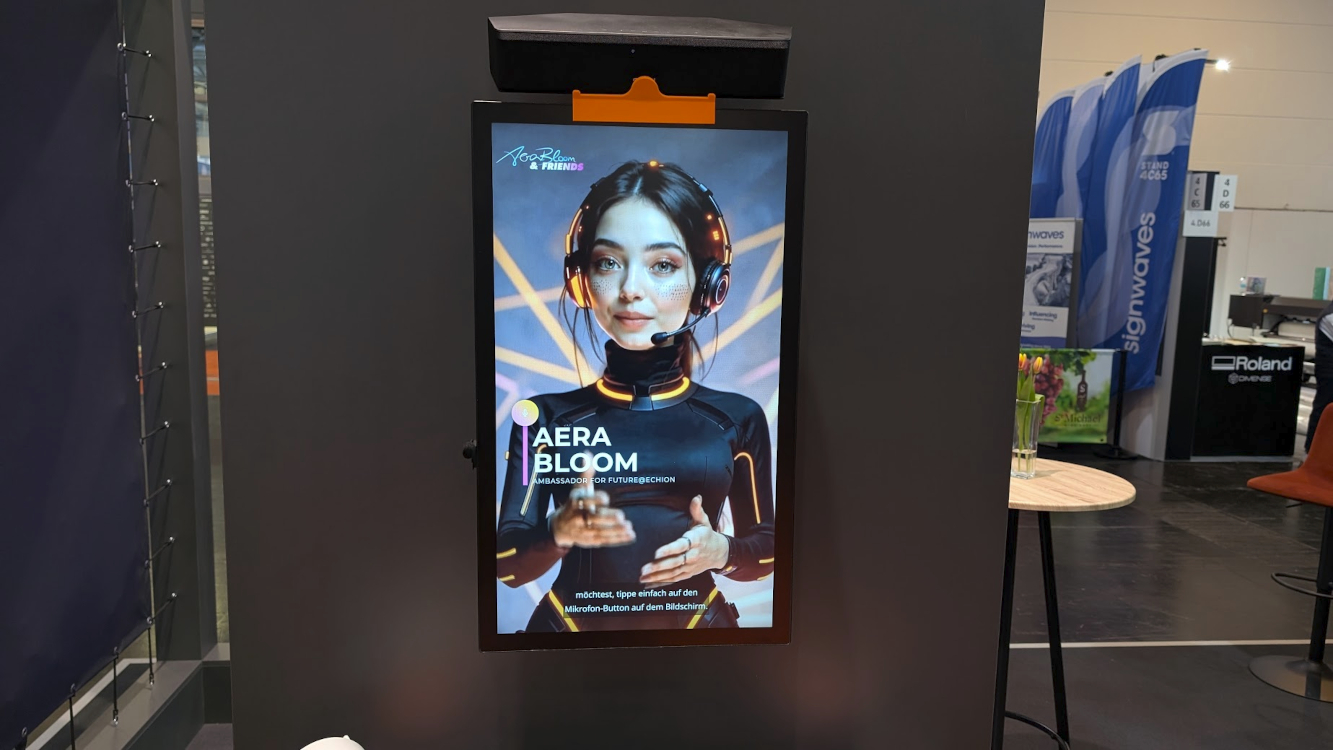
AI-powered avatars are another trend at Euroshop. But Echion stresses that these digital helpers are designed to support staff, not replace them – especially as the number of sales employees continues to shrink.
Avatars like Echion’s Aera Bloom living in the platform Aera Bloom & Friends can help with product questions, internal queries, and even visual assistance. They work well in familiar Lift & Learn scenarios or embedded in guided customer journeys. However, they cannot replace the emotional, interpersonal element that customers still expect – and where AI currently falls short. Chatbots remain a source of frustration, and retailers have learned from e-commerce that technological convenience cannot compensate for a lack of empathy.
Emotional boundaries still slow down AI
AI also faces practical constraints. Emotional nuance and foreign language fluency continue to be stumbling blocks. AI-generated output often lacks the subtlety and cultural sensitivity required for customer‑facing communication.
Between hype and the shopfloor
Euroshop 2026 shows clearly that AI is everywhere – in conversation, in demos, in prototypes. But the reality in stores is more grounded.
Retailers want AI, but they want it responsibly. They want automation, but not at the expense of brand identity. And they want innovation, but only where the operational impact is tangible. And they guidance from trusted agency partners like Echion.