
Munich | The defense industry is stepping out of the shadows and into the streets - literally. At the Munich Security Conference, towering OoH campaigns signaled a new era of public-facing defense communication.
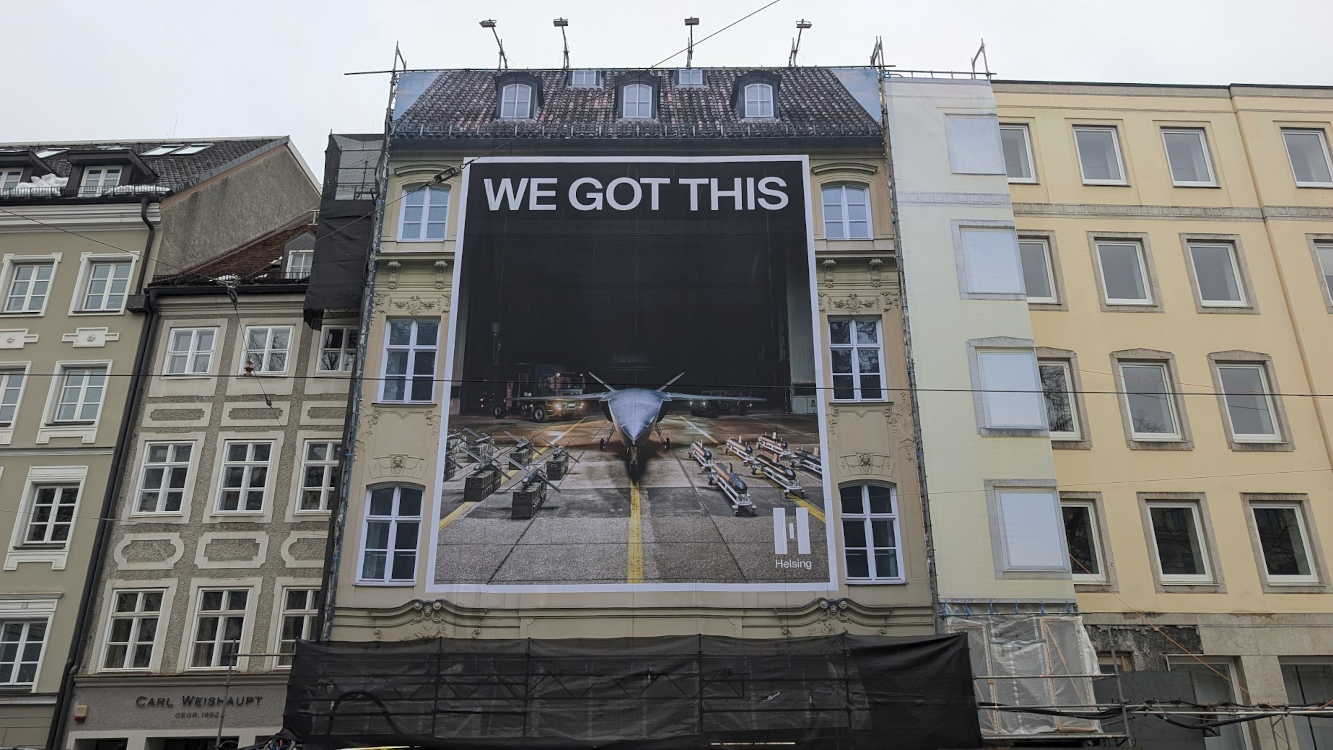
OoH: Defense Sector Discovers Public Spaces
The defense industry is undergoing a profound transformation. Once shaped by post–Cold War downsizing, long and highly specialized procurement cycles, and a discreet “just‑in‑time” production logic, the sector is now emerging as the industrial and technological backbone of national security across Europe and beyond.
Russia’s war against Ukraine and rising geopolitical tensions have pushed defense back to the top of political agendas. Governments are accelerating procurement, expanding industrial capacity, and pouring investment into new technologies. And with that shift, defense companies are stepping out of their traditionally low-profile corner – including into the most public of all channels: Out-of-Home advertising.
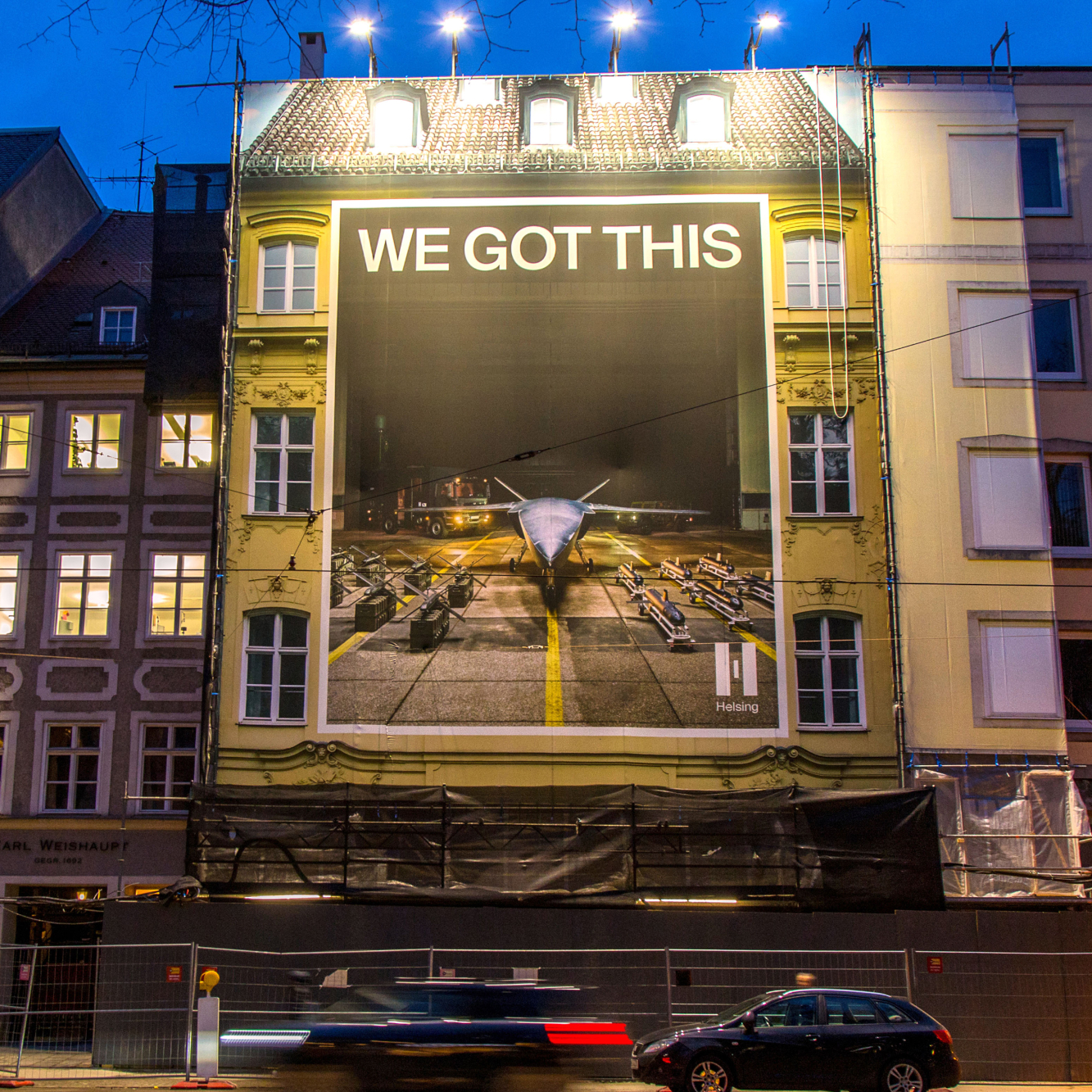
Nowhere was this shift more visible than at the recent Munich Security Conference. Historically, defense firms kept their branding subtle and their communications behind closed doors. This year, however, Munich’s cityscape became a stage. Directly opposite the conference hotel, an oversized blow-up façade installation showcased Helsing’s AI-enabled autonomous drone systems.
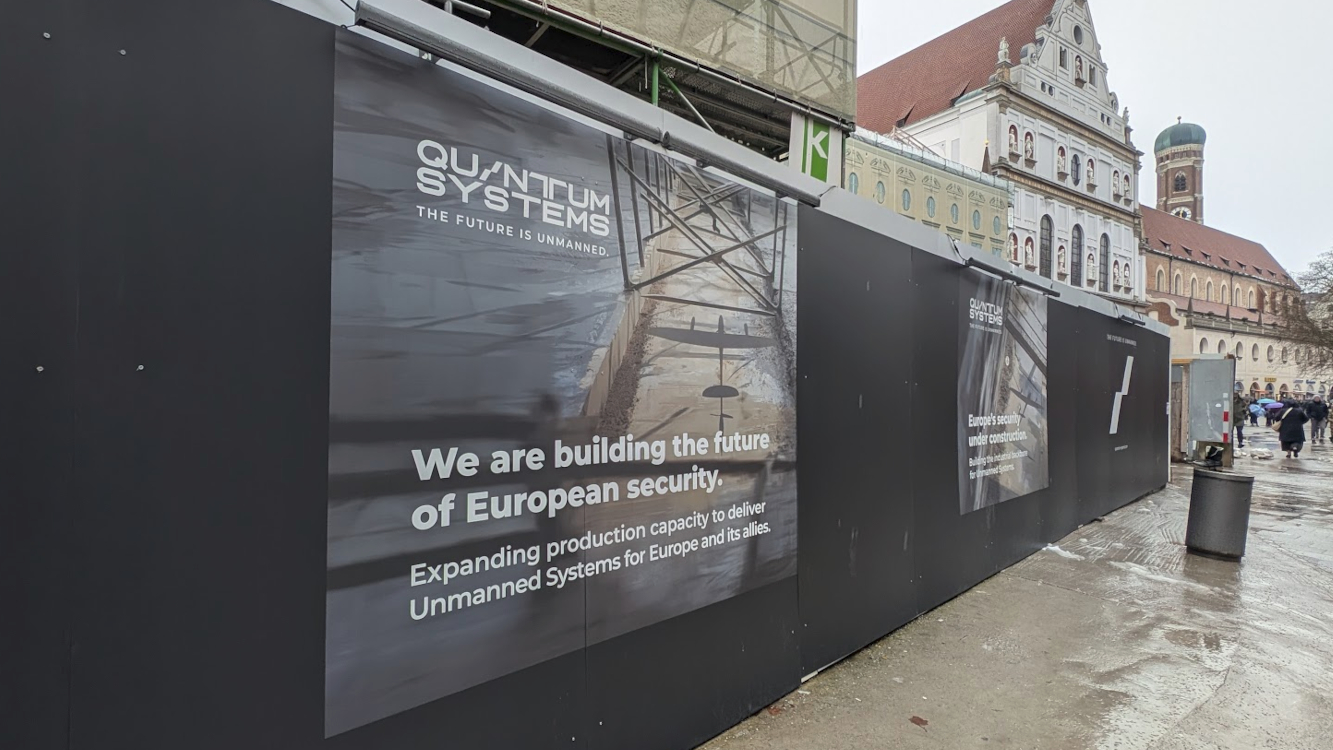
A few steps away, construction fences were wrapped in campaign visuals from Quantum Systems, the Munich-based drone manufacturer and Helsing competitor. What until recently would have been unthinkable – defense tech companies engaging in highly visible public advertising – has become a strategic communication tool. Public advertising becomes not just a sales tool but a recruitment strategy, targeting audiences that rarely considered defense an attractive sector.
The shift toward public communication does not make defense marketing any less complex. Procurement cycles stretch over years and involve ministries, armed forces, parliaments, auditors, and international partners. Communications must follow strict regulatory frameworks that govern how companies interact with government agencies.
And while public exposure can help build legitimacy, it also invites political scrutiny and societal debate. In this environment, reputation and reliability often matter as much as technical performance. Companies must balance the need for visibility with the sensitivities of an industry in which national priorities, ethical considerations, and geopolitical implications influence every message.
What is unfolding in Munich may be an early glimpse of a broader transformation. As defense returns to the center of political and industrial attention, companies are entering the public arena to define who they are, what they stand for, and how they contribute to Europe’s security architecture. Out-of-Home advertising – a medium not traditionally associated with defense – has become an effective and surprisingly natural channel for an industry in transition.
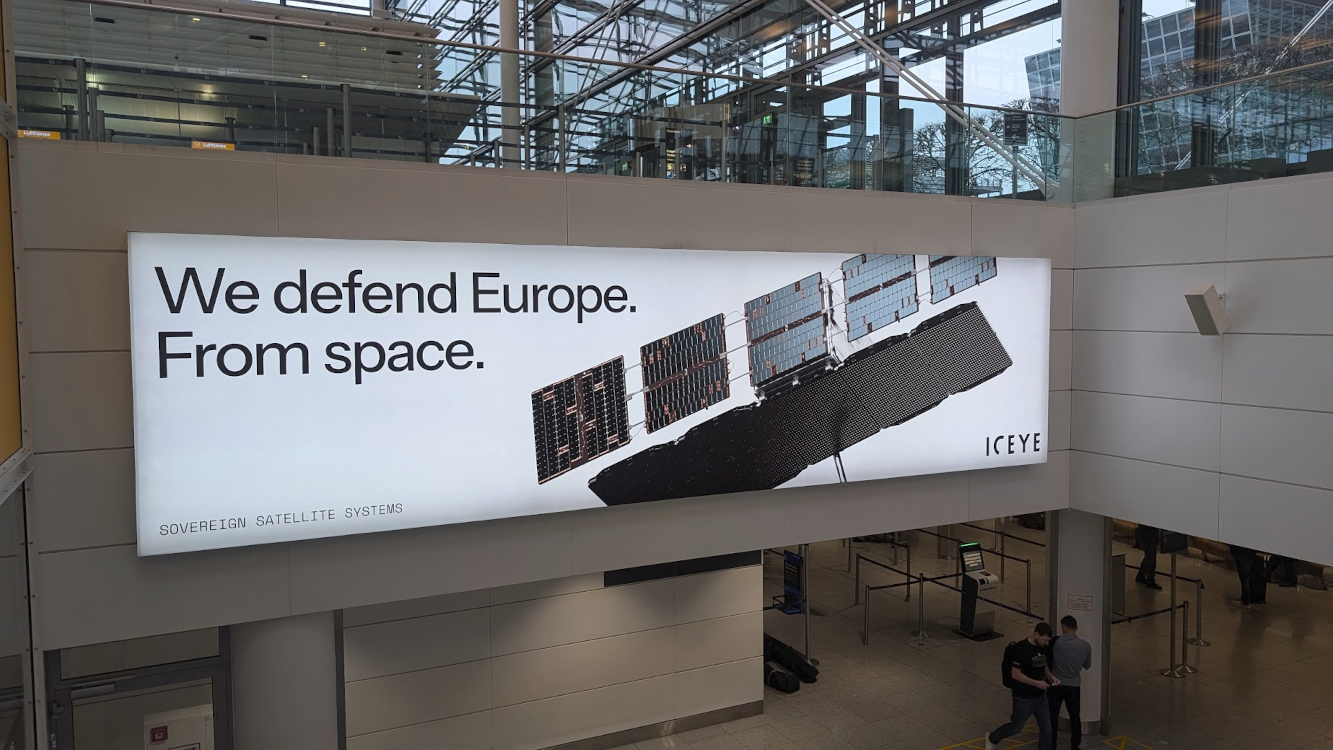
Another next-gen defense business advertised at Munich Airport during the Munich Security Conference. Rheinmetall/Iceye – the Finnish / German manufacturer and operator of synthetic aperture radar (SAR) satellites – recently won a EUR 1.7bn Bundeswehr contract for space reconnaissance.
The Bundeswehr has commissioned the joint-venture to supply the German Armed Forces with space-based reconnaissance data via exclusive access to a synthetic aperture radar (SAR) satellite constellation. The current contract is valued at approximately €1.7 billion gross. The space-based reconnaissance data will be used, primarily, to protect the ‘Lithuania Brigade’ and secure NATO’s eastern flank.