
Barcelona | ISE 2026 highlighted the first AI-enabled digital signage CMS workflows that offer tangible benefits. From guided content creation to assistants that connect signage with broader enterprise systems, AI is moving from experimental to practical.

ISE 2026: The AI Revolution Finally Hits the Digital Signage CMS
What we expected to see at ISE 2026 two years ago, we finally saw in Barcelona this year. The first tentative attempts to integrate AI into digital signage CMS platforms now feel like a distant prelude. Back then, AI features were often random experiments – sometimes flashy, mostly impractical, and offering little real efficiency for users.
Fast forward to 2026, and the landscape has shifted dramatically. With the rapid evolution of LLMs and, crucially, the emergence of agentic AI capable of letting platforms “talk” to each other through model context protocols (MCPs), digital signage CMS solutions are finally delivering AI-powered workflows that provide measurable organizational benefits. These platforms are no longer just automating signage tasks – they are turning digital signage into a data source that can drive decisions across the enterprise.
During ISE, I had the chance to see several demos firsthand, and the results were impressive. The tools are genuinely user-friendly, and the AI outputs are markedly better than anything we’ve seen before.
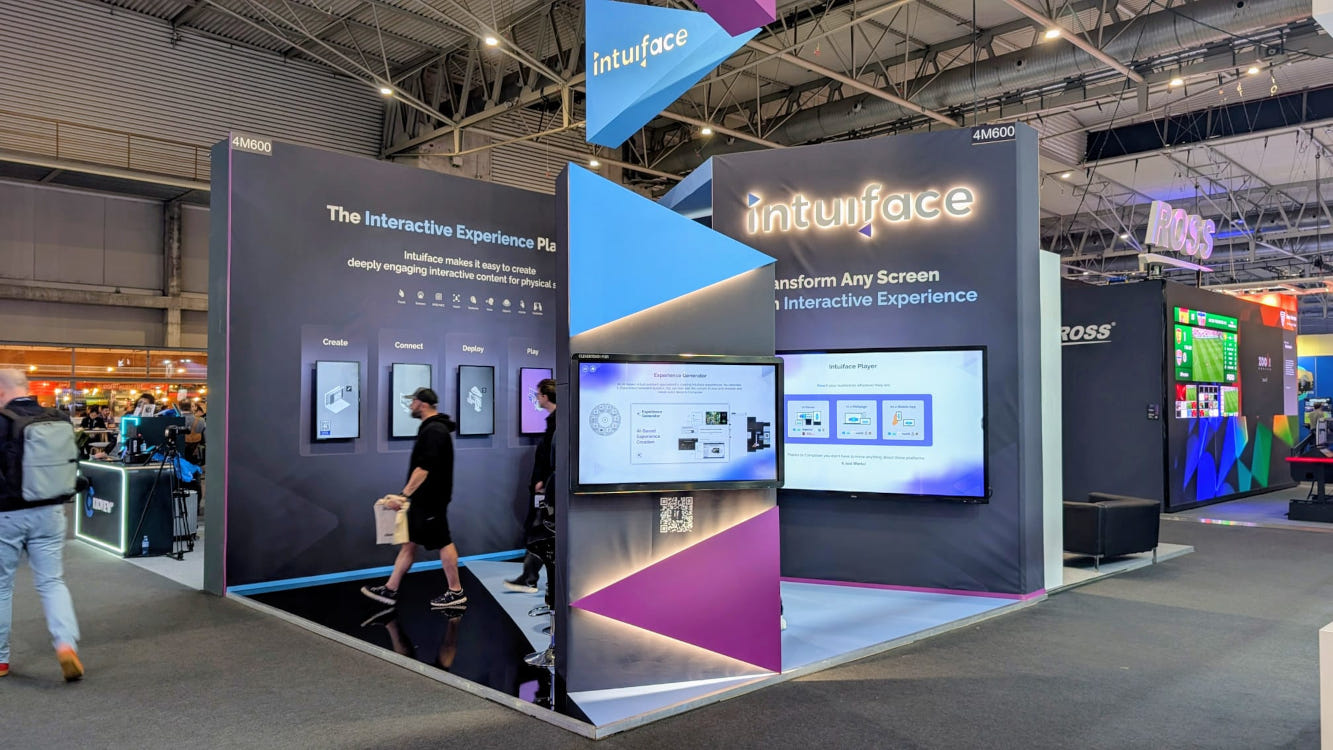
Take Intuiface, for example. Their Experience Generator is an AI-driven content creation tool specifically tailored for interactive signage. Unlike generic content generators, it produces content that aligns with Intuiface’s XML-based architecture, working seamlessly with sensors, voice interaction, computer vision, and complex orchestration rules such as conditional trigger/action syntax
Users need prompting guidance
What makes these AI workflows truly usable is guided prompting. Most users struggle with crafting effective prompts, but Intuiface has built mechanisms to refine and optimize input, lowering the barrier to generating meaningful content.
Assistants instead of tools
Korbyt is another example. Their workspace experience platform now incorporates multiple AI assistants capable of speaking to other enterprise tools. Concierge AI, for instance, integrates with Outlook to allow natural-language bookings of rooms, desks, and workspaces. Command AI monitors devices proactively, while Create AI and Curate AI assist with content creation and delivery – again leveraging guided prompting to make AI accessible and actionable.

Turning data points into actionable insights
But the platform pushing the envelope the most is Appspace. Beyond offering AI assistants, Appspace now allows users to build their own assistants without coding – a true “assistant builder.” This enables organizations to turn any data captured across touchpoints into actionable insights.
Appspace handles roughly 1.5 billion data points a year, which can now be processed and visualized through conversational AI. Pre-built assistants, like the Analytics Assistant, allow users to ask questions such as “show me the most popular meeting room.” The assistant doesn’t stop at reporting – it identifies the reasons behind the patterns and suggests concrete actions to optimize outcomes, like increasing bookings for underused rooms.

Appspace’s new data visualization engine further personalizes insights, allowing tailored dashboards rather than generic reports. As Thomas Philippart de Foy, Appspace’s Chief Innovation Officer, explains:
“Others may talk about AI agents for signage alone. Our assistants can understand what content was played on a screen and who was in the building to see it. That connection between digital content and physical presence is where real workplace intelligence starts.”
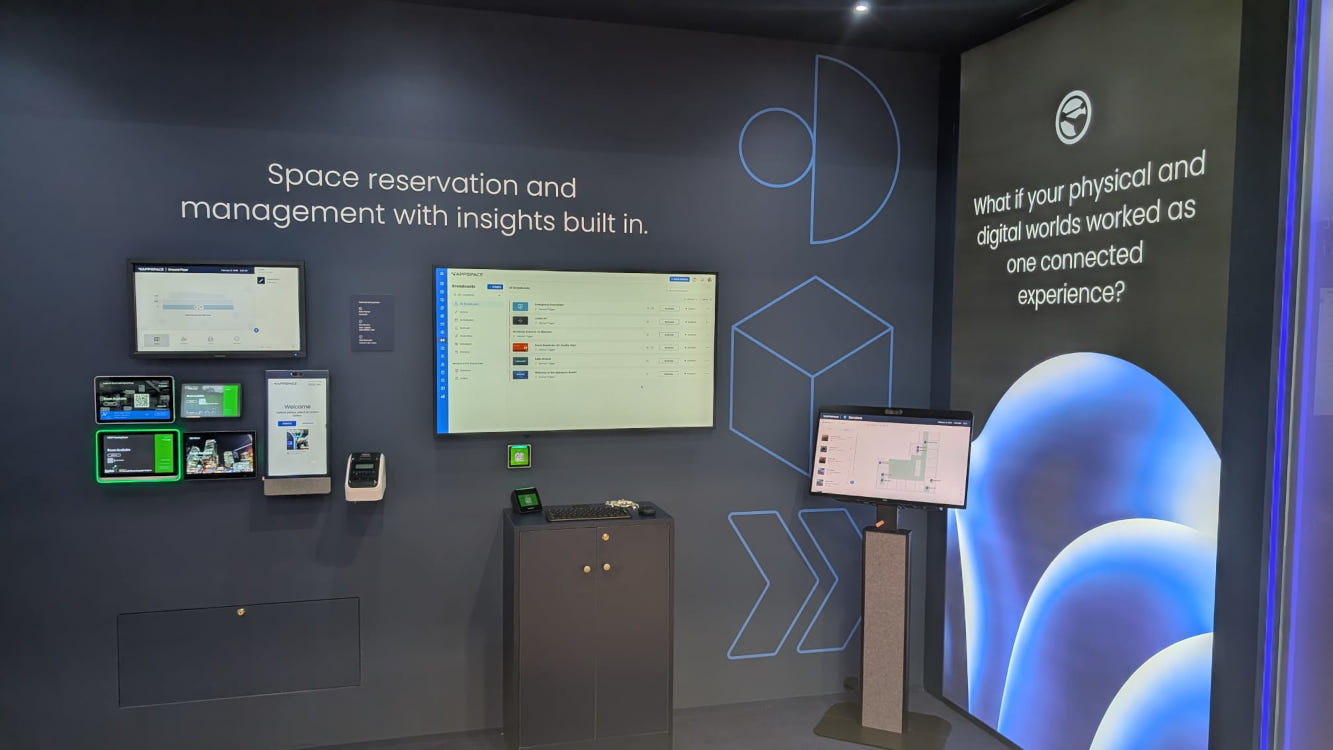
Through MCPs, these assistants integrate seamlessly with other enterprise systems. They can, for example, create tickets in ServiceNow or interface with building systems to trigger real-world actions. The first set of assistants is already available on Appspace, with the assistant builder and insights dashboards slated for launch next quarter.
What this means for the industry
- Content creation is becoming more sophisticated: AI is now embedded into workflows tailored specifically to digital signage.
- MCPs are the real differentiator: They transform isolated AI tools into fully integrated workflow engines.
- Digital signage software is becoming part of a larger AI ecosystem: The real value emerges when insights gathered from CMS platforms inform other enterprise systems, and vice versa, creating a feedback loop that optimizes content delivery.
- AI enables continuous optimization: Rigid, pre-defined tools are being replaced by systems that learn, personalize, and adapt over time.
After ISE 2026, it has become clear that the AI revolution in digital signage CMS has arrived. It’s no longer about novelty; it’s about actionable intelligence, seamless workflow integration, and content that truly responds to both users and the environment.