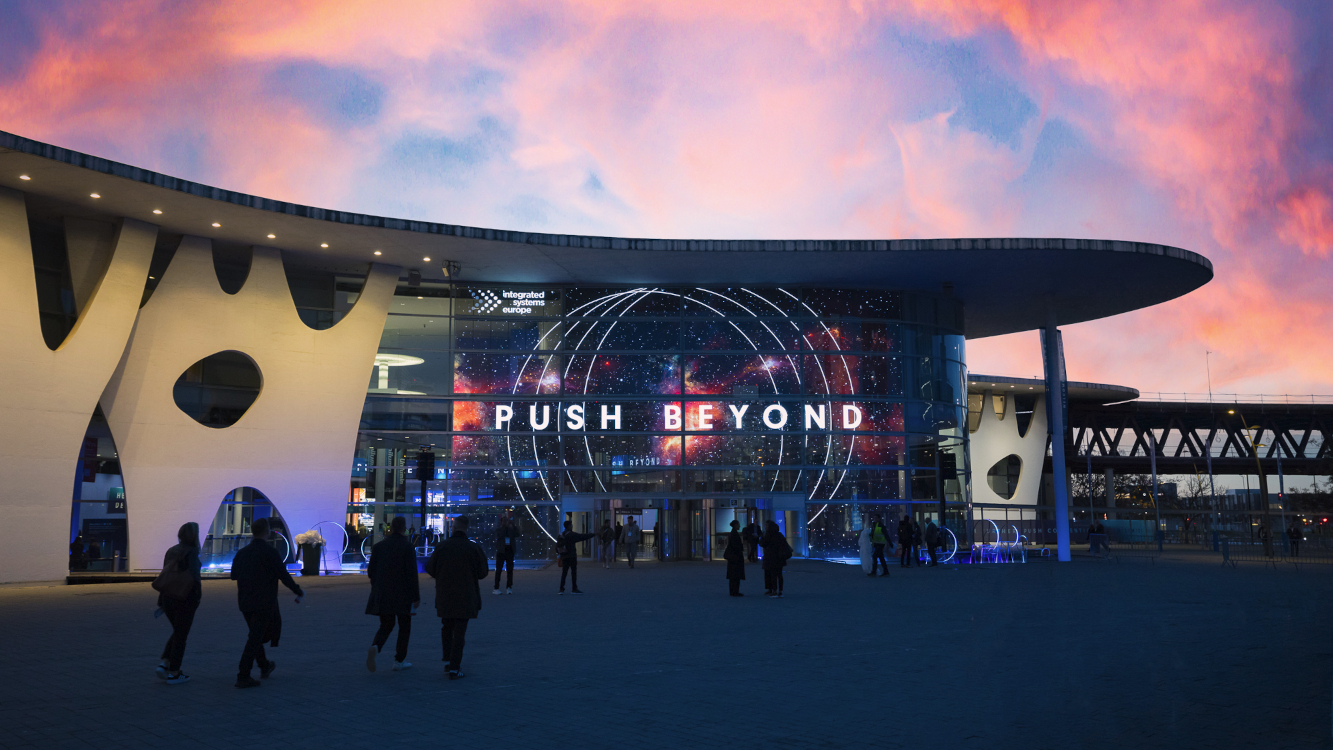
Barcelona | The digital signage industry is entering 2026 with renewed optimism. At this year’s ISE, the mood across halls and meeting rooms was noticeably upbeat. After a mixed 2025 marked by slow growth and widespread project postponements, many market participants now expect a clear upswing. Whether this confidence is fully justified remains to be seen - but several factors point in the right direction.
ISE 2026: The Top Five Digital Signage Trends
Across the industry, deferred projects are finally being executed in Q1. Economic sentiment, particularly in the DACH region, is improving. And in retail – a vertical responsible for nearly half of all digital signage deployments – retail media continues to expand rapidly. Ironically, even as brick‑and‑mortar retail struggles, retailers are accelerating investments in digital networks and monetizable media platforms.
Rightsizing in 2025 Reshaped the Competitive Landscape
Many providers spent the past year “rightsizing” their organizations. Vacant roles were left unfilled, and several international vendors enacted significant staff reductions. Senior leadership, creative teams, and software departments were most affected. Meanwhile, normal turnover in sales is energizing the job market. In short: the industry has recalibrated – leaner and ready for a new growth phase.
ISE 2026 showcased a hardware market focused on refinement, not disruption. LCD will continue to dominate digital signage as the “industry’s workhorse” for years to come. The technology is mature and “good enough” for most applications. Resolution improvements such as 8K remain unnecessary; instead, progress is happening in areas that only reveal themselves on close inspection: backlight performance, form factor depth, and bezel design. Samsung’s booth highlighted just how far LCD optimization has come.
Niche hardware made occasional appearances – a new record 130‑inch LCD panels and spatial displays among them – but LED and ePaper accounted for most of the genuine innovation.
2026: The Year Software Steps Out Front
Software was omnipresent across the show floor, including Samsung’s omnipresent VXT platform. More importantly, 2026 appears to mark a strategic shift: major display manufacturers are positioning software not as a CMS replacement, but as a complementary layer to partner ecosystems.
LG, Philips, Samsung, and others focused heavily on Remote Device Services, arguing that no one understands the hardware better than the companies that build it. A deeper analysis of these software strategies will follow on invidis this week.
LED Takes Center Stage – And Influences Buying Decisions
LED continued its steady rise in importance in the digital signage market. The show floor featured more curved formats, tighter pixel pitches, and emerging technologies including chip‑on‑glass.
A notable trend: brand trust increasingly influences LED procurement. According to Philips, many integrators and customers now choose the LED brand first – and then select LCDs from the same manufacturer to maintain consistency across their visual estate. As a result, providers offering both LCD and LED gain a competitive edge.
Single‑technology vendors, including many Chinese LED suppliers, face growing pressure as multi‑platform portfolios become the standard expectation. Philips currently generates 10% of its revenue from LED; the company expects that share to reach 20% in 2026.
A major behind‑the‑scenes topic at ISE was the sharp rise in memory component pricing. Memory costs have tripled since summer, and with memory already representing more than 10% of a display’s bill of materials, higher end prices are inevitable. Only the immense competition in the display market may limit higher priuce increases.
MDEP: Microsoft’s Android Ambition Shakes the Market
Microsoft’s new Android initiative – MDEP – was another hot topic, particularly in the UC industry. Some exhibitors even showed early digital signage displays running on MDEP.
The platform’s disruptive potential stems less from its technical capabilities and more from its mandatory quarterly update cycle, which contrasts sharply with the industry’s current norm of 12–24‑month update intervals. Established SoC providers, long focused on stability and long cycles, will feel the pressure. Further insights on MDEP’s digital signage implications will be available on invidis shortly.
92,000 Visitors: ISE Reinforces Its Role as the Global Meeting Point
ISE 2026 once again set new benchmarks: With 92,000 unique visitors and more than 210,000 visits across four days ISE 2026 was another record show. The show’s growing global relevance was particularly evident in the presence of international integrators. Econocom alone brought 130 employees to Barcelona.
One of the most notable strategic announcements – the launch of Diversified Digital, the new digital signage business unit of one of the largest US‑based integrators – took place at ISE. The show has not only become the global stage for announcements, but also more and more integrators participate with a physical presence. Diversified chose a large rooftop‑garden while largest US-competitor AVI-SPL was present with a booth in hall 2.
Conclusion: A Confident Industry – and a Truly Global Marketplace
ISE continues to strengthen its position as the world’s leading trade show for digital signage and professional AV. The event has become the annual meeting place for industry stakeholders – and increasingly for end customers exploring their digital strategies.
The sector enters 2026 with optimism, momentum, and a renewed sense of direction. Whether the year becomes the anticipated turning point remains to be seen – but the signals coming out of Barcelona suggest a promising start.