
Downtown retail rents in Germany’s major cities are rising sharply again, concentrating demand in fewer but more desirable locations. While premium hotspots boost investments in flagship‑level digital signage, Retail Media Networks are fueling an even bigger boom across supermarkets and big‑box retail.
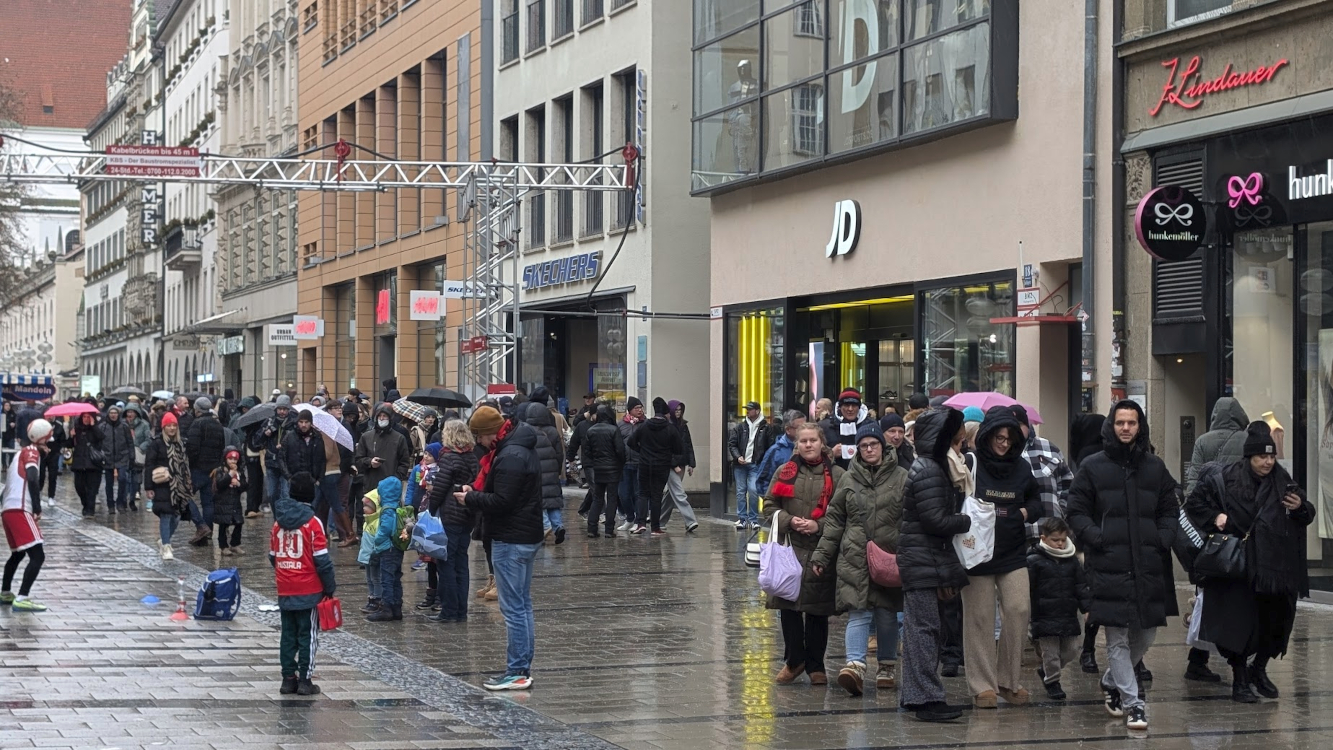
Germany: Downtown Retail Rents Rise Significantly
Retail rents in Germany’s major metropolitan areas are rising again. According to a new report by the German Economic Institute (IW), rents for prime inner‑city spaces increased by an average of six percent in 2025, significantly outpacing inflation. After several slow years, the retail property market is stabilizing, but with a renewed focus on only the most attractive areas. This dynamic creates both opportunities and challenges for the digital signage industry.
Prime Rents Outpace Inflation
The IW study, covering 16 German metropolitan cities, confirms that inner‑city retail is consolidating around highly attractive streets and plazas. While rents are rising broadly, the overall footprint of premium retail zones is contracting. The report finds that prime city‑center locations still command a rent premium of around 60 percent compared to typical urban retail areas. Although this premium has decreased since 2018, it remains most pronounced in Germany’s seven largest cities, where strong demand continues to push rents upwards.
This concentration underscores a clear trend: retailers want fewer but higher-performing stores, ideally in locations with strong visitor flows and high visibility. These city‑center hotspots remain highly desirable despite shrinking in size.
Premium Locations Demand Premium Experiences
For retailers willing to invest in these high-rent locations, the expectations rise accordingly. Brands paying premium rents typically strive for premium experiences, often realized through high-quality store architecture, integrated service concepts, and sophisticated digital signage. Flagship stores in particular rely on advanced digital elements to justify their presence in expensive, high-traffic locations.
Vertically integrated global retailers exemplify this shift. Inditex, for instance, has reduced its global store network to around 7,600 locations. While the number of stores has declined, the remaining ones are more digitally equipped, significantly larger, and strategically positioned in top-tier locations. This strategic consolidation strengthens the importance of digital touchpoints, as these stores merge e-commerce, logistics, and brand experience into unified environments.
Secondary Locations Lose Ground
The flip side of the market’s renewed strength is that many secondary retail streets within city centers are losing relevance. As footfall concentrates around a handful of prime areas, mid-tier locations increasingly struggle to attract and retain tenants. For the digital signage industry, this means fewer opportunities for standard in-store signage installations in these declining zones.
Retail Media Networks Drive a Parallel Boom
While inner-city fashion and lifestyle segments consolidate, another part of the retail landscape is evolving in the opposite direction. Retail Media Networks (RMN) are experiencing extraordinary growth across Germany. Supermarkets, DIY stores, electronics retailers, and other large-format operators – most of them located in suburban areas or retail parks – are rapidly expanding their digital screen networks.
Unlike high-street fashion, these formats rely less on visual design and more on footfall and basket size. The motivation for digital investment is linked to new media revenue streams rather than store atmosphere. As a result, tens of thousands of additional displays are being installed across German retail as chains position themselves within the booming RMN ecosystem.
This surge is transforming the digital signage market. For many large format retailers, the priority is no longer improving the in-store environment but participating in a growing, data-driven advertising channel. Even brands with little prior interest in digital signage are now investing to avoid missing out on retail media revenues.
A Market Dividing Into Two Tracks
Germany’s retail sector is increasingly splitting into two distinct trajectories. In the city centers, a small number of premium locations dominate, pushing retailers to invest in ambitious, experience-led store concepts – supported by high-end digital signage. Outside the centers, the rapid expansion of Retail Media Networks is generating unprecedented demand for screens, driven by measurable advertising returns rather than design or atmosphere.
For the digital signage industry, this duality requires a diversified approach. Experience-focused flagship projects in top locations will continue to define the upper end of the market, while the RMN boom will drive large-scale, standardized deployments across supermarkets and big-box stores.
Both segments promise growth – but they follow fundamentally different rules, expectations, and economic models.