Barcelona | At ISE 2026, the AIMS Alliance presented the finalized IPMX standard for broadcast applications. New testing procedures provide professional users with greater confidence when selecting hardware.
AV-over-IP: AIMS Debuts IPMX Standard at ISE
At ISE 2026, the AIMS Alliance (Alliance for IP Media Solutions) unveiled the IPMX standard as a fully developed system. The association operates as an international consortium of broadcast and ProAV companies including Arista, Cisco, Panasonic and Ross Video. Its goal is to establish IPMX as a global standard and end fragmentation in the market.
After a six-year development phase, the trade show in Barcelona marked the official market launch. The framework is based on the broadcast-proven standards ST 2110 and NMOS. IPMX can therefore be deployed wherever video and audio signals need to be distributed flexibly and vendor-independently over standard IP networks.
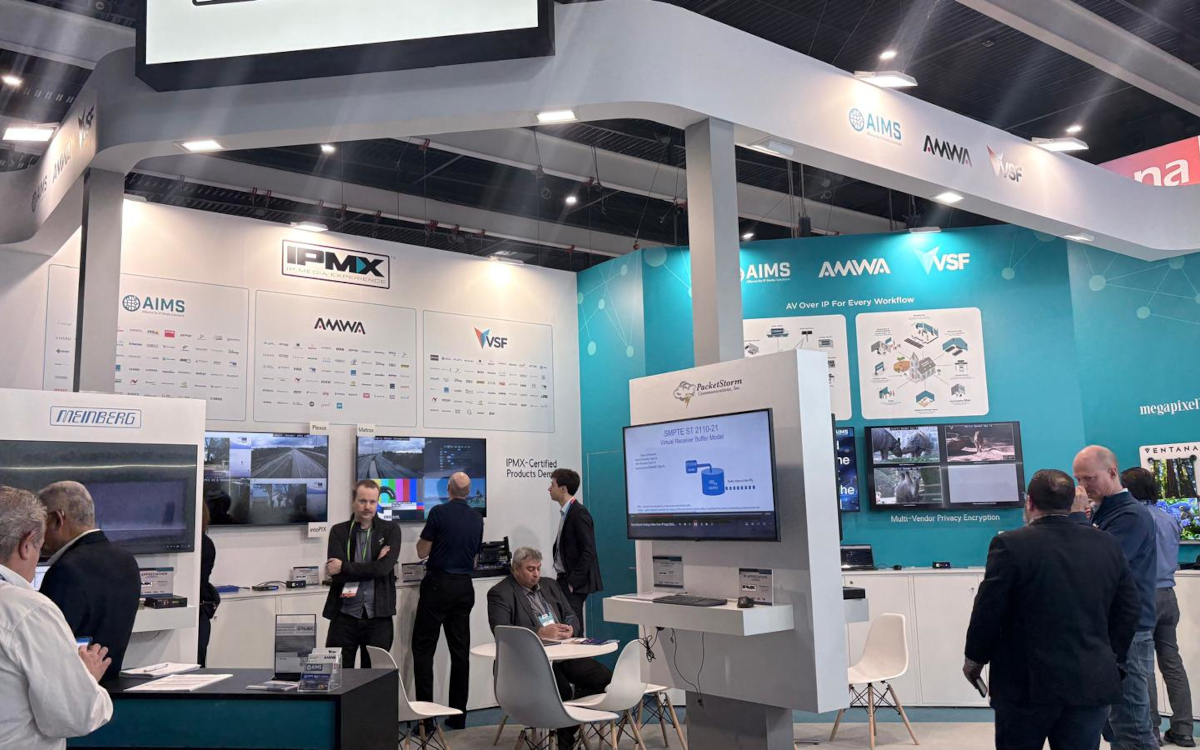
The European Broadcasting Union (EBU) acts as an independent third party responsible for interoperability testing. This process ensures that hardware from different manufacturers works together within a shared network infrastructure. Andrew Starks, board member of the AIMS Alliance, described this step as the culmination of the technical and regulatory groundwork.
Official hardware certification
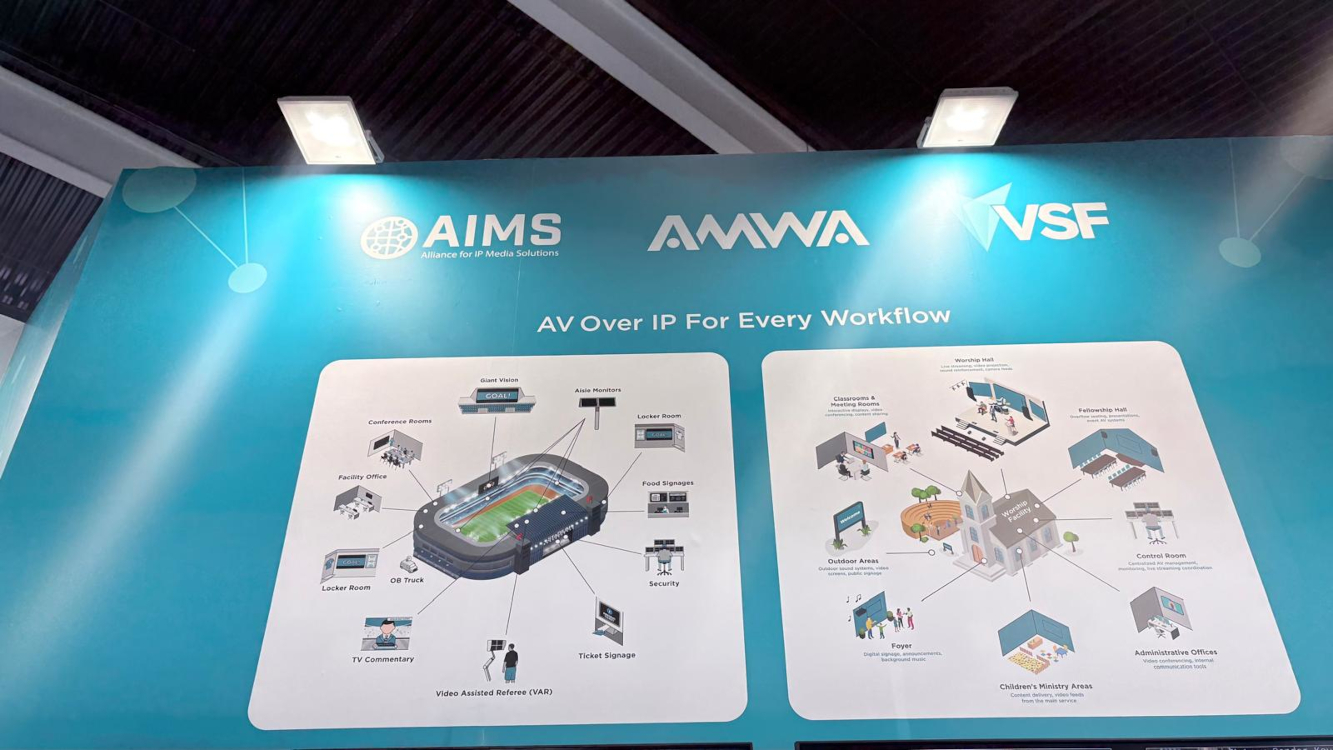
“At ISE, we are presenting officially certified IPMX products for the first time,” Andrew Starks explained in an interview with invidis. The rollout includes finalized test plans and documented procedures for manufacturers. With this move, the non-profit organization is responding to the ProAV industry’s demand for reliable AV-over-IP solutions. Demonstrations included use cases such as a sports stadium and a church.
IPMX covers core technical areas such as USB support and HDCP copy protection. The standard also enables flexible use of PTP timing for synchronization. Unlike the strict requirements of the broadcast market, IPMX allows adjustments in latency and bandwidth — an advantage for ProAV applications where cost efficiency and network utilization are key factors.
Open IPMX architecture
Hardware supporting the new standard is already available from companies such as Matrox, AJA Video Systems and Ross Video. The IPMX architecture is designed to be open and uses RESTful APIs for control. This allows integrators to develop their own control systems on a standardized foundation.
“The introduction of IPMX is intended to move the AV industry forward with a flexible and future-proof approach,” said Andrew Starks. The focus is on enabling straightforward deployment within existing IP networks. The IPMX certification framework demonstrates that a gradual path toward standardization is achievable.