
Consumers have rapidly embraced AI as their go-to research tool. In online shopping, it remains just that: a trusted guide for options, not the best price. In this first article of his Retail Connect series, invidis impact’s Roi Iglesias explores the challenges of "Agentic Commerce."
Agentic Commerce: Why AI is Winning the Search War but Losing the Checkout Battle
The narrative surrounding “Agentic Commerce” – the idea that AI agents will autonomously manage our wallets – has hit a psychological wall. While tech giants and logistics firms present a future of frictionless, automated buying, the data from February 2026 tells a more cynical story. We aren’t entering an era of “buying with AI”; we are entering an era of “AI-induced verification fatigue.”
1. The conversion illusion: 60% search, 17% trust
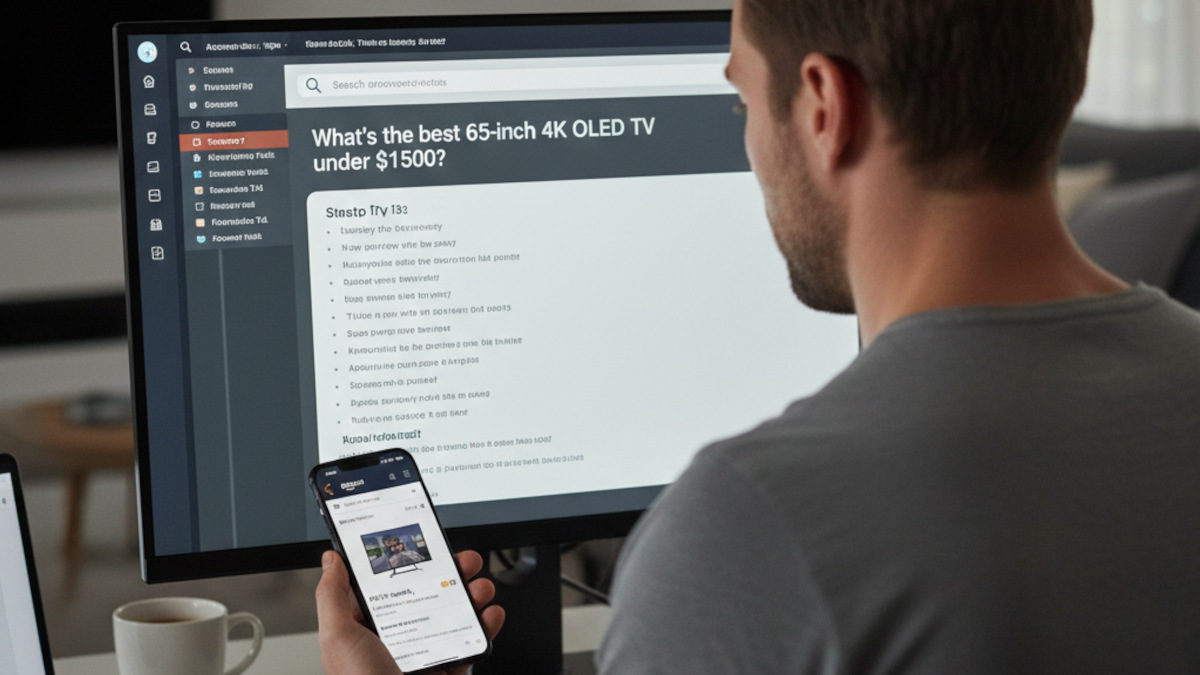
One of the most striking gaps in the current market is the disconnect between research and execution. According to the Channel Engine Marketplace Shopping Behavior Report (released Jan/Feb 2026), 58% of shoppers now use AI tools to research products, but only 17% feel comfortable completing a purchase through an AI interface.

The industry often cites a 2% conversion rate for AI agents (a reference originating from early OpenAI research). However, this isn’t a technical failure; it’s a trust deficit. Even when AI provides a “perfect” recommendation, 95% of consumers still perform at least one manual verification step – checking third-party reviews, visiting the official brand site, or cross-referencing prices – before clicking “Buy.”
2. The “Just Walk Out” syndrome: efficiency vs. psychology
To understand this barrier, we must look at Amazon’s Just Walk Out technology. Technically, it was a triumph: it reduced friction by digitizing the physical store. Yet, as of early 2026, Amazon has pivoted away from its own branded stores (Amazon Go/Fresh) toward a B2B model because of “limited customer adoption.”
The reason? Psychology. Shoppers reported “phantom friction – the anxiety of not having a tangible transaction moment or a real-time receipt. AI shopping faces the same hurdle. We are optimizing for speed, but the consumer values certainty. By removing the friction of “choosing,” we’ve inadvertently increased the friction of “trusting.”
3. Supply-side hype vs. demand-side reality
There is a massive asymmetry in the market. On the supply side, 9 out of 10 sales teams are now betting on AI agents to hit their 2026 targets (Source: trendTIC Salesforce/El Candelero Tecnológico). We are flooding the market with AI that wants to sell.
On the demand side, however, consumers are using AI as a noise filter. Bain & Company (Feb 2026) reports that 60% of searches are now “Zero-Click”—meaning the user gets the answer from an AI summary and never visits a retailer’s site. This isn’t efficiency; it’s a defensive maneuver. The consumer is using AI to avoid the very marketing agents the supply side is deploying.
4. Conclusion: the “verification tax”
The real trend of 2026 isn’t “Agentic Commerce”; it’s the Verification Tax. For every minute an AI saves a consumer in research, that consumer spends another minute verifying the data to ensure they aren’t being “hallucinated” into a bad purchase.
The 2% conversion rate is the “glass ceiling” of AI. Until AI can provide the same psychological closure as a human interaction or a traditional checkout, it will remain a brilliant researcher that we simply don’t trust with our credit cards.