
McDonald’s Saudi Arabia turned heads by removing all menu boards and challenging guests to order from memory. The viral stunt showcased deep brand loyalty - while subtly proving how essential digital menus remain for QSR operations.
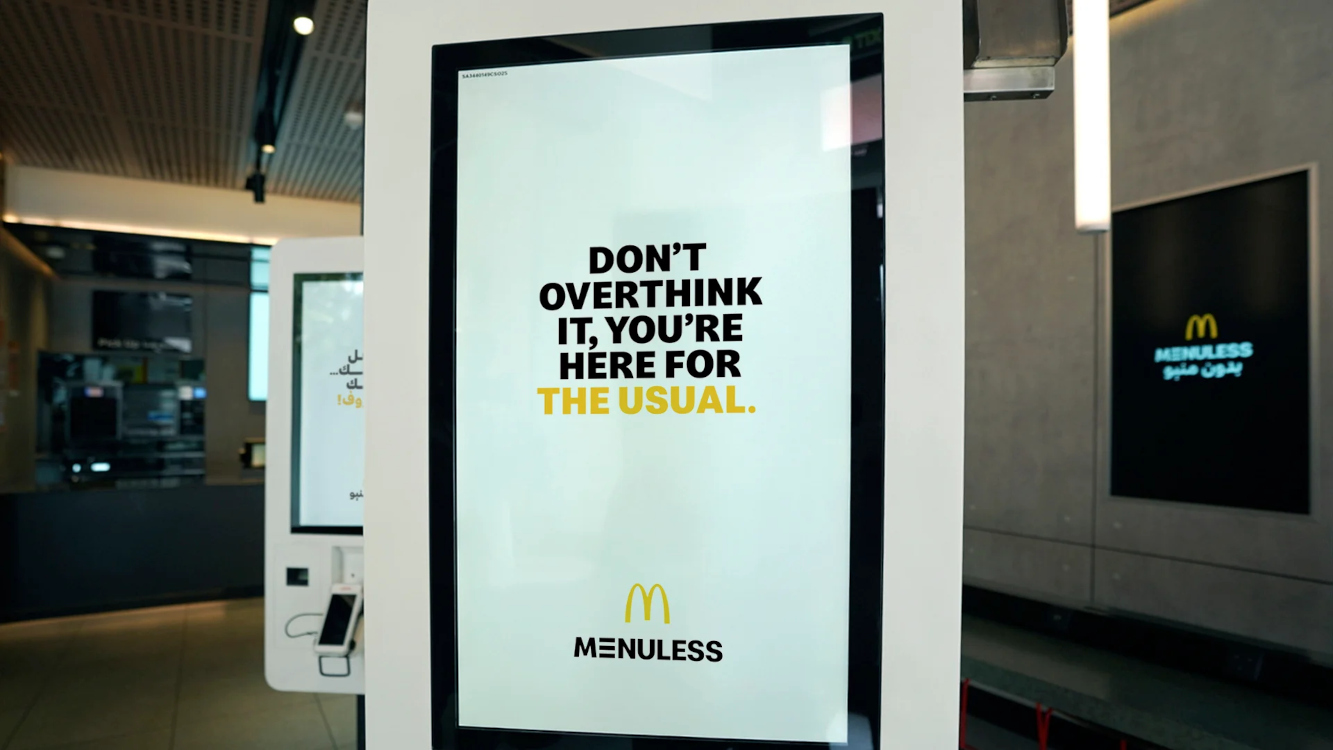
Campaign: McDonald’s Ditches Menu Boards
Digital menu boards in drive-thru lanes, restaurants, and on self-service kiosks are considered indispensable in the QSR sector. They inform, guide, entertain, and – crucially – sell. The industry often points to their digitalization as one of the most transformative innovations in modern quick service. All the more surprising, then, is the move McDonald’s made in Saudi Arabia: a campaign in which the brand removed all menu boards from its restaurants.
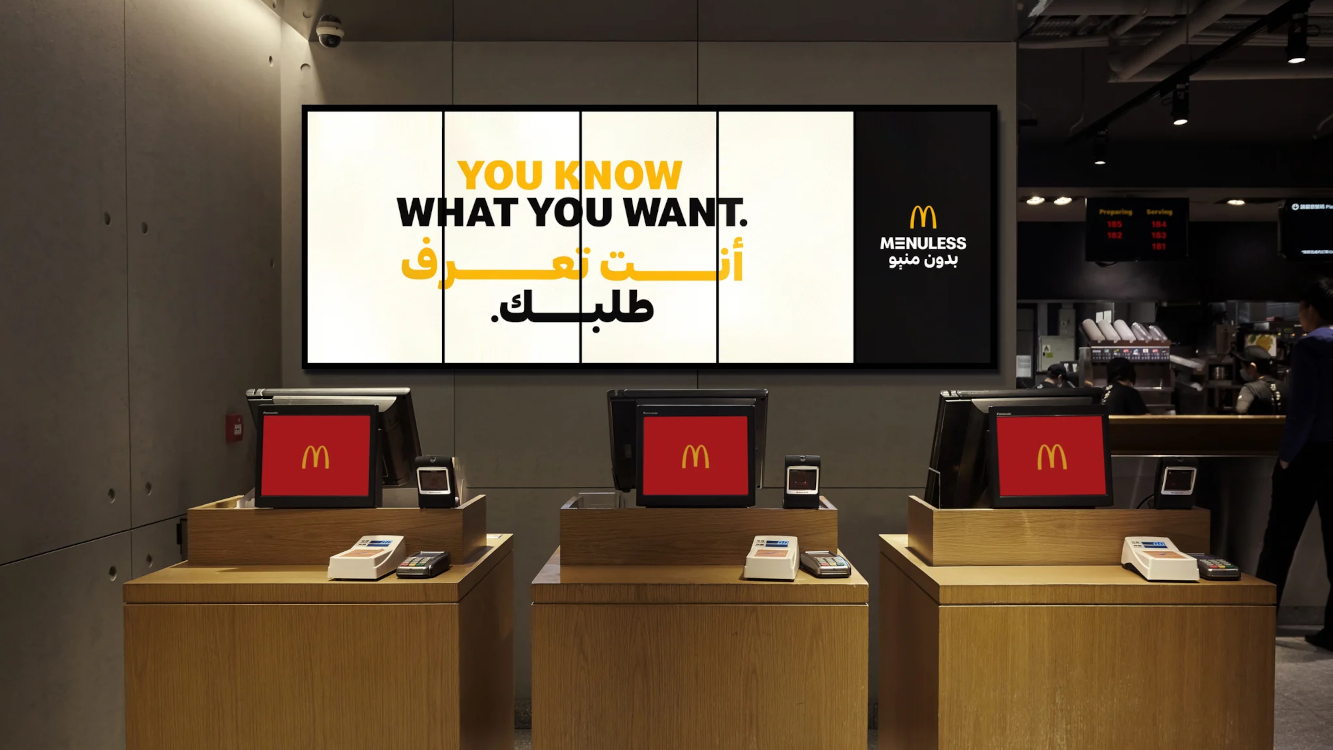
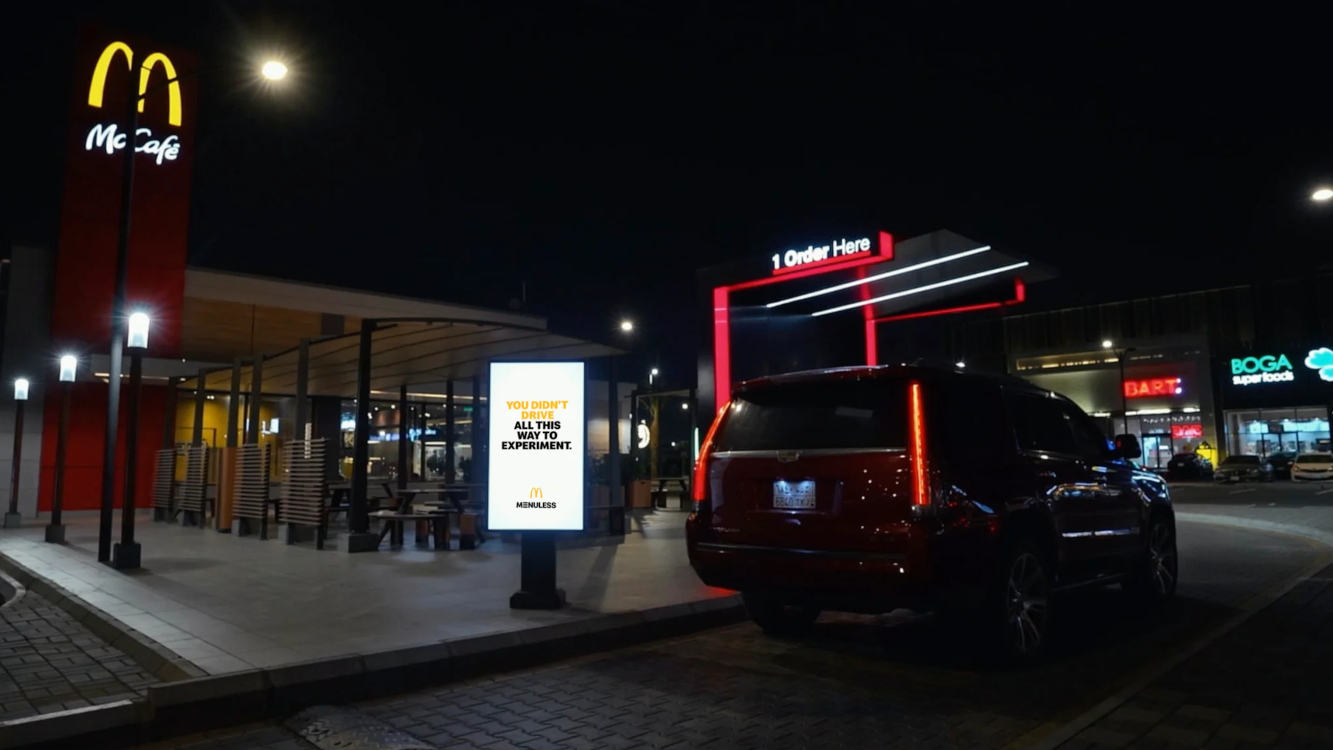
An Innovative Campaign Built on Brand Love
Together with the agency Leo Dubai, McDonald’s developed a campaign that leans entirely on the strong emotional bond Saudis have with the Golden Arches. The premise: McDonald’s customers know their favorite items so well, they don’t even need to see a menu to order.
While competitors chase attention with unusual, ever-more-creative burger innovations, McDonald’s took the opposite route – proving that its classics are so deeply ingrained in customer memory that menu boards become almost unnecessary.
The “menu-less restaurants” were a sensation. Guests lined up to participate, eager to be filmed ordering their meals purely from memory. What followed was a social media phenomenon: The “McMenulessChallenge” went viral as customers recited entire menus on camera – often with impressive accuracy.
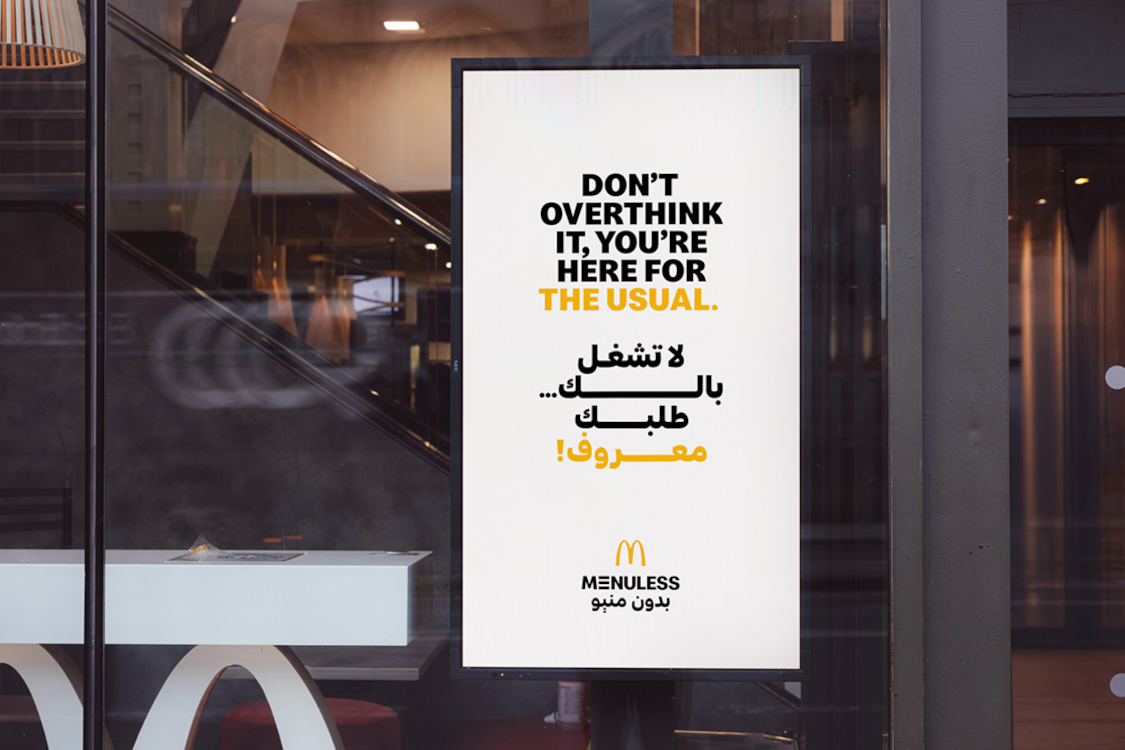
A Viral Hit with a Clear Message
The award-winning spring 2025 campaign turned into a major success story for McDonald’s Saudi Arabia. It showcased the powerful affinity customers have built with the brand over the past 30 years. But beyond the emotional storytelling, the McMenuless Challenge unintentionally emphasized another truth – one that digital signage professionals know well.
Nothing Works Without a Menu Board
From a digital signage perspective, the stunt highlighted just how central digital menu boards and self-service order terminals are to QSR operations:
- They inform customers and guide decision-making
- They influence workflows, subtly highlighting or deprioritizing certain items to optimize operations
- They entertain, using large-scale visuals to promote seasonal offers
- They speak the customer’s language, literally and visually
- And above all: They upsell better than any human staff member could
QSR businesses are finely tuned to throughput, clarity, and consistency. Menu boards -especially digital ones – are the backbone that keeps this machinery running smoothly.
This is why major QSR chains treat menu boards as business-critical infrastructure, backed by remote device management, proactive monitoring, and service contracts designed for 24/7 uptime. Any outage can directly impact sales and guest experience.
A Campaign That Proved the Opposite of Its Premise
McDonald’s Saudi Arabia successfully demonstrated customer loyalty in an attention-grabbing way. But unintentionally, the campaign also reaffirmed a fundamental truth in the digital signage world: Even in a market where customers can recite menus by heart, digital menu boards and self-service order terminals remain indispensable.
The McMenuless Challenge might worked as a campaign – but not as an operating model. And that’s precisely why digital signage continues to sit at the heart of every modern QSR strategy.