
Could one platform finally let any content run on any screen? SignageOS' Supra promises to break the fragmentation in digital signage, simplify content creation, and extend hardware life. If it delivers, this could turn the logic of signage upside down.
Opinion: SignageOS’ Supra Could Reshape the Foundations of Digital Signage
For more than two decades, the digital signage industry has accepted a certain inevitability: fragmentation is part of the game. Different SoCs, different OS versions, different CMS platforms – all stitched together by integrators with patience, workarounds, and a deep understanding of hardware limitations. Innovation in content was always constrained by one simple fact: what you can play depends on what the device can handle.
With Supra, SignageOS is attempting to break that rule.
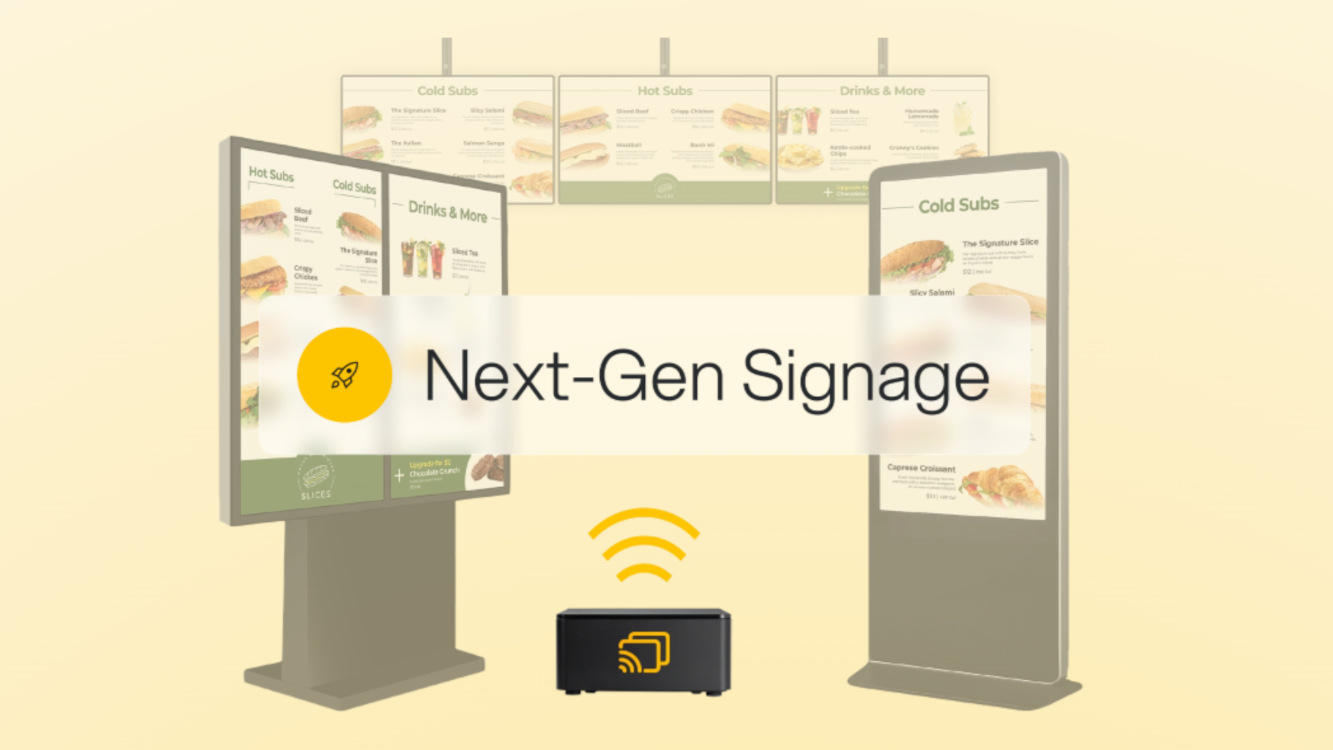
If the technology lives up to its promise, bidirectional streaming could shift the architecture of digital signage. Content would no longer need to be adapted to the quirks of each device or browser engine. Instead, it could be created once and displayed anywhere – reliably, consistently, and independent of SoC platforms, operating systems, or CMSs.
This is not just a technical upgrade. It is a potential restructuring of the industry’s value chain.
The biggest bottleneck in digital signage adoption has never been screens or players. It has been content – or, more precisely, the lack of people capable of creating it. True interactive experiences require not only creative talent but also knowledge of a specific CMS, the limitations of a specific SoC, and the behavior of a specific browser version. That complexity excludes most agencies. A standard web developer can build responsive digital experiences for e-commerce, mobile apps, or corporate websites – but not for signage.
Supra removes that barrier.
If any web app can run on any screen, suddenly every digital agency becomes a potential signage agency. Interactive content moves from niche expertise to mainstream capability. The industry has long talked about lowering the entry barrier for content. Supra may finally deliver it.
The second – and perhaps even more consequential – impact lies in hardware longevity. The industry’s green signage ambitions are often at odds with its hardware reality. While a display can easily run for 10 or 15 years, the player or SoC controlling it typically becomes outdated long before. When the browser engine stops receiving updates or can’t handle new content standards, operators have little choice but to rip and replace.
SignageOS claims Supra can extend hardware life cycles to as long as 15 years, with only a single refresh required. If accurate, this would be a major leap forward for ESG conscious operators and for cost-sensitive networks. Longer lifespans mean lower capital expenditures, fewer truck rolls, and a significantly smaller environmental footprint.
At ISE 2026, the industry will get its first in-depth look at Supra. The technology still needs to prove itself in the field, at scale, under messy real world conditions. But the concept addresses two of the market’s most persistent pain points – content creation and hardware fragmentation – with an elegance that the industry has been waiting for.