
New York City | T-Mobile Advertising Solutions is bringing “LED holograms” to retail. A new pilot with Samsung and Hypervsn introduces 3D product experiences in select T-Mobile stores.
NRF 2026: T-Mobile Tests Hypervsn-Based In-Store Retail Media
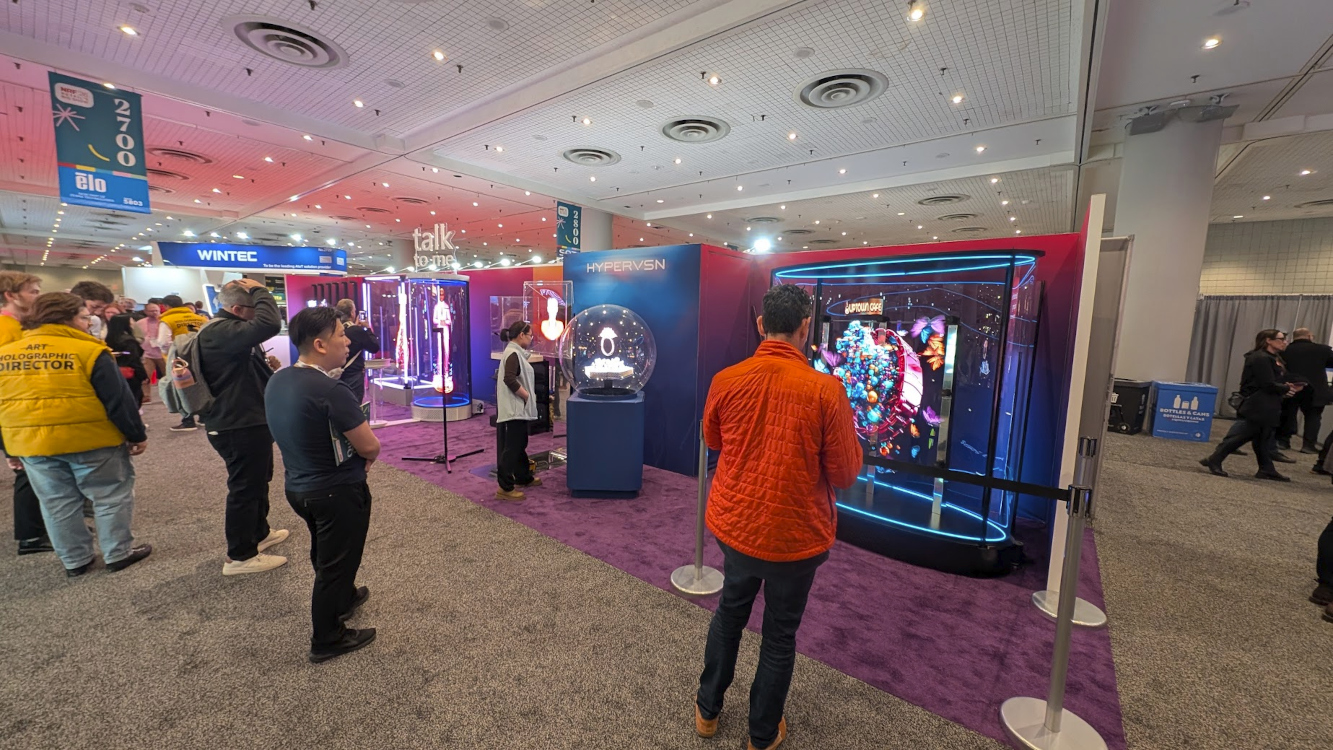
At NRF 2026, Hypervsn’s 3D LED rotor technology was hard to miss on the show floor, drawing crowds with the always popular, so-called holographic displays. Now, T-Mobile Advertising Solutions is taking the concept beyond the trade show and into real-world retail environments. The company has launched a large-scale test of Hypervsn-powered in-store retail media in select T-Mobile stores, starting with Samsung Electronics America as the first brand partner.
The pilot introduces so-called holographic product presentations for Samsung’s latest Galaxy devices, including the Galaxy Z Fold7 and Galaxy Watch8. These immersive displays allow shoppers to explore device features in lifelike 3D, creating a dynamic alternative to traditional signage. By leveraging Hypervsn’s technology, T-Mobile aims to enhance product storytelling at the point of sale, where purchase decisions happen.
Interactivity is having a moment
This initiative reflects a broader trend in retail media: moving beyond static screens to interactive, attention-grabbing experiences. According to Hypervsn, holographic displays deliver significantly higher engagement compared to conventional formats. For T-Mobile Advertising Solutions, the test is an opportunity to evaluate how emerging display technologies can transform in-store marketing and set new standards for customer engagement.
The WOW still hasn’t worn off
For many digital signage professionals, the appeal of rotating 3D LED fans remains puzzling. Even the latest product iterations fail to deliver the perfect smartphone selfie. Yet, the technology continues to draw crowds – both at tech trade shows and in real-world installations. And ultimately, that’s what counts: capturing attention.