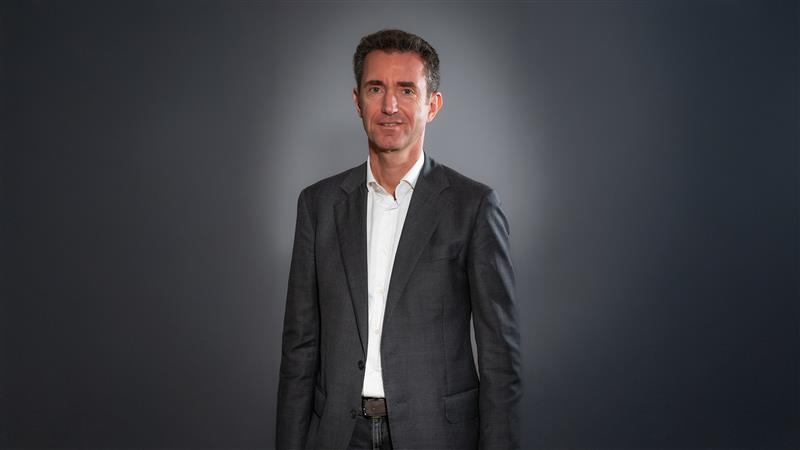
Ahead of ISE 2026, invidis met with Gianluca Pasquali, who took over as CEO of M-Cube in April 2025. In the conversation, the former Vodafone Italy director and BCG management consultant explains how he has reshaped one of Europe’s leading digital signage integrators, why the company is betting on its proprietary platform, and how industrialized global rollouts will define the company’s next phase.
M-Cube: “Digital Signage Touches Hearts and Moves Wallets”
2025 was nothing less than a transition year for M-Cube. When Gianluca Pasquali stepped into the CEO role, he brought the perspective of a seasoned telecom executive but was entirely new to the digital signage industry. This outsider perspective – combined with the deep industry knowledge of Manlio Romanelli, M-Cube’s founder and current President, who personally selected Pasquali to lead the company – proved invaluable as he began the process of rightsizing the organization.
2025 revenue reached €70 million
Subsidiaries that had long operated with considerable independence were fully integrated into a unified structure. Management layers were reviewed, duplicated roles were removed, and non-performing positions were replaced with investments in sales and commercial functions. Despite these sweeping changes, the group closed the year with high single-digit revenue growth, slightly above general market development, and achieved total sales of approximately €70 million with what Gianluca Pasquali describes as a “good level of profitability.”
Retail media deal with Italy’s largest grocer
Italy remained M Cube’s strongest market in 2025, followed by France and Germany, while the UK and Asia-Pacific saw slower development, particularly due to market dynamics in China. Luxury retail continues to anchor M-Cube’s business, but the company also made significant progress in retail media networks. In Italy, M-Cube became the exclusive RMN partner for Selex, the country’s largest grocery retailer, and the integrator secured additional RMN clients in the UK such as Coop. For Gianluca Pasquali, this shift reflects a broader market evolution. “We talked for years about in-store retail media,” he notes. “Now we finally see it happening. But we don’t just want to touch the heart of retailers through digital experiences – we also want to move their wallet. That is where retail media networks come into play.”
Looking ahead to 2026, M-Cube plans to build on its strengths as an end-to-end integrator with deep expertise in content creation and its ability to execute highly scalable international projects. This capability is particularly relevant wherever global brands require industrialized rollouts on tight timelines. Retail media networks are a prime example: retailers need rapid deployment to reach the critical mass necessary for monetization. Below that threshold, RMNs simply do not generate value.
Commitment to a single software platform
A central pillar of the company’s strategy is its proprietary software platform. Since taking over, Gianluca Pasquali has re-evaluated the role of in-house software within the group. The outcome was a clear commitment to a single, fully owned, scalable, cloud-based platform. “We focus on one platform – DXP One,” he emphasizes. “In 2025, we made the decision to invest. In 2026, we’ll execute it.” This strategy not only streamlines operations but aligns the company’s software roadmap with the needs of global clients requiring speed, standardization, and transparency.
Ecosystem partnerships remain essential for success, especially in retail media networks, where consultancies, hardware vendors, and media agencies all play critical roles. Only a resilient partner environment enables pan European or global rollouts at the scale and speed required by today’s brands. M-Cube positions itself as both integrator and orchestrator within this wider ecosystem.
The emotional and commercial appeal of digital signage
After nine months in the digital signage industry, Gianluca Pasquali describes the experience as energizing. Unlike in the telco industry, where much of the work revolves around defending shrinking market share, digital signage is an industry characterized by growth, innovation, and increasing relevance for retailers and brands. What motivates him most is the combination of emotional and commercial impact. Digital signage creates memorable in-store experiences that “touch the heart,” as he puts it, while retail media networks directly influence retailers’ revenue streams and profitability.
At the same time, he acknowledges the challenges the industry faces, particularly the rise of IT integrators and growing margin pressure. Yet, he remains confident that M-Cube’s blend of creativity, platform ownership, and rollout excellence positions the company well for the next phase of expansion.