When 3D visuals meet freehand gestures, a new level of interactivity emerges. Soon, it could work without complex, custom installations but via plug and play. At ISE 2026, Sony will launch its Spatial Reality Display featuring integrated gesture control technology from Ameria.
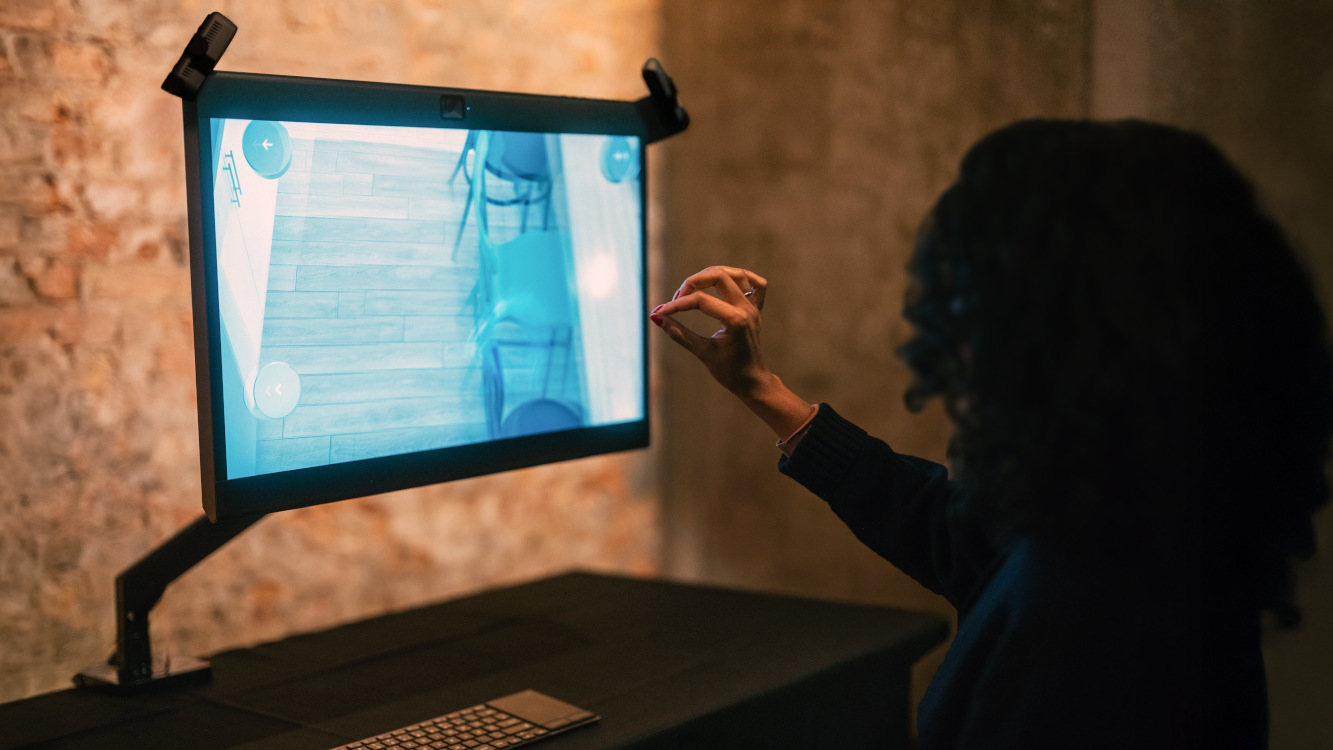
From Touch to Gesture: The Next Generation of 3D Interactive Signage
The term “interactive signage” often promises more than it delivers. In 90 percent of cases, it simply refers to basic touchscreens. Yet interactivity can go much further – a reality that a German start-up, Ameria, has been exploring for years. The company develops gesture-controlled applications that go far beyond what sensors like Microsoft Kinect can achieve.
Visitors to major trade shows such as the ISE in recent years may already have encountered Ameria’s technology. Gesture-controlled car races or dancing avatars regularly drew large crowds. In everyday life, however, touch interaction remains dominant – gestural control is still more familiar from James Bond movies than practical applications.
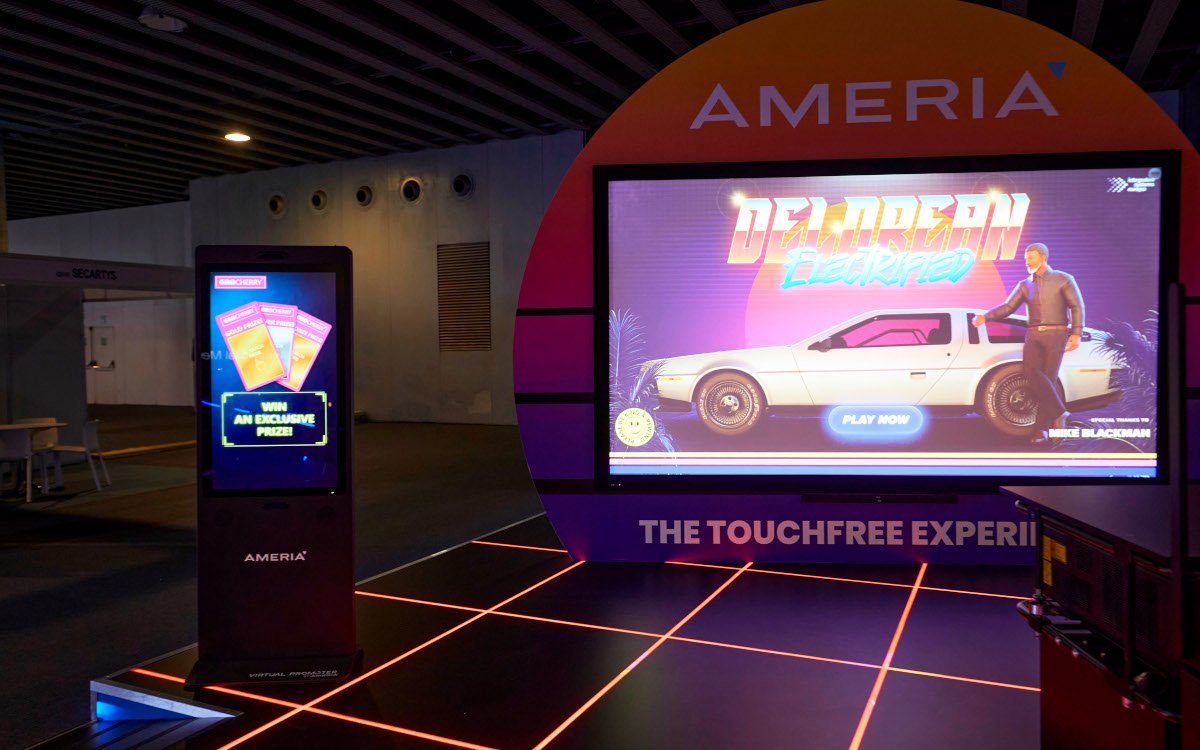
A similar pattern is evident with 3D displays. Glasses-free 3D effects that truly impress are still rare, yet so-called 3D displays have become a staple at nearly every tech show. More often than not, these are unstable optical illusions: the initial “wow” fades quickly, leaving little lasting value. Attendees at the upcoming ISE in Barcelona can expect to see plenty of such gimmicks.
Unlocking new potential with gestures and 3D
When combined with gesture control, however, 3D displays open up entirely new possibilities. “3D demands spatial interaction—not a mouse or keyboard,” says Albrecht Metter, CEO of Ameria. Glasses and controllers can be more of a hindrance than a help for many applications. Against this backdrop, Ameria partnered with Sony to develop a 3D display fully controllable via freehand gestures.
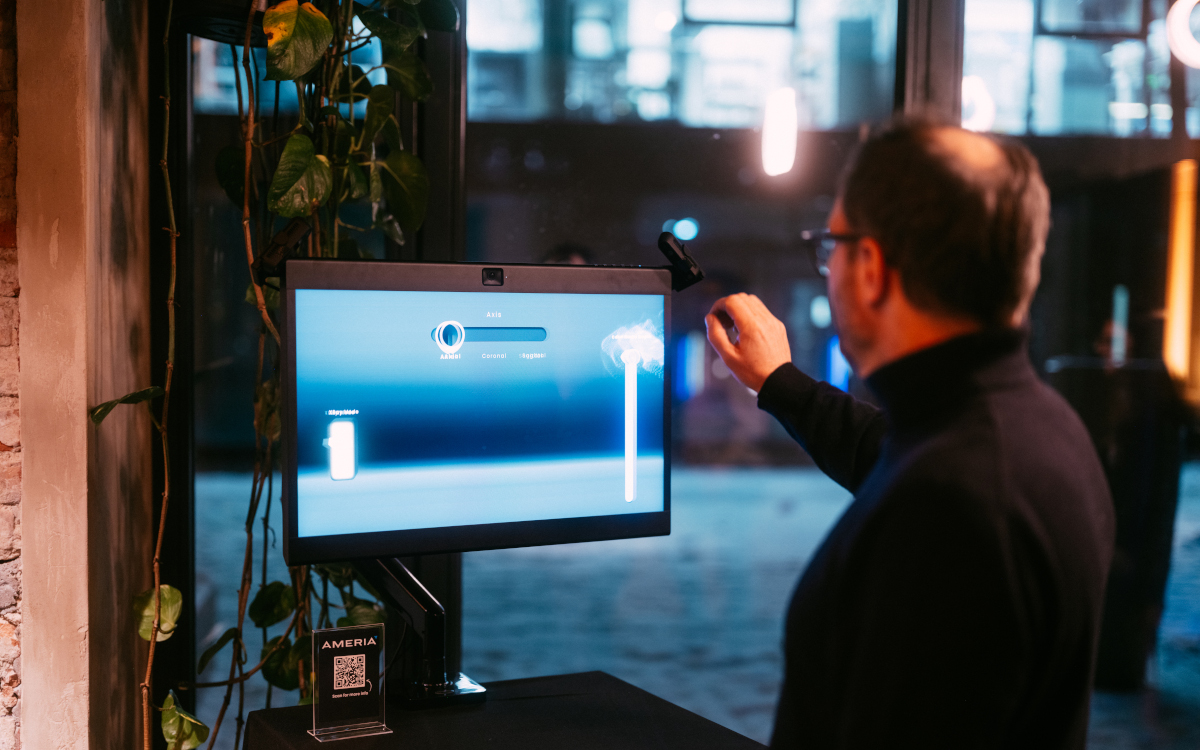
The joint solution combines Sony’s Spatial Reality Display (SRD) with Ameria’s Starkit, resulting in an interactive, spatial signage display that works “out of the box.” The SRD uses eye-tracking to render objects seemingly floating in space. StarKit complements this with two Intel Realsense sensors mounted on the display, capturing hand movements in real time. Users can select, move, and rotate objects without touching the screen, as shown in this video.
“The unique combination of Ameria’s innovative approach and Sony’s display expertise drastically reduces the friction that has traditionally plagued interactive installations,” explains Rik Willemse, Head of Professional Displays and Solutions at Sony. Previously, implementing spatial interactive signage often required combining fragmented solutions into complex setups.
Applications in Retail, Corporate, and Education
Sony and Ameria are now bringing their solution to market as a complete product. The debut will take place at ISE in Barcelona, followed by a European rollout. The initial focus is on retail, corporate showrooms, and educational institutions. The 3D signage display is designed to be as easy to set up as a traditional 2D display.
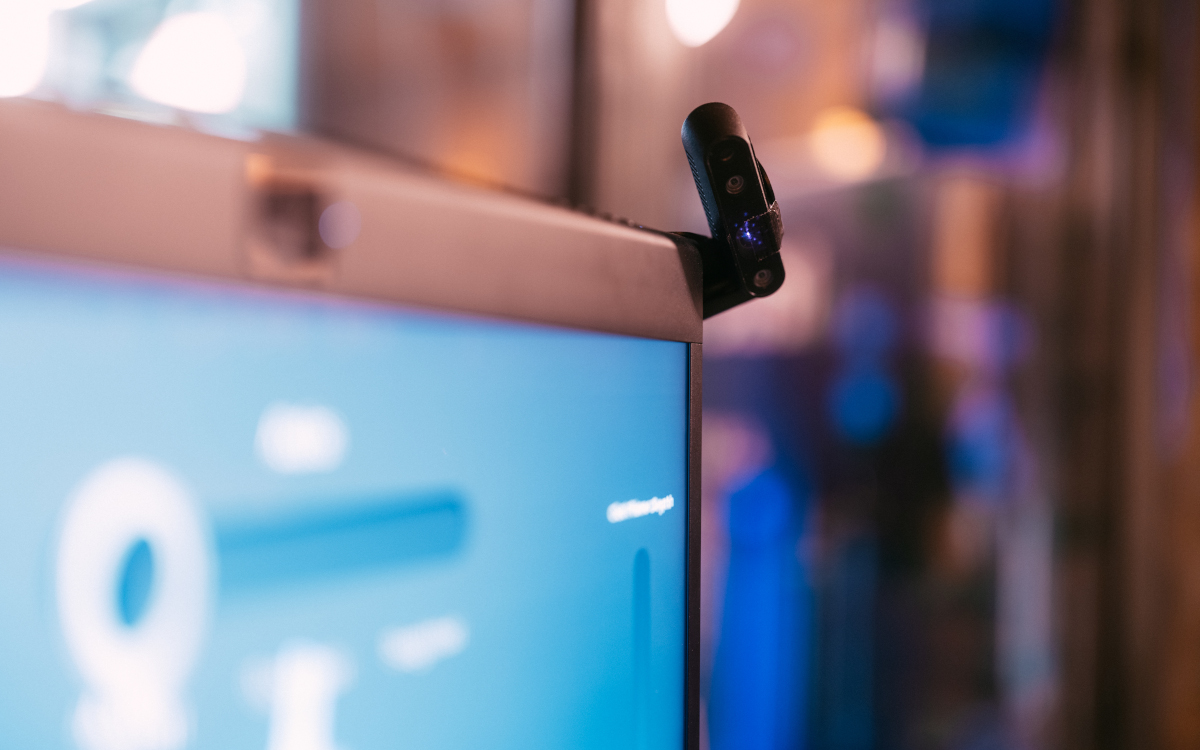
“We never saw gesture control as just a feature – it’s part of the overall experience,” says Metter. The system connects via plug-and-play and is then powered by the Ameria CMS, which automatically makes existing 3D assets interactive through gestures.
Ameria’s software is designed around natural interaction. “Users don’t need to learn anything – they can handle virtual objects and content as if they were part of the real world.” According to the company, simple product showcases can be created in just a few minutes.
From gimmick to sales tool
For Willemse, this also represents an opportunity for European retail: “Traditional POS and signage technologies are no longer enough to capture consumer attention sustainably.” Displays should no longer be passive digital surfaces looping content endlessly. Sony therefore sees 3D as a central component of its professional display business.
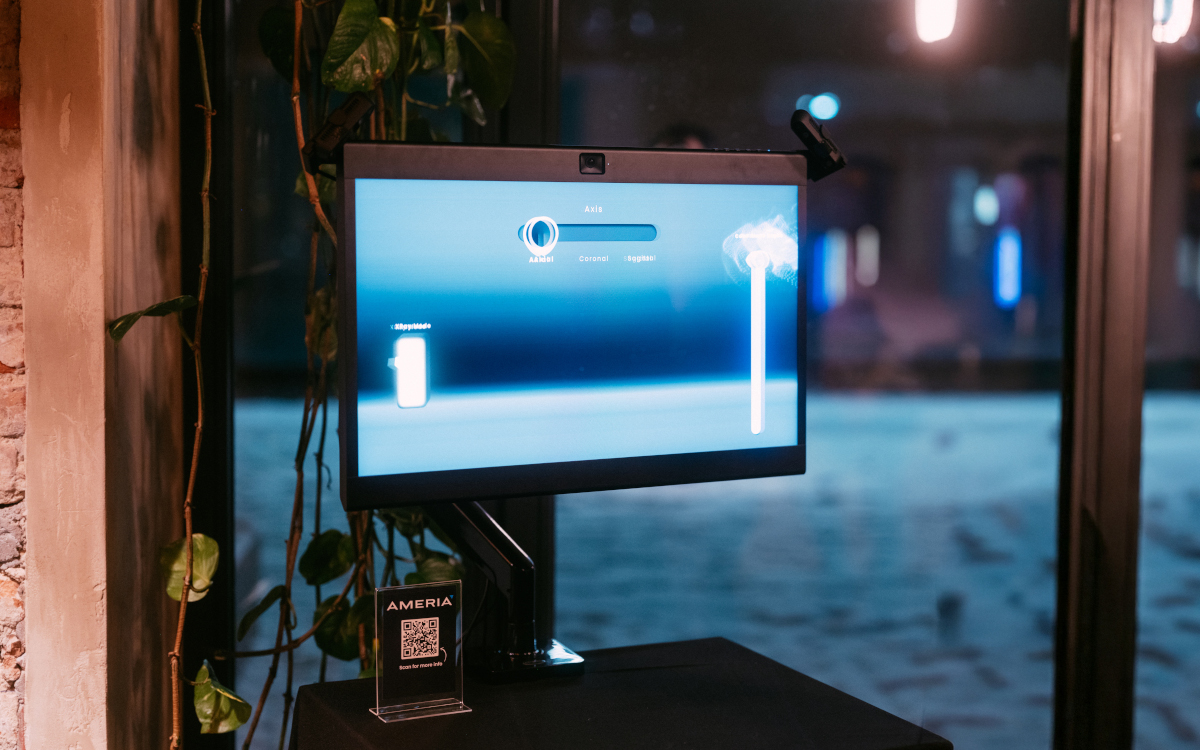
Looking ahead, Sony and Ameria aim to expand the solution into sectors such as healthcare, architecture, and engineering, where 3D data is already central. Distribution will initially focus on selected partners in Europe, supporting the SRD model ELF-SR2. Ameria’s CMS software is offered via subscription.
Gesture control still has a long way to go – particularly because users are so accustomed to touchscreens. With this joint solution from Sony and Ameria, however, the technology is moving closer to everyday use. It is likely that the first installations in stores and showrooms will appear later this year.