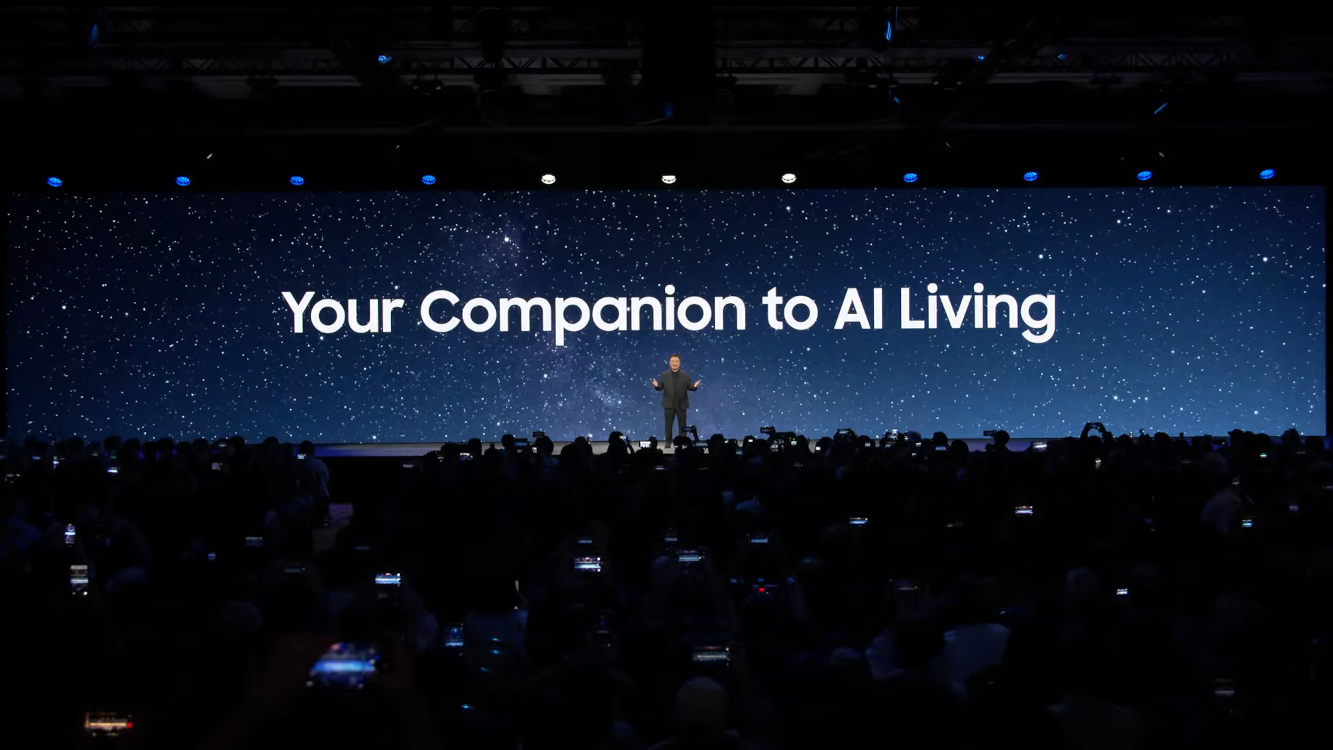
As expected, CES 2026 announcements are dominated by AI. At Samsung’s First Look 2026 keynote, traditionally held one day ahead of the trade show, not surprisingly AI was the central theme - this time with a clear strategic message: the future of devices is no longer defined at the moment of purchase.
CES 2026: From Screens to Software Platforms
Samsung’s narrative is no longer limited to higher resolution, brighter panels, or thinner bezels. Instead, it is about “AI on Device”, complemented by “AI in the Cloud”, and – more importantly – about a platform that continuously evolves over the lifespan of a device. The hardware remains the same. The experience does not.
From hardware vendor to platform provider
Samsung and LG and most other display giants are historically hardware manufacturers. Their business model was simple: produce panels, ship displays, drive volume. In Consumer Electronics as well as B2B. For decades, digital signage projects were defined by technical specifications – panels size, resolution, nits – and most important by price. According to Samsung, that era is coming to an end.
The Korean manufacturers have exited LCD panel production entirely. Today, global LCD manufacturing is dominated by Chinese players such as TCL CSOT, Hisense, and BOE—supported by substantial government subsidies and by the acquisition of factories, patents, and know-how from Samsung and LG themselves.
Samsung’s response is not to compete on price or volume anymore. Instead, the company is redefining value. The display itself is no longer the product – the platform is.
A paradigm shift
At CES 2026, Samsung openly acknowledged this strategic shift. For the first time, the company put long-term software evolution and AI-driven functionality at the center of its display strategy. The message is clear: buyers should stop evaluating devices purely based on specifications at the time of purchase. Instead, they should place trust in a platform that improves continuously – powered by:
- A constantly updated operating system (Tizen OS)
- Integrated IT and device security (Knox)
- IoT-Ecosystem connectivity via SmartThings
- AI capabilities that evolve over time
This is a fundamental change in how electronic devices are positioned – especially in digital signage, where hardware refresh cycles often span three to five years.
Seven years of guaranteed evolution
One of the most important announcements – easily overlooked amid AI buzzwords – is Samsung’s seven-year upgrade guarantee.
Samsung has already committed to seven years of operating system and security updates for its Android-based smartphones. Now, that commitment is being extended to consumer displays and may also end-up in digital signage. This goes beyond current EU regulations, which since June 2025 require smart phone manufacturers to provide at least five years of updates after the last official sale of a device. Samsung is deliberately setting a new benchmark – one that competitors might be forced to follow.
For professional AV and digital signage buyers, this is a crucial signal. Long-term software support is no longer a “nice to have”; it is becoming a baseline requirement for compliance, security, and operational stability. Samsung’s consumer electronics promise at CES would be much tougher to deliver in B2B SoC, were until now stable OS platforms were prioritized over latest browser features and security updates.
Why MicroLED matters more than ever
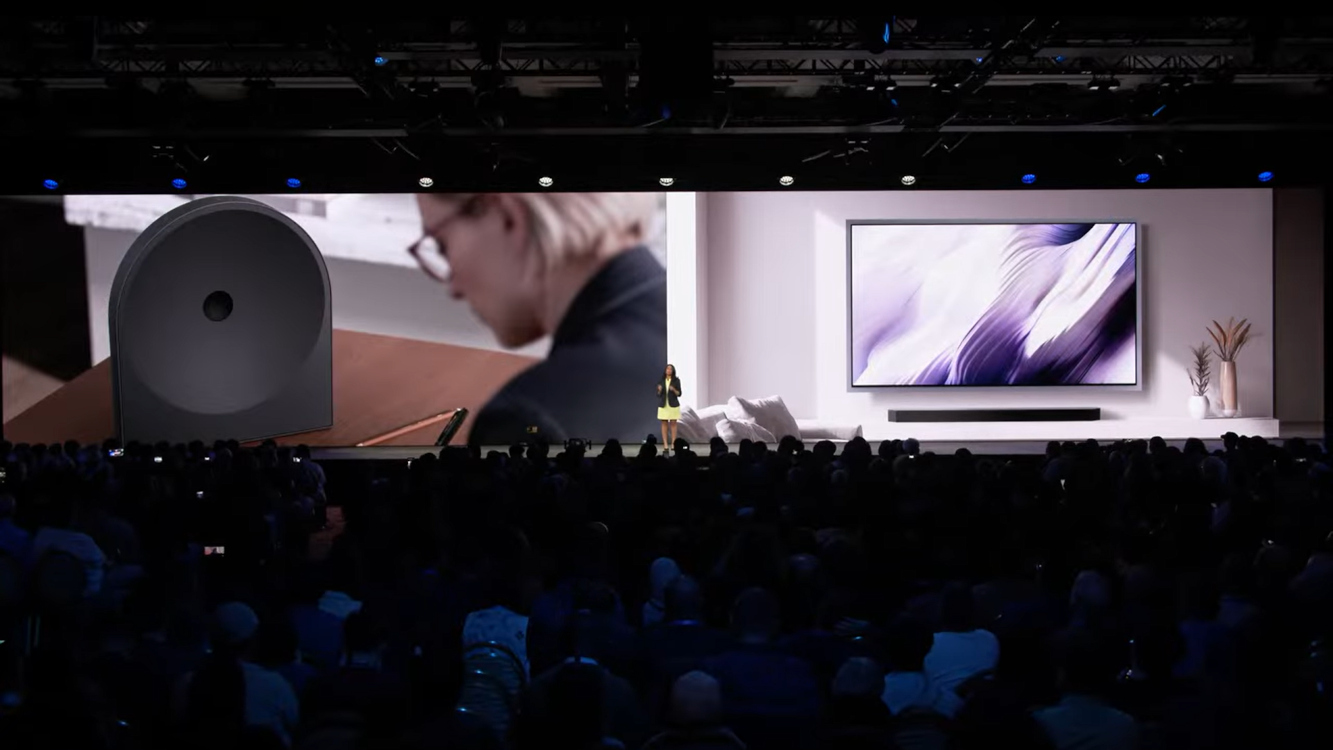
While LCD production has shifted to China, Samsung continues to invest heavily in MicroLED, particularly with The Wall in the B2B market. This is no coincidence.
MicroLED gives Samsung a competitive advantage where Chinese suppliers currently cannot match ecosystem, service and software maturity. Combined with AI-driven image processing and software features delivered over time, MicroLED becomes for Samsung customers not just a premium display – but a long-term platform investment.
Hardware differentiation alone would not be sufficient. Platform lock-in, trust, and long-term innovation are the real value drivers.
Consumer strategy, B2B impact
Although Samsung presented its strategy in a consumer electronics context at CES, the implications for digital signage are obvious. Samsung’s B2C and B2B displays increasingly share:
- The same operating system (Tizen)
- The same security framework (Knox)
- The same user interface philosophy (One UI)
- The same device management and ecosystem integrations
- And increasingly, the same on-device AI capabilities
This is a textbook example of economies of scale. Samsung ships around 500 million devices per year, and a growing share of them run on a unified AI-enabled software stack. Every improvement benefits both consumer TVs and professional signage displays.
“Screens are more than displays”
According to S. Yong, Global Head of Visual Displays at Samsung, the company’s vision is clear: “Screens are more than displays.” Samsung’s new smart screens are designed to adapt to usage patterns and environments, anticipate user needs and transform the experience in real time using AI
Crucially, Samsung emphasizes that its AI ecosystem is built on “the highest ethical standards.” As AI becomes embedded directly into public-facing screens and enterprise environments, trust in the platform, the brand, and the AI roadmap becomes mission-critical.
The real message for digital signage
CES 2026 sends an unmistakable signal for the professional AV and digital signage industry. Innovation is no longer primarily driven by panel technology. Most display solutions today are technically mature – often more than “good enough” for standard use cases. The real differentiation is shifting to:
- Long-term software evolution
- AI as an enabler, not a feature
- Remote management and security at scale
- And the ability to deliver new capabilities years after installation
For Samsung, the strategic objective is clear: leverage trust into a platform relationship – one that lasts at least seven years and enables experiences that are not yet available, and in many cases not even conceivable today. The display hardware may stay the same. But the value proposition does not.
For competitors, ISVs and integrators the focus must be of becoming global organisations that can be trusted long-term. Not necessarily alone – it will be difficult to build a global brand like Samsung – but as an eco-system of trusted partners.