The global semiconductor market is once again experiencing significant turbulence - and this time, the digital signage industry is directly in the line of fire. According to Omdia, the ongoing memory shortage is beginning to hit LCD and LED display manufacturers with increasing force
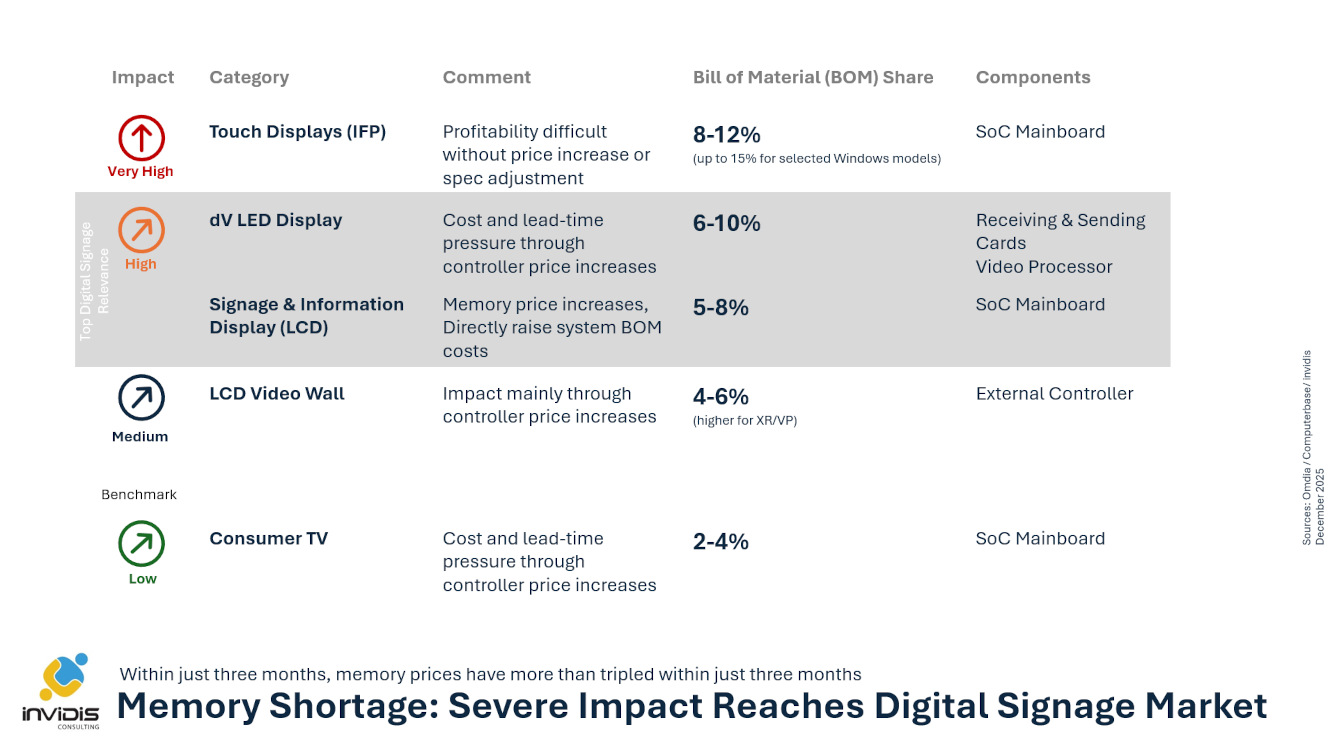
Memory Shortage: Severe Impact Reaches Digital Signage Market
Digital signage is often perceived primarily as part of the panel industry. In reality, professional displays – LCD, LED, IFP touchscreens, and video walls – are highly integrated embedded computing systems. Their reliance on DRAM, NAND and other memory components makes the sector structurally more sensitive to supply fluctuations and price spikes.
Digital Signage More Vulnerable Than Expected
The rapid shift of production capacity toward high‑bandwidth memory (HBM) for AI GPUs is accelerating the imbalance. With hyperscalers and semiconductor vendors prioritizing AI‑centric clients, memory allocation for embedded and display applications is being pushed downward in the supply queue. The result: escalating component prices and uncertain availability.
Memory Prices Up 180% – Even Apple Is Hit
The severity of the situation becomes clear when looking at the consumer electronics heavyweights. Multiple reports indicate that even Apple – a company known for supply‑chain dominance – is being charged up to 180 percent more for memory used in the latest iPhone generation.
Earlier this year, Apple reportedly paid USD 25–29 per LPDDR5X chip. Today, Samsung is said to be demanding as much as USD 70. While these increases are not expected to immediately affect iPhone retail prices, they underline the extreme pressure in the DRAM market.
The situation is deteriorating rapidly: since September, memory prices have more than tripled within just three months. Industry analysts currently see no relief in sight before 2028, as AI data centers continue to absorb enormous volumes of memory for training and operating large language models such as ChatGPT and Gemini.
Indirect Pressure on B2B Displays Intensifies
For digital signage, this means a challenging environment across all major display categories:
- Professional LCD displays face higher bill‑of‑materials costs
- IFP touch displays and educational panels rely heavily on embedded computing architectures
- dvLED displays increasingly integrate onboard controllers and SoCs that depend on DRAM and NAND
Even if panel prices remain relatively stable for now, the rising cost of controllers, media processors, and embedded boards will eventually make its way into end‑product pricing.
Immediate Impact Remains Limited – For Now
For digital signage manufacturers – who lack the purchasing leverage of companies like Apple – the situation is more delicate. Many procurement teams are already facing longer lead times, shifting component priorities, and increasing pressures on margins.
For the broader digital signage ecosystem, the memory shortage represents yet another structural challenge, following years of panel supply volatility, logistics disruptions, and escalating SoC complexity.
Given that AI‑related memory demand will continue to dominate global capacity planning, the professional display market must prepare for elevated memory costs well into the second half of the decade. Vendors already report moderate price increases, but further adjustments are likely as inventories of lower‑priced memory components run out in early 2026.
One thing is clear: the digital signage industry is becoming increasingly intertwined with global IT and semiconductor supply dynamics – and the consequences of the AI boom are now impossible to ignore.