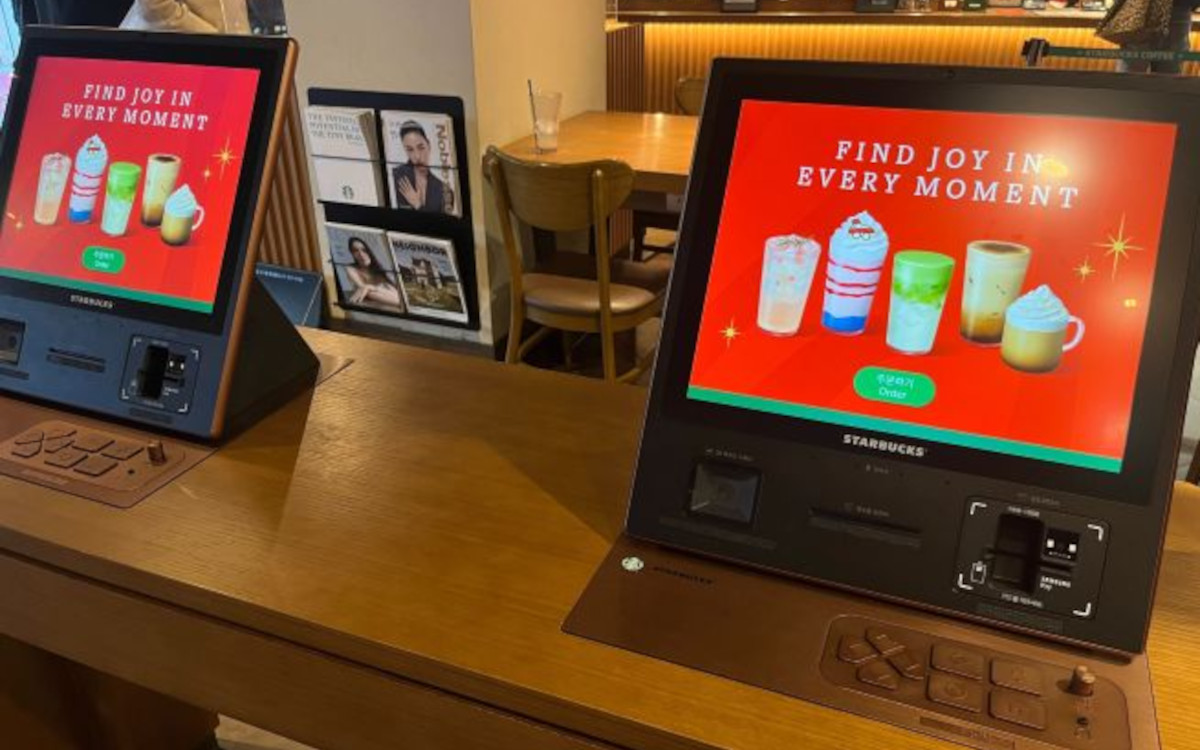
Starbucks Korea has introduced self-order kiosks for the first time, signalling a cautious shift in the global coffee giant’s long-standing commitment to human interaction. The pilot program launched at the Myeong-dong branch, one of Seoul’s busiest shopping districts and a hotspot for international tourists.
Seoul: Starbucks Pilots Self-Order Kiosks
Customers at the flagship store can now choose between traditional counter service and touchscreen kiosks, which support Korean, English, Chinese, and Japanese. This multilingual approach aims to make ordering more convenient for non-Korean speakers – a key consideration in tourist-heavy areas.
Starbucks plans to expand the pilot to around 20 high-traffic stores in locations such as Myeong-dong, Jongno, Gangnam, and Jeju Island starting this month as reported by Korea Bizwire.
Balancing Technology and Brand Philosophy
Unlike other coffee chains in South Korea that embraced kiosks years ago to boost efficiency, Starbucks resisted automation, citing its brand ethos of fostering “human connection.” The company emphasizes that kiosks complement rather than replace face-to-face ordering, similar to its popular mobile app.
Starbucks Korea prioritized inclusive design. The kiosks are mounted on tables and positioned lower than standard models, making them accessible for customers using wheelchairs.
This move aligns with Starbucks’ broader experimentation with technology-driven formats, including kiosk-equipped “smart stores” in Japan and the UK. The challenge remains balancing digital convenience with the brand’s hallmark personal service – a delicate equation for a company that built its identity around human interaction.
Implications for Digital Signage
For the digital signage industry, Starbucks’ cautious adoption of kiosks does not only streamline ordering but also open opportunities for dynamic content, personalized recommendations, and data-driven engagement – all critical components of next-generation customer experiences.