
Despite a sluggish economy, Infocomm made a confident debut in Mexico City. With just over 5,000 visitors and 64 exhibitors, the show was modest in size – but it’s already planning to double in 2026.

Mexico: Infocomm LATAM Starts Small, Thinks Big for 2026
The first Infocomm América Latina drew 5,193 visitors to Mexico City last week, where 64 exhibitors showcased their latest AV solutions over three busy days. The response was strong enough that organizer Avixa is already planning to double the exhibition space for next year’s edition. The goal: to make Infocomm América Latina the go-to gathering for the region’s AV industry in the coming years.
In addition to regional players, several international manufacturers joined the debut event. A number of Spanish companies, including software provider Deneva, took the opportunity to demonstrate their dedication towards the Latin American market.
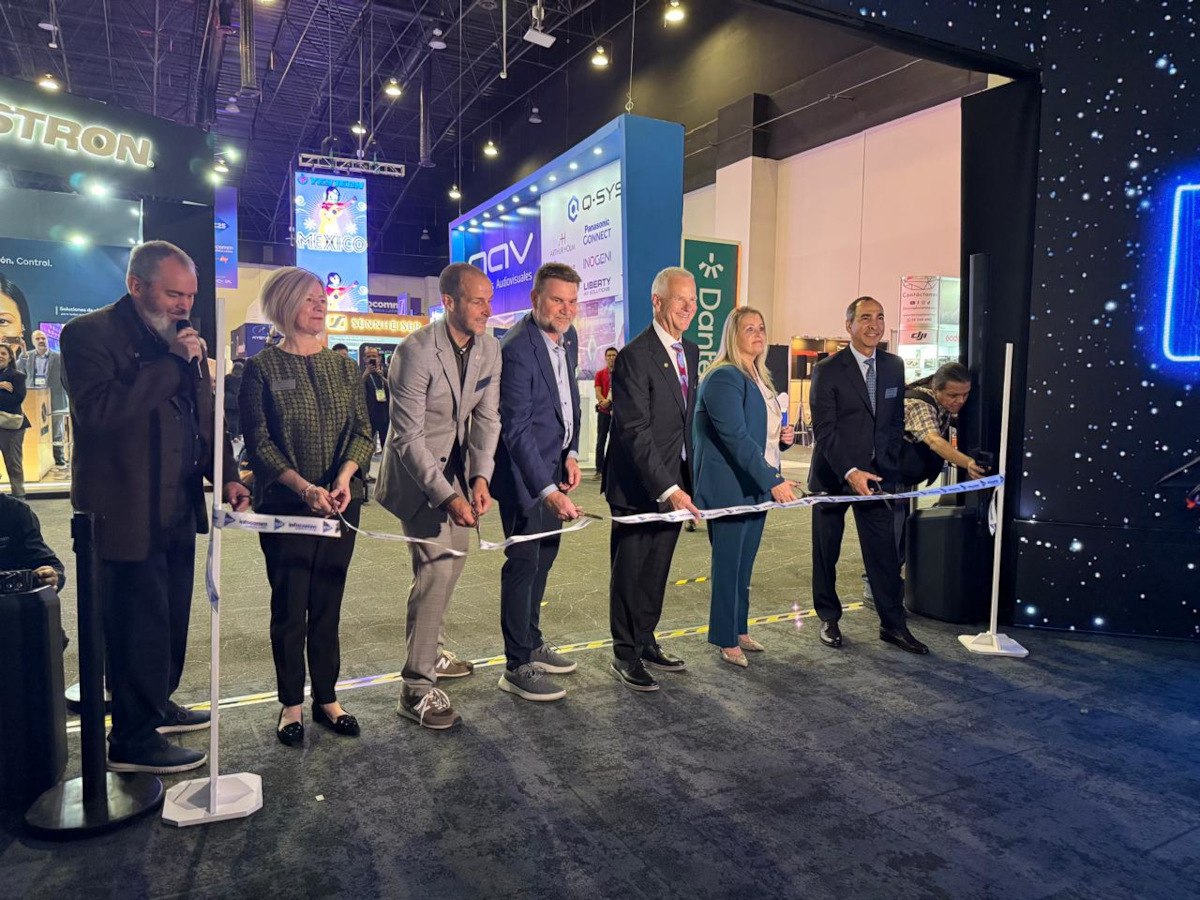

Economic uncertainty from U.S. tariffs
Mexico, the region’s second-largest economy after Brazil, ranks among the top three digital signage markets in Latin America, alongside Brazil and Colombia. Despite its potential, 2025 marked a year of stagnation for the Mexican economy, with growth remaining flat. The slowdown is largely due to reduced public spending and uncertainty surrounding U.S. tariffs, creating a cautious investment climate for AV and signage projects.
Reflecting these challenges, the Congreso Avixa conference program placed a strong focus on the economic outlook. Speakers such as Jeff Stoebner, CEO of Forté, and Dave Labuskes, CEO of Avixa, stressed the need for resilience, urging the industry to embrace change and accept economic uncertainty as the new normal.
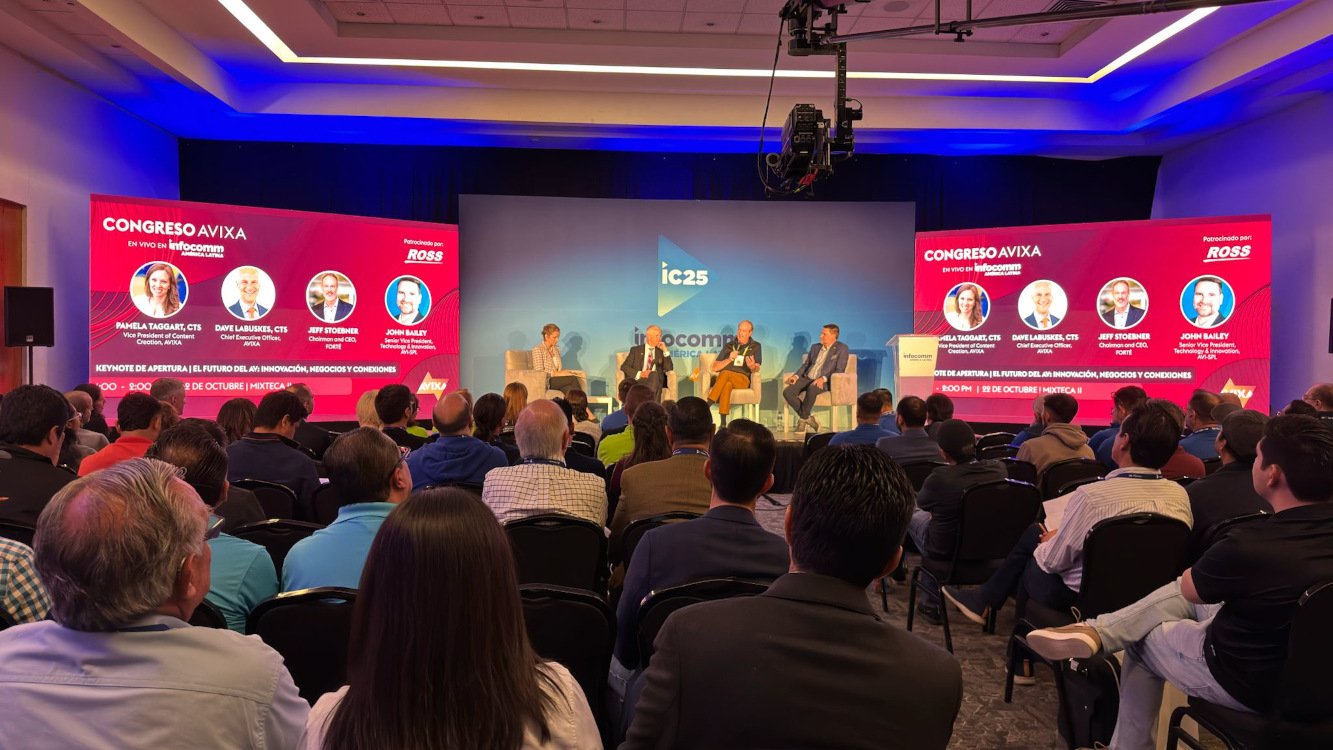
Demand for more AV training programs
In a panel discussion featuring representatives from Bose Professional, Ross Video, and Wesco Anixter, the experts discussed the shortage of skilled professionals across Latin America and the opportunities presented by AI. The panel called for expanded training and professional development programs, as well as stronger industry partnerships.
Within the digital signage track, Julian Phillips of AVI-SPL explored the emerging “era of intelligence,” highlighting how AI-driven insights are transforming content and engagement strategies.
Many presentations at the Congreso were held in Spanish, reflecting the event’s local focus. “The most important thing is that we produce this show specifically for this market,” explained Jenn Heinold, Senior Vice President at Avixa. “We’ve embraced the local culture, and there’s a profound sense of pride and warmth here that you won’t find elsewhere.”

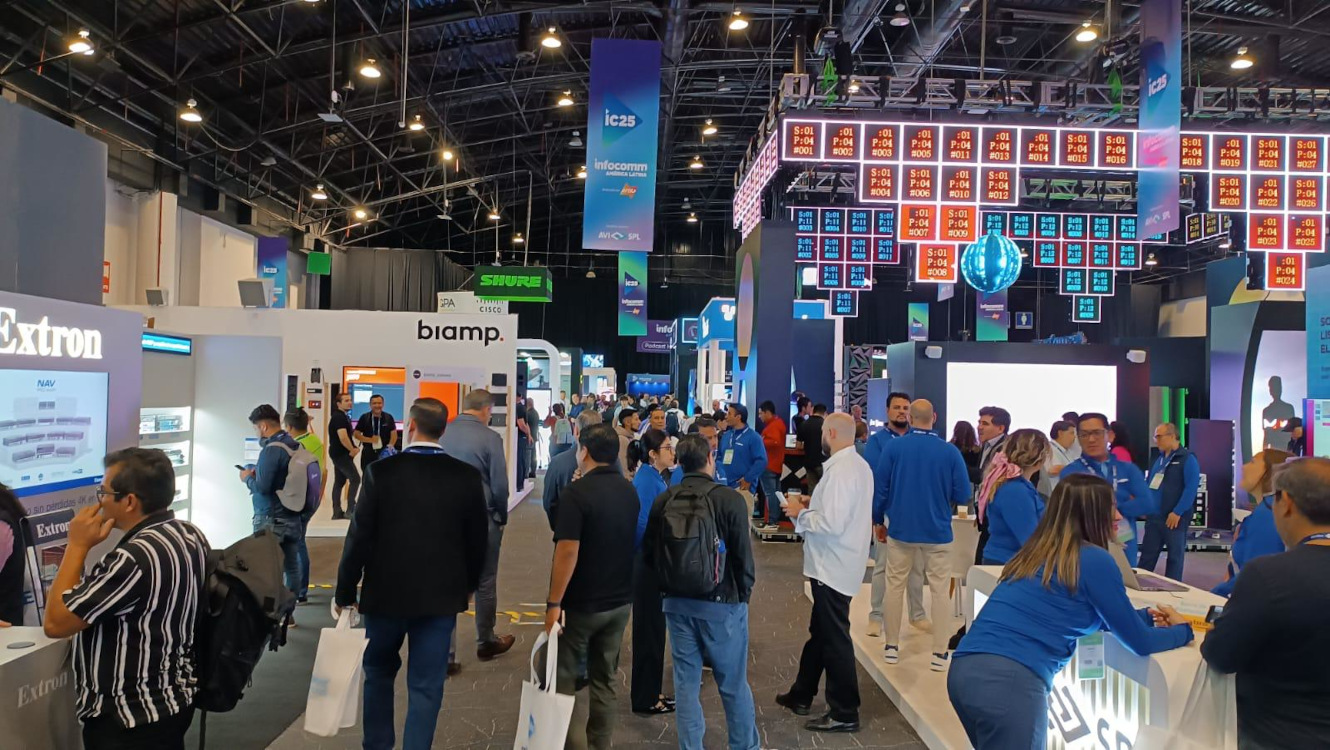
Looking ahead to 2026
Beyond the exhibition halls, attendees joined Integrated Experience Tours to explore cutting-edge AV installations, including the immersive Inspace experience room and the state-of-the-art Estudio 13 recording studio.
Avixa Regional Director Rodrigo Casassus Coke expressed satisfaction with the show’s debut: “We achieved a complete sell-out in this first edition and exceeded our goals in all aspects: space, participation, and promotion. We are very satisfied with the incredible market response.”
The next Infocomm América Latina is scheduled to return to the WTC Mexico City from October 21–23, 2026.