It's been a tough year for the U.S. display and LED industry in the U.S. But there have been a few silver linings amid the trade tensions with China. Sharp's Mark Quiroz tells invidis how the display maker has turned turbulence into opportunity, and shares the masterplan for what’s next.
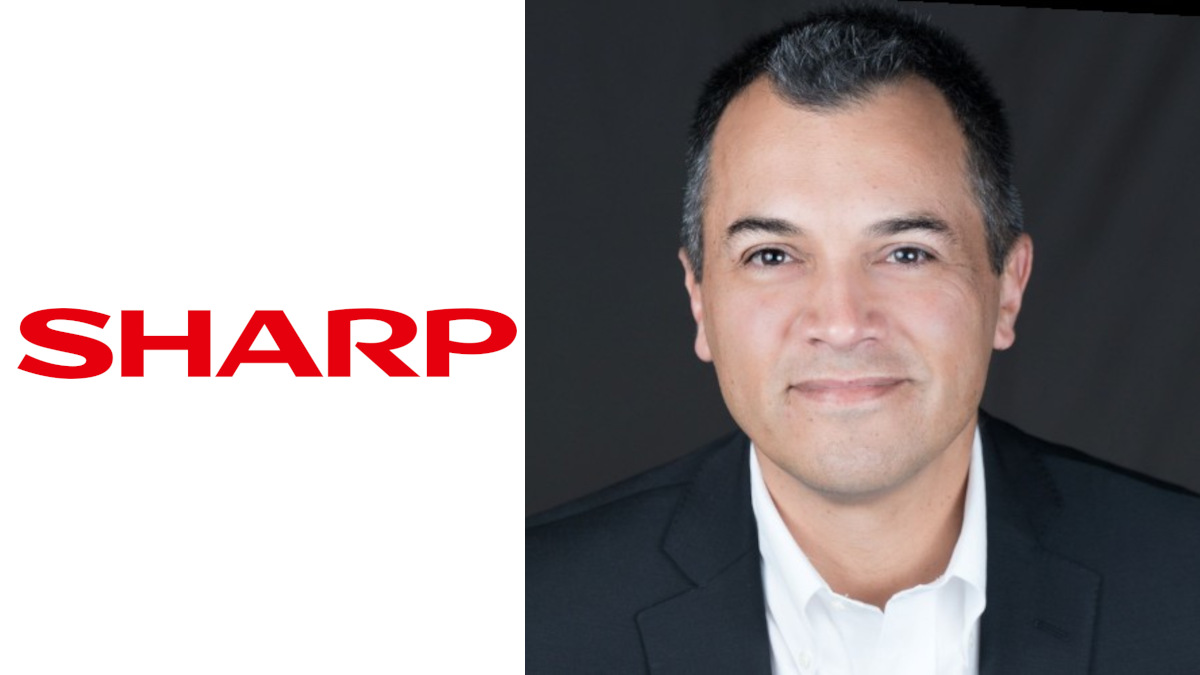
Mark Quiroz, Sharp: Finding Opportunity in a Turbulent Display Market
When Mark Quiroz took charge of Sharp’s display organization for the Americas in November 2024, the mandate was clear: drive growth across the entire portfolio – from LED and LCD to projection and desktop displays. What wasn’t on the agenda was reshaping supply strategies around tariff issues.
Yet the renewed trade conflict with China has not been all bad news for Sharp. For the Japanese manufacturer, which is completing its full merger with NEC this year, it has also opened a window of business opportunities – particularly in government-related projects, where Chinese solutions are ruled out from the start. “It has been an opportunity for us, but it’s a constantly evolving situation,” Quiroz notes, highlighting that meeting U.S. requirements is a perpetual effort of adapting sourcing and production strategies.
Competing on quality
Sharp NEC displays have never been the first choice in price-sensitive markets, but are considered a safe bet for business-critical environments, such as airports, thanks to their durability.
In many other sectors, however, price pressures are rising, above all in consumer markets. Sharp’s TV production was shut down last year – Sharp’s owner, Foxconn, once the world’s largest contract TV manufacturer, has almost entirely lost the market to competition from Korea and, even more so, China. While the TV business was beyond saving, Quiroz sees significant potential in the ProAV segment, especially with the merged product lines of Sharp and NEC.
An industry in transition
Quiroz is a familiar face in the display market, having overseen Product & Service Management for Samsung’s Mobile Experience division in the U.S. for several years. After a year-and-a-half break from the pro display business, he joined Sharp as Senior Vice President & GM of Displays, returning to an industry in the midst of consolidation. Particularly in AV integration, private equity has pushed for much closer alignment with IT than was typical two years ago.
Some things, however, have not changed as much as Quiroz expected. LED has grown but has not overtaken LCD, thanks to LCD’s still much lower price and easier handling. Projection, once thought to be in steep decline, has proven surprisingly resilient. “There are price points and applications that projection still serves very well, especially in education and complex installations,” he observes.
Education markets, in particular, have been slower to adopt new display technologies than anticipated. Teacher resistance and entrenched lesson plans have slowed the shift, leaving projection as a viable option.
In other markets, LED adoption continues, with fine-pitch solutions driving growth in premium environments such as retail, hospitality, and mission-critical control rooms. Installation remains a bottleneck due to labor shortages, which has prompted Sharp to push into all-in-one solutions to provide easy-to-deploy options.
Services, software, and SoC
Beyond hardware, Sharp is strengthening its service and software strategies. One of the company’s greatest USPs is its global customer support program, a legacy carried over from NEC. In terms of software, Sharp has always remained deliberately agnostic, except for its proprietary remote device management system, Naviset.
For CMS software, Sharp adheres to its principle of integrating with best-of-breed solutions, unlike competitors such Samsung and LG, who sell their own applications. However, developing a proprietary CMS isn’t completely off the table if future customer demand warrants it, Quiroz says.
Sharp is also expanding more into SoC solutions as customers increasingly seek streamlined systems with fewer external devices.
Mitigating tariff impact
One of Sharp’s current big challenges is diversifying production while ensuring consistent product quality. “If you don’t have quality products, it all falls apart from there,” Quiroz says. Exploring multi-sourcing strategies to stay resilient is a top priority, though he doesn’t confirm plans for new production facilities outside China.
To mitigate the initial impact of tariffs earlier this year, Sharp stockpiled inventory and tried to maintain open communication with partners and customers. “The biggest challenge is planning. Once customers understand what’s coming, they can make concrete decisions.”
Sustainability as a differentiator
In Europe, Sharp is recognized as a sustainability leader in the ProAV segment – a reputation that’s also informing its U.S. strategy. Product longevity and second-life programs are key pillars, with displays often lasting more than a decade.
Quiroz notes that Sharp’s new LED models consume up to 60% less energy than competitors, while packaging is being redesigned with sustainability in mind. The company also does a lot of experimentation with E Ink’s e-paper technology for low-energy applications, including outdoor e-posters with integrated solar panels, as shown at ISE 2025.
Global coordination and partnerships
Looking ahead, Sharp is doubling down on global collaboration. Coordination across time zones is not easy, but the company sees global consistency – whether in product sets, warranties, or pricing – as a key strength. Sharp is also working closely with major international integrators such as AVI-SPL, Diversified, Kinly, and NEOs to support multinational customers.
“We’re coming at it from two angles,” Quiroz explains. “Supporting global end users with consistency, and working with integrators who are gaining prominence.” With consolidation reshaping the industry, Sharp’s ability to combine quality products, sustainability, and coordinated global service could prove decisive in the years ahead.