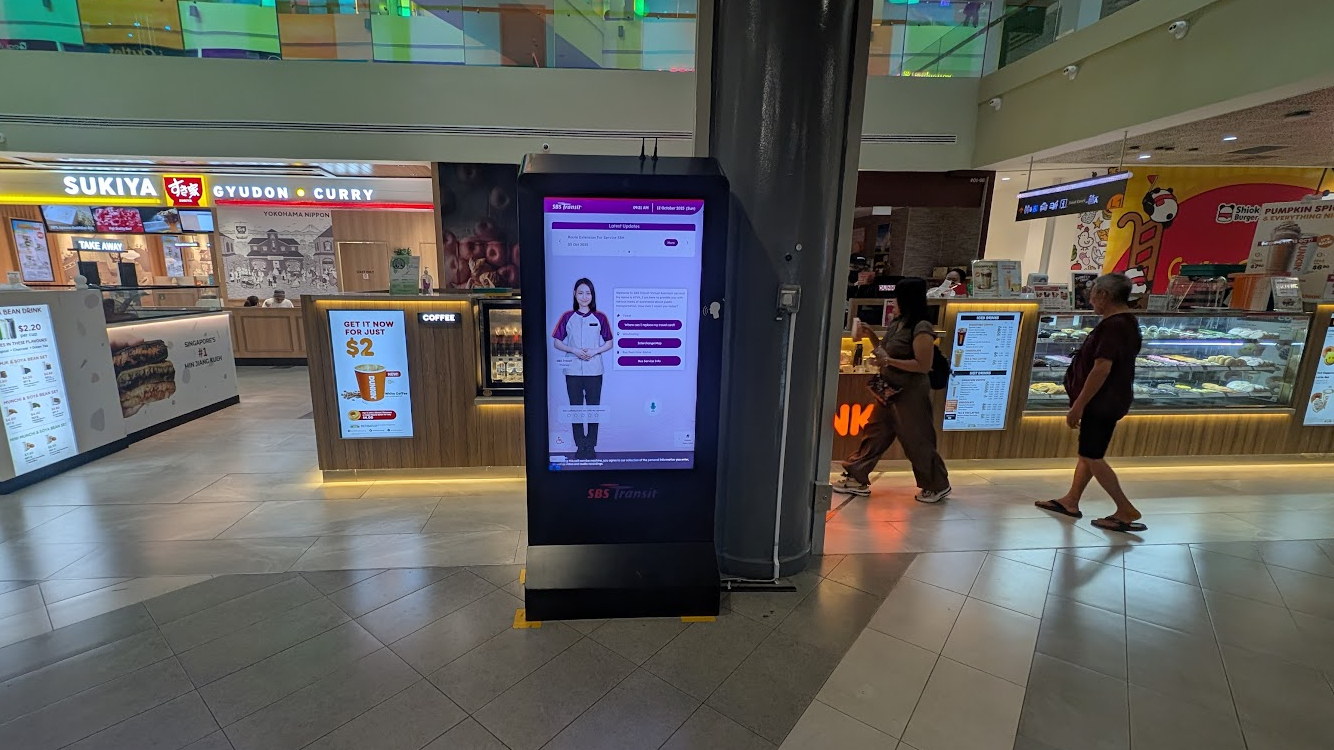
Singapore | Digital signage has long been a fixture in public transport – supporting everything from ticket kiosks to departure boards. Now, Singapore’s SBS Transit is taking it a step further with AI-powered Digital Humans that offer natural, conversational customer service. After a successful pilot, Aiva is set to roll out across 50 metro stations nationwide.
Digital Signage: Digital Humans Redefining Customer Service
Singapore – the ultra-efficient, high-tech city-state on the equator – continues to set global standards in smart city innovation, from AI and IoT to digital signage. Its latest advancement comes in the form of Aiva and Silvia, AI-powered Digital Humans that enhance customer service across the city’s mass transit network.
Following more than a year of pilot testing, SBS Transit is now deploying Digital Humans across Singapore’s busiest metro stations and bus terminals. Aiva has already proven her value in real-world settings – passengers interact with her naturally, as they would with a human assistant. And soon, she’ll be able to respond not just with information, but with empathy.
From transactional to experiential
Traditional ticketing terminals and touchscreen kiosks have long been the backbone of self-service in public transport. Efficient, yes – but uninspiring. These interfaces rarely offer memorable experiences or emotional engagement. Aiva was developed to change that.
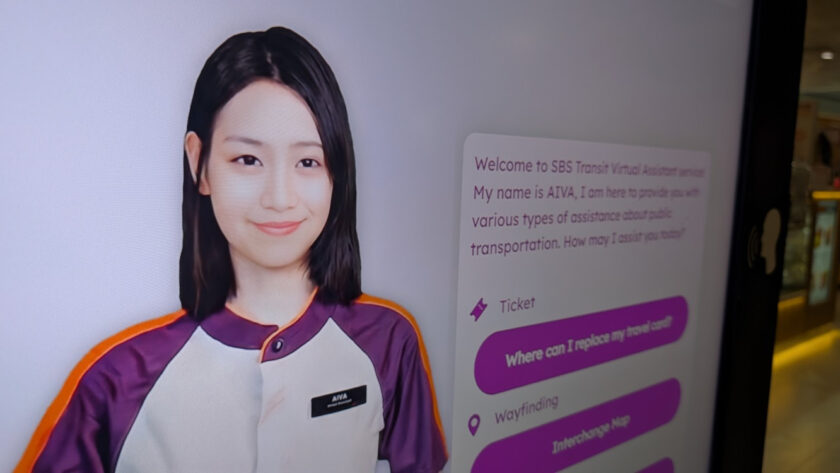
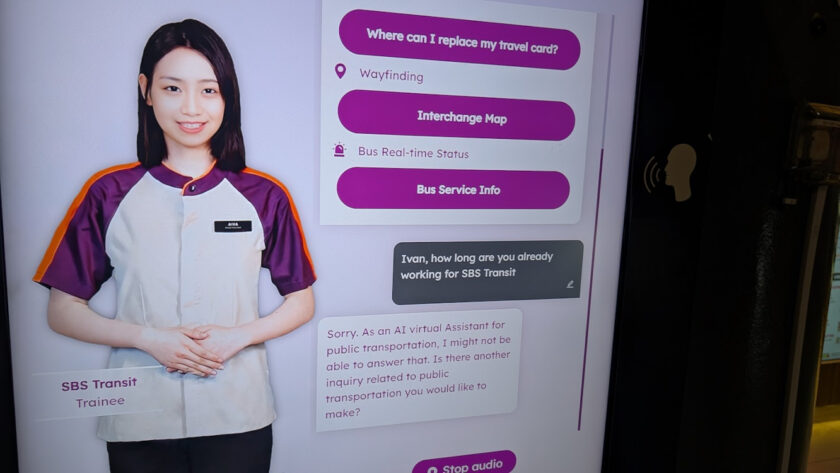
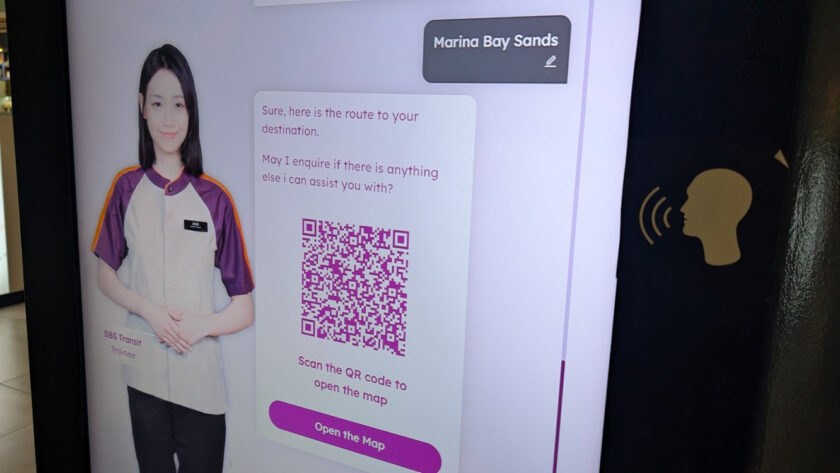
She provides real-time route and transfer information, answers commuter questions, and even shares details about nearby amenities. With her human-like appearance, natural voice, and expressive gestures, Aiva turns routine interactions into engaging experiences. Metro riders of all ages have embraced the lifelike encounters – some even stop to take selfies with their local Digital Human.
Solving staffing challenges with AI
Singapore, like many urban metropolises, faces a shortage of qualified customer service staff. SBS Transit, under constant public scrutiny, needed a scalable solution to meet rising passenger expectations. Traditional digital signage applications fell short – visibility and engagement in crowded mass transit stations were too low.
As part of an innovation initiative, SBS Transit partnered with six technology companies to explore next-gen digital customer service solutions. Among them, Aiva emerged as a standout. During the pilot phase, each station saw an average of 50 daily interactions – a strong indicator of user acceptance and and higher-than-expected utilization.
Powered by Domain AI
Unlike generic AI avatars, Aiva was trained using a Domain Large Language Model (LLM) tailored to public transportation. This specialization ensures fast, accurate responses and a seamless user experience. The system runs directly in the browser of the digital signage platform, making integration in various existing digital signage systems straightforward.
To support Singapore’s multilingual population, Aiva will soon communicate in Mandarin, Malay, and Tamil, in addition to English. This requires upgraded edge-computing power – a dedicated media player instead of SoC and robust internet connectivity at each touchpoint.
Designed for trust and Eengagement
Aiva’s appearance was refined in close collaboration with SBS Transit’s marketing team. The result? A digital assistant so relatable that users frequently ask if they could go on a date. The feature to display spoken input as text on-screen also led to unexpected challenges – users are regularly testing Aiva with profanity, prompting developers to implement filters that now block inappropriate language.
Silvia: inclusive customer service in action
In a parallel innovation track, SBS Transit developed Aiva’s sister Silvia, SBS Transit’s Sign Language Virtual Assistant. Designed to assist hearing impaired commuters, Silvia translates spoken and written queries into Singapore Sign Language. In a multicultural city like Singapore, where sign languages vary widely, Silvia represents a major step toward inclusive digital signage.
The future of Digital Humans lies in Agentic AI – systems that can interact with other AI agents to deliver cross-platform services. Imagine asking Aiva to book a restaurant near the station, check store hours, or reserve museum tickets – all without switching apps.
Even more transformative is the integration of emotional intelligence. Soon, Aiva and Silvia will be able to detect and respond to users’ emotional states, adjusting tone and behavior accordingly. This evolution addresses one of the biggest shortcomings of digital systems: the lack of human nuance.