Mumbai | India's largest private company – Reliance Industries - is aggressively entering the digital signage market under the Jio Platforms brand with their product Jio Signage. A prime example of how large corporations can expand into new markets – if they leverage their corporate tools, financial strength and brand recognition. India’s established digital signage industry is being disrupted – even a global digital signage market leader is losing out.
A “Bloodbath”: Jio Signage Shakes Up India’s CMS Market
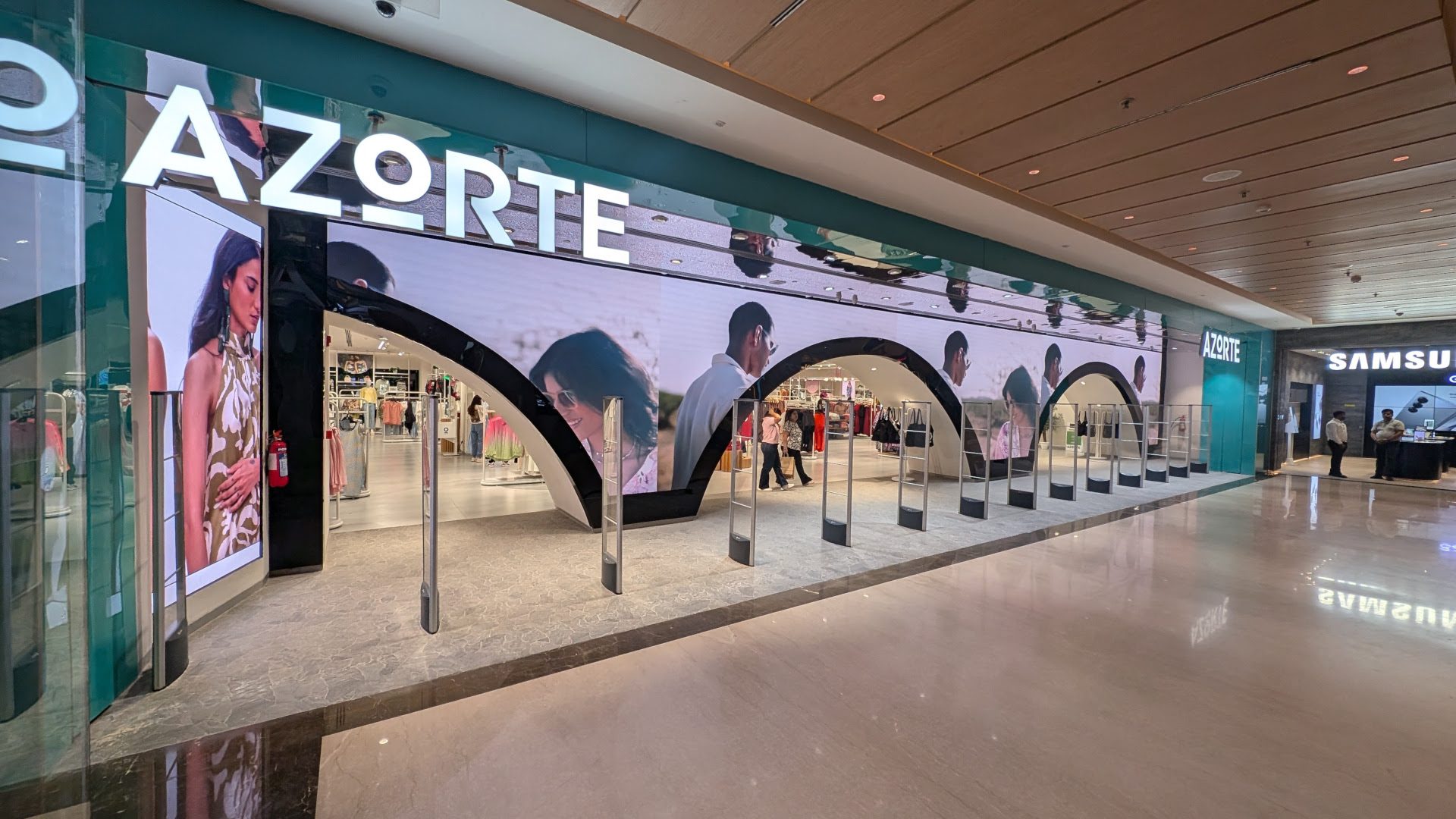
On the outskirts of India’s financial and business metropolis, Mumbai, India’s largest corporation, the Reliance Group, developed a 500-acre headquarter. A city within a city for 50,000 employees, with its own hospital, sports stadium, and recreational lake. This is where Reliance’s heart beats – its more than half a million employees worldwide generate revenues of US$120 billion. With businesses including chemicals, technology, and retail – with over 10,000 stores – Reliance Industries is a dominant force in India.
In the world’s most populous country, only about 15% of retail outlets fall under “controlled retail” – stores in shopping malls that meet standards and amenities comparable to those in Europe or North America. Against this backdrop, Reliance Retail operates more than 10,000 stores, featuring both its own brands and joint ventures with leading global names.
Reliance’s subsidiary, Jio Platforms is India’s largest technology provider offering services that range from mobile networks to cloud computing and beyond. One of its latest ventures is digital signage.
Mass adoption of Jio Signage
For more than a decade, Reliance Retail’s trusted digital signage partner has been a U.S.-based global industry pioneer – a company for which India serves not only as a software development hub but also as an important sales market. With a six-figure and rapidly growing number of active digital signage touchpoints, Jio Platforms ultimately chose to develop its own solution: Jio Signage. Designed to work with virtually all display brands, it also provides proprietary media players to upgrade non-smart displays.
In a coordinated corporate effort, several hundred software developers built Jio Signage entirely from scratch. Naturally, it is cloud-native, built on a modern tech stack, and equipped with a competitive feature set. This new CMS has already proven its reliability in practice and is now being rolled out across the group.

Huge success after only one year
As India’s leading technology provider, Jio Platforms has a proven track record of entering new markets with scalable business models. After deploying tens of thousands of licenses across the extensive Reliance Retail network, the company extended its digital signage solution to external retail clients and other industries. Within just a year, Jio Platforms captured a significant share of India’s digital signage CMS market, disrupting the landscape by setting new professional standards in B2B services.
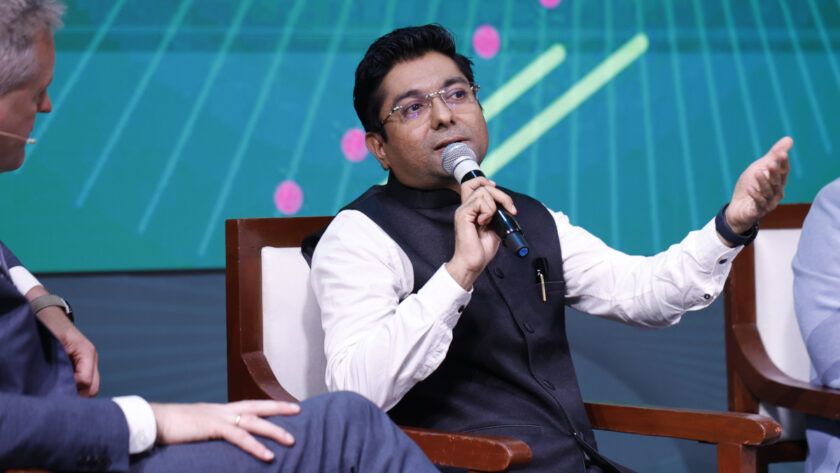
At the invidis Digital Signage Conference during Infocomm India 2025, established competitors privately described the situation as a “bloodbath.”
The US$120 billion corporation is rewriting the rules of the game. India’s typically small to medium-sized software developers now find themselves challenged by a powerful domestic giant on their own turf. For years, the country’s digital signage CMS industry operated with little interference from large corporations or international players. In fact, many independent software vendors (ISVs) successfully expanded abroad, establishing footholds in the Gulf region, Europe, and North America.
But those comfortable times are over. “We had neglected our home market,” admitted a leading provider who wished to remain anonymous. Will India now be dominated by Jio Signage? With its expertise in CMS, IoT, and related technologies, will surely continue to disrupt the market and become the dominant player.
At the same time, global giants such as Samsung (VXT), LG, Panasonic, and Philips are entering the market with bundled hardware and in-house software solutions tailored for India. Domestic LED brands, including Xtreme Media, have also successfully launched competitive CMS offerings, further intensifying the competition.
But India’s software entrepreneurs are agile and enterprising enough not to cede the market to Jio or the bundled solutions from display manufacturers. In addition, European and U.S. digital signage ISVs are entering India, bringing strong brand recognition, large global installed bases, and well-established partner ecosystems. Competition is heating up, making the world’s fourth-largest economy an exciting battleground for digital signage innovation.
In-house CMS vs. in-house device management
More and more global organisations – including large US-based QSR providers – have decided to develop their own digital signage software platform. There are advantages and disadvantages, but once end-users reach a network size of several hundred thousand players, in-house CMS development is certainly justified. Often, only a limited-feature CMS solution is needed that sits on top of powerful experience, marketing, and ERP platforms.
While an in-house development of a CMS may make sense for selected large end-user, it is rarely worthwhile to develop inhouse professional device management platforms. Managing the signage’s industry very unique SoC platforms should be left with experts like SignageOS which have become the de-facto standard in the industry.