On August 1, the new EU cybersecurity regulation RED2014/53/EU took effect – also affecting digital signage. Leading display providers say they are prepared, but devices imported before the deadline still need software updates.
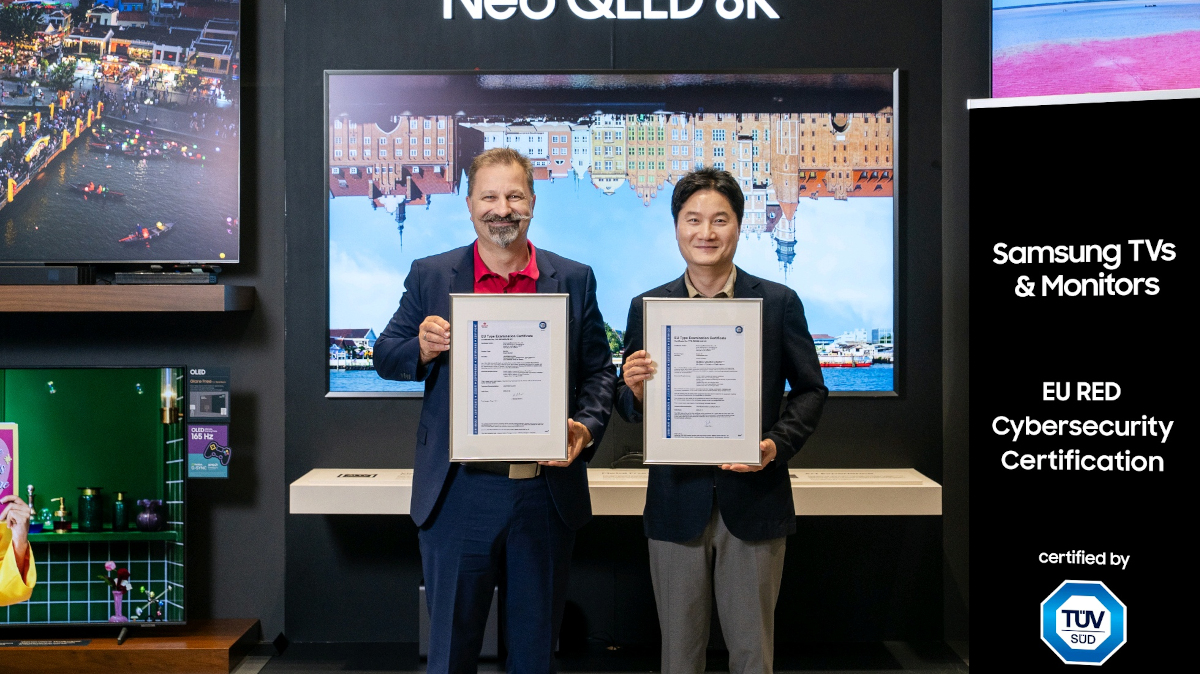
Mandatory: New EU Cybersecurity Rules for Signage
Starting August 1, 2025, the EU Radio Equipment Directive (RED) will be amended to include mandatory cybersecurity requirements. All devices with integrated radio technology sold in the European market must comply with these rules under the RED Article 3.3d-f.
Professional screens, interactive whiteboards, e-paper devices, and AiO LEDs with integrated Wi-Fi must also meet the new stricter requirements covering electrical safety, electromagnetic compatibility (EMC), and efficient use of the radio spectrum.
From August 1, 2025, these rules will also introduce stricter cybersecurity obligations, such as improved network security, better protection of personal data, and measures to minimize fraud risks.
Digital signage providers consider themselves well prepared
invidis spoke with leading display providers in Europe, all of whom confirmed compliance with RED 3.3. Otherwise, CE certification, which is required in the EU, can no longer be obtained. Devices imported before the deadline will need software updates to stay compliant. Samsung and LG both noted that their proprietary security platforms, Samsung Knox and LG Shield, already meet the new security requirements.
“All security requirements of the RED 3.3 directive were covered by the LG Shield security framework. We didn’t have to develop any additional tools for certification,” Robert Bergner, Head of Solution Sales at LG Germany, told invidis. “Cybersecurity is an absolute must, which is why we welcome guidelines like RED. The protection provided by LG Shield even goes beyond the requirements.”
According to Tobias Augustin, Product Management Manager at Sharp, the new requirements of the RED Directive make absolute sense and should lead to significant improvements in the cybersecurity of professional displays.
“The removing the self-declaration option creates an extra burden for manufacturers and leads to delays due to the required testing by test laboratories. However, it alos ensures all manufacturers meet the requirements.”
Augustin also sees advantages in the EU directive when compared to other markets. “Other regulations, such as the UK’s PSTI Act 2022, contain loopholes and exceptions often exploited by less security-focused manufacturers,” he noted.